
How Varanasi Got Its Name from Two Rivers That Still Flow Through It

A city's name is usually the last thing anyone thinks to question. Varanasi has been called Varanasi for so long that the word feels more like a sound than a meaning. But pull it apart and you find two rivers, a boundary, and a way of defining a city that is older than most of the world's capitals.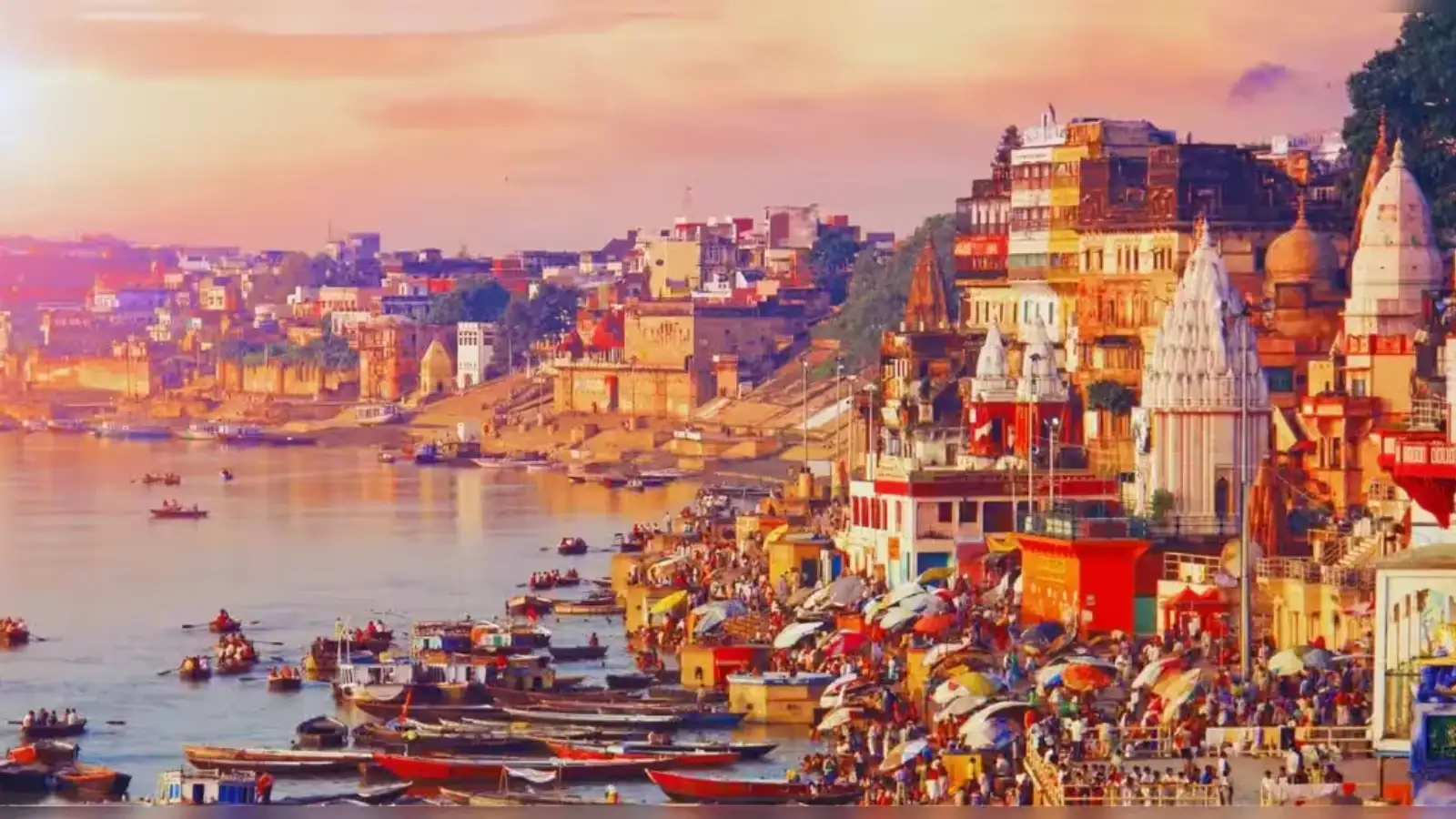
The Varuna is the elder of the two in terms of religious standing. It gives its name to the Varun Ghat, and in early Sanskrit texts the city is sometimes called Varanasi simply because of this river's prominence on its northern flank. The Assi, quieter and shorter, anchors the southern end of the pilgrimage circuit that runs along the Ganga's bank. A devout visitor who walks from Assi Ghat all the way north to Raj Ghat has, in a sense, walked the full original length of the city as its name defines it.
The British administration rendered it as Benares, a phonetic approximation that stuck through the colonial period and well into the twentieth century. Benares is Varanasi heard through a particular ear and written down quickly. The city's official name was changed back to Varanasi decades ago, restoring the geography that was always there.
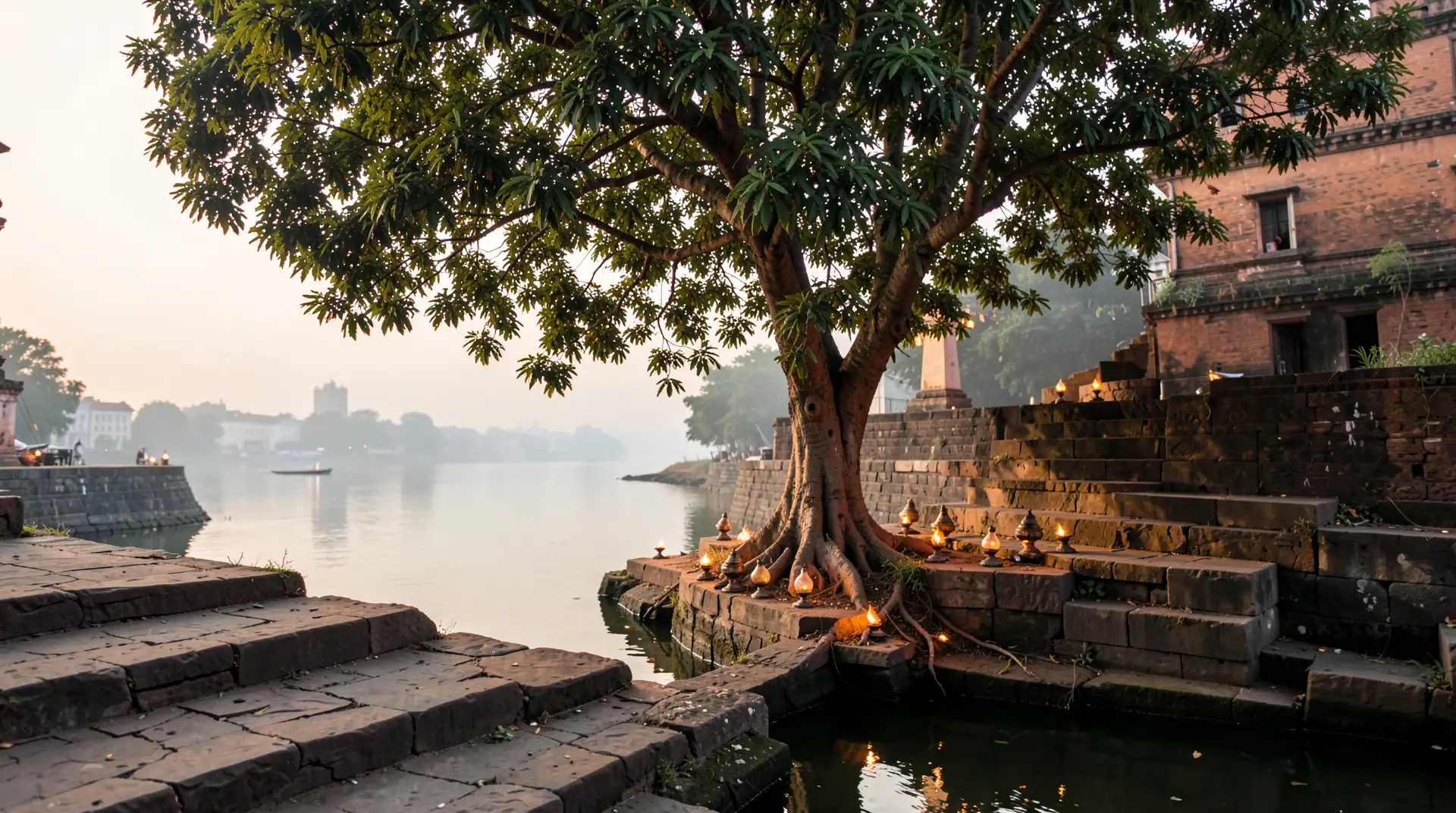
There is a large peepal tree at the ghat, under which a Shiva linga is said to have been installed after a battle described in the Puranas. The story gives the Assi its sacred standing independent of its size. A river does not need to be wide to hold a boundary.
The two rivers together gave the city a shape before anyone drew a map of it. North wall, south wall, and the Ganga as the eastern face, three natural boundaries that a settlement could grow inside and know where it ended.
The Two Rivers Behind the Name
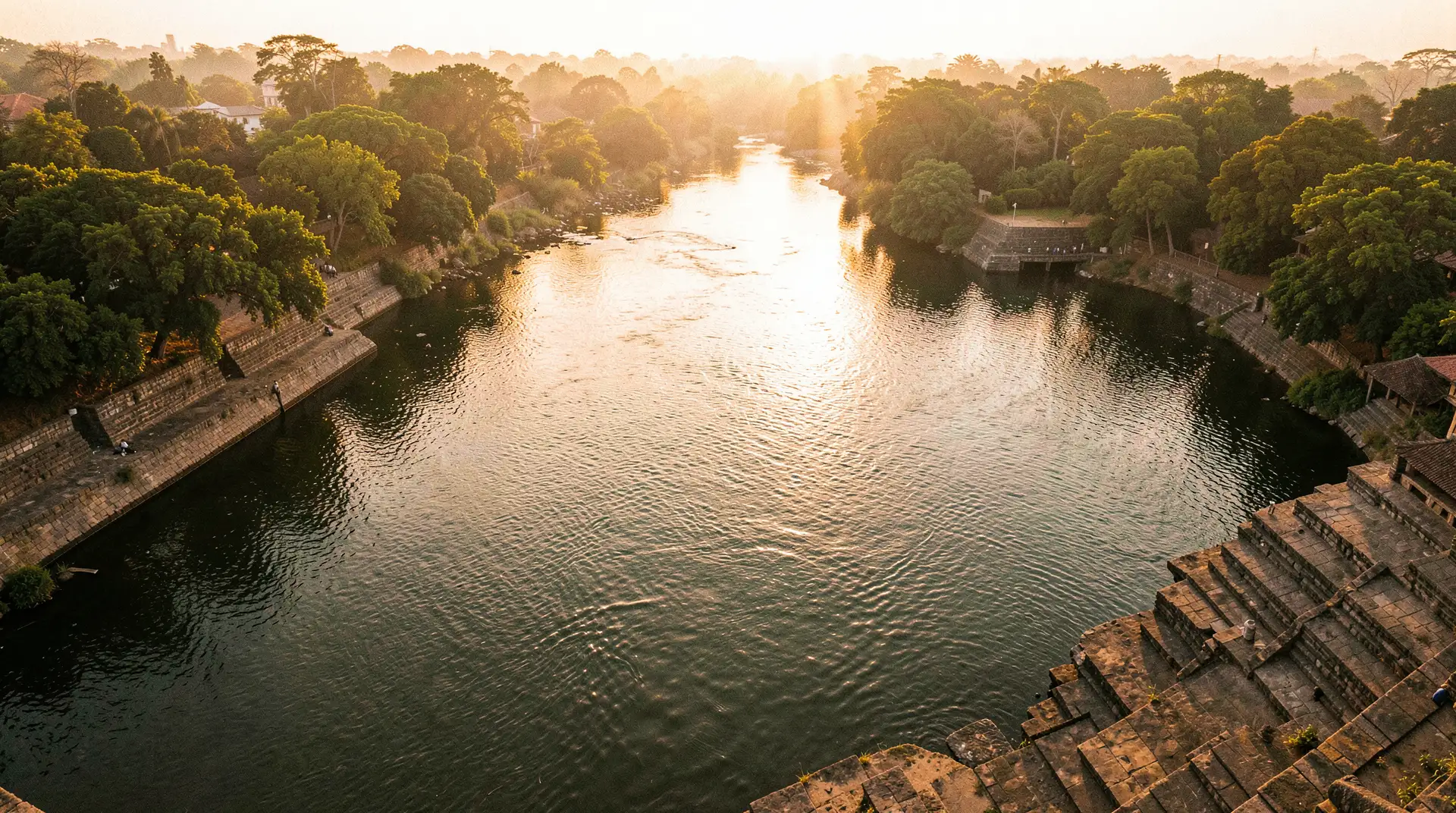
The Varuna rises to the north of the city and joins the Ganga near the neighbourhood of Raj Ghat. The Assi is a smaller stream, more nullah than river for much of its length today, that meets the Ganga at the southern end of the ghats, at a point still called Assi Ghat. Together, they once formed a natural perimeter. The city that grew between them took both names and fused them: Vara-nasi, or in older spellings, Varanasi.The Varuna is the elder of the two in terms of religious standing. It gives its name to the Varun Ghat, and in early Sanskrit texts the city is sometimes called Varanasi simply because of this river's prominence on its northern flank. The Assi, quieter and shorter, anchors the southern end of the pilgrimage circuit that runs along the Ganga's bank. A devout visitor who walks from Assi Ghat all the way north to Raj Ghat has, in a sense, walked the full original length of the city as its name defines it.
What the Older Names Tell Us
Varanasi has accumulated names the way old cities accumulate neighbourhoods. Kashi is the most sacred of them, from the Sanskrit root kash, meaning to shine or to illuminate, and it appears in texts that predate most surviving written records of the city. Kashi is the name a pilgrim uses, the name that carries theological weight in the Puranas and in the Mahabharata. Varanasi is the name the geographer uses, the name that describes where the city sits.The British administration rendered it as Benares, a phonetic approximation that stuck through the colonial period and well into the twentieth century. Benares is Varanasi heard through a particular ear and written down quickly. The city's official name was changed back to Varanasi decades ago, restoring the geography that was always there.
The Assi Ghat End of the City
Assi Ghat is where the Assi stream meets the Ganga, and it has a specific ritual role in the city's pilgrimage geography. The Panch-Tirtha circuit, a route connecting five sacred bathing points along the river, begins and ends here. The Assi is not a dramatic river. In the dry months it is modest enough to step across. But its confluence with the Ganga is marked, worshipped, and considered the city's southern threshold in a tradition that has not changed its geography in centuries.There is a large peepal tree at the ghat, under which a Shiva linga is said to have been installed after a battle described in the Puranas. The story gives the Assi its sacred standing independent of its size. A river does not need to be wide to hold a boundary.
Where the Varuna Meets the Ganga
The Varuna's confluence is less visited than Assi Ghat but no less old. It sits near Raj Ghat, at the northern end of the ghat sequence, where the land rises and the ghats thin out. The Varuna itself runs through the northern parts of the city, through neighbourhoods like Lahartara and Pahadia, before reaching the Ganga. It is a longer, more substantial river than the Assi, and its presence in the city's daily life is more visible: bridges cross it, markets sit along it, and its name appears on street signs in the northern quarters.The two rivers together gave the city a shape before anyone drew a map of it. North wall, south wall, and the Ganga as the eastern face, three natural boundaries that a settlement could grow inside and know where it ended.
A Name That Survived Everything
Varanasi is among the handful of cities whose name has remained in continuous use for more than two thousand years, through empires, invasions, and administrative renamings. The name survived because the rivers that made it are still there. The Varuna still flows. The Assi still reaches the Ganga at the southern ghat. As long as both rivers run, the city's name is self-explaining, a description of a place written in water, readable by anyone who walks its full length from one confluence to the other.Next Story