
Buckingham Canal: The Famine-Era Waterway Running Through Chennai

Most people who cross it on a bridge or glimpse it from a train window do not know its name. The water is dark, the banks are crowded, and nothing about it announces its age. But the Buckingham Canal is older than most of Chennai's landmarks, and the reason it exists at all is one of the bleakest chapters in the region's history.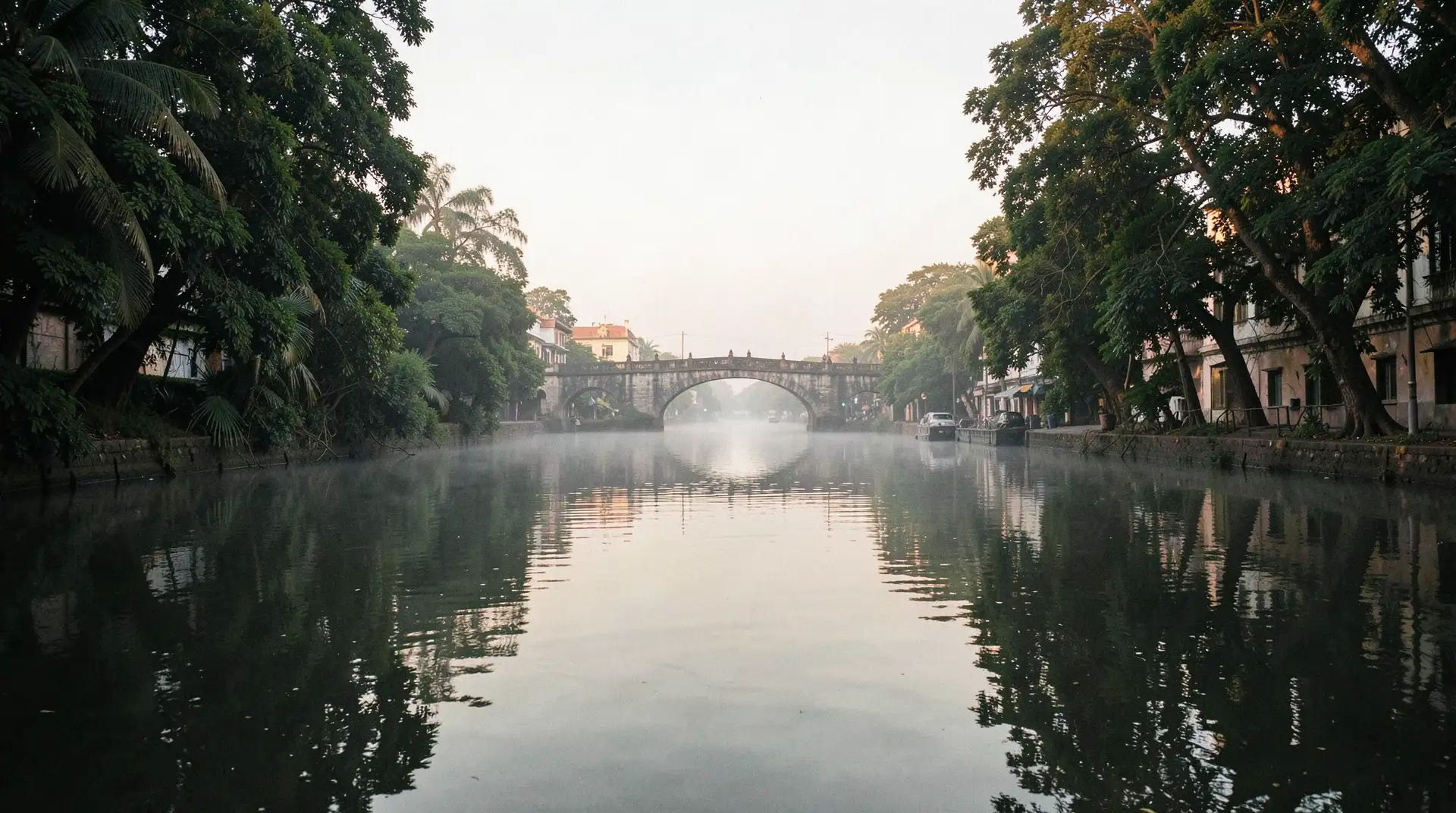
The immediate push came from the Great Madras Famine of 1876 to 1878, one of the deadliest famines in South Asian history, which killed millions across the Deccan and the Tamil districts. The colonial administration needed a way to move grain quickly along the coast without depending on roads that turned to mud in the monsoon or a sea that was rough for months at a time. A sheltered inland waterway running parallel to the coast was the answer.
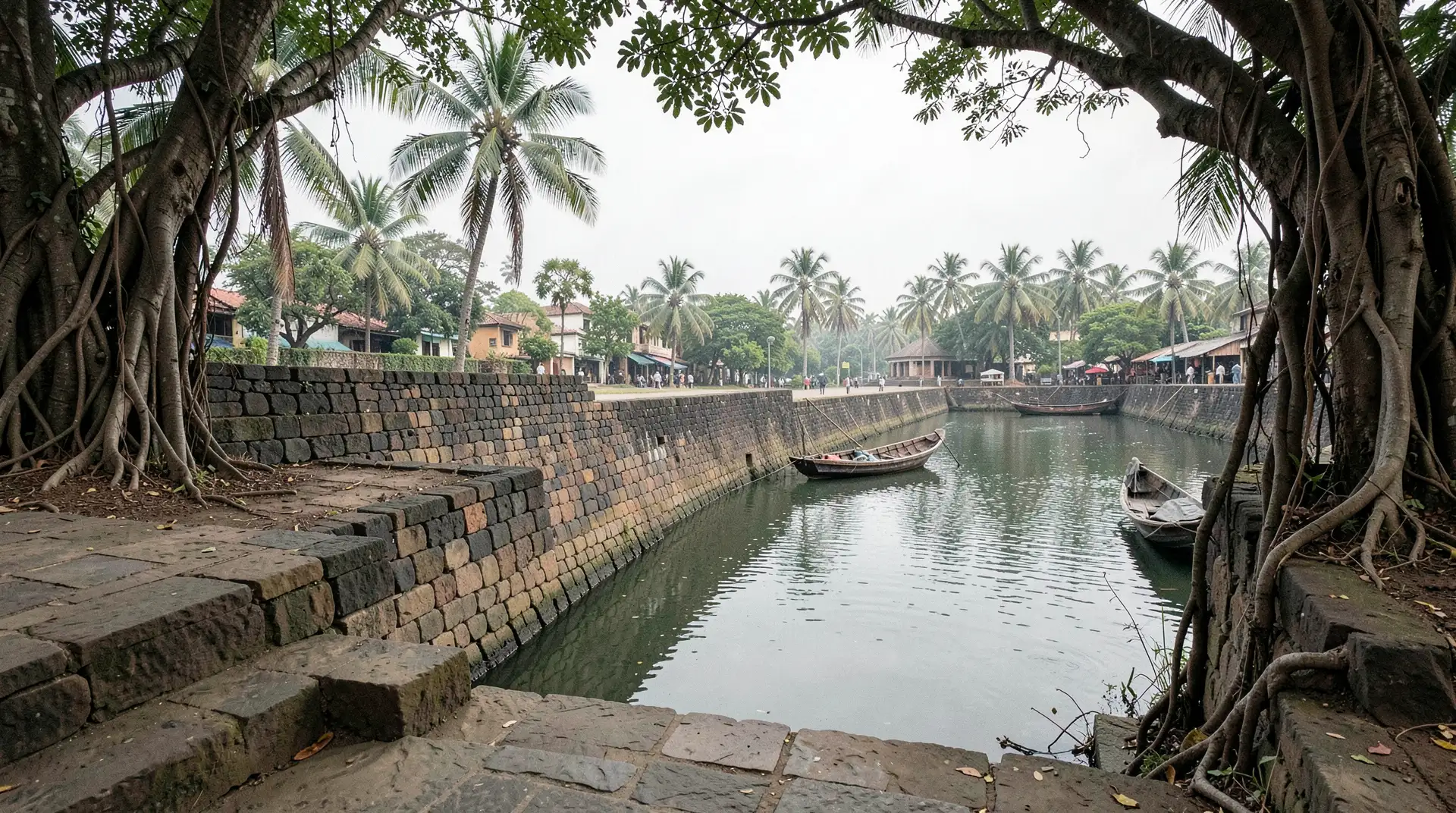
Salt, rice, timber, and construction material moved through it for decades. The canal was also used to drain floodwater from the low-lying parts of the city, a function that is still partly relevant today, though the drainage load it carries now is far heavier and far less clean than its builders imagined.
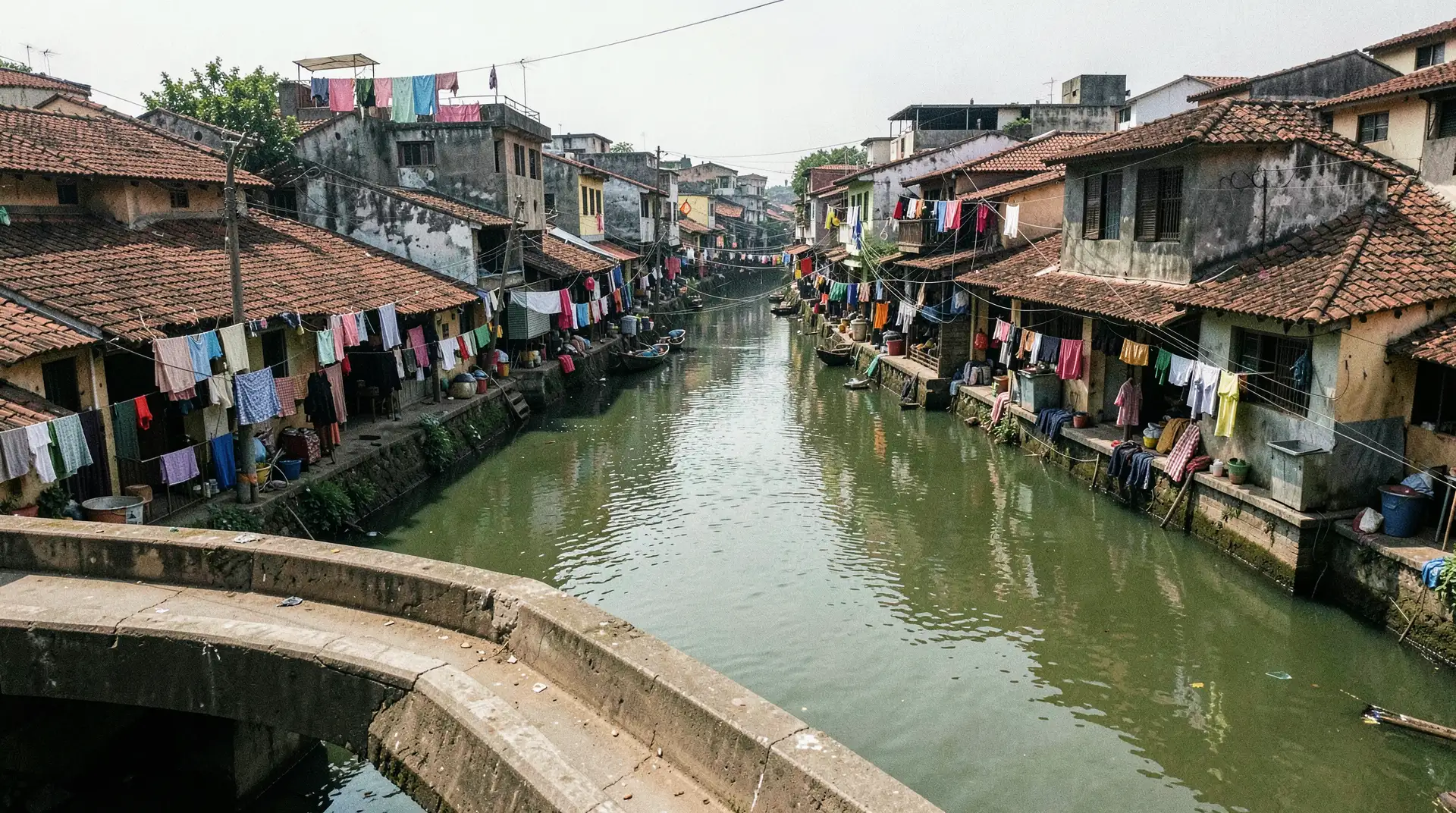
The stretch running through areas like Nungambakkam, Egmore, and Perambur became hemmed in by encroachments, informal settlements, and the general press of a city that needed every square metre. The canal that was once a working artery became, in large parts, an open drain. The boats stopped.
The commerce moved to roads and later to rail. What remained was the channel itself, still carrying water, still technically navigable in some stretches, but no longer serving the purpose it was built for.
The canal does still carry water to the sea during heavy rain, and in that sense it is doing a version of what it was always meant to do. But the volume it can handle now is a fraction of what a clear, maintained channel could manage. Chennai's flooding in the 2010s brought the canal back into public conversation, though the conversation about what to do with it remains unresolved.
Whether the city acts on that or not, the canal itself is not going anywhere. It was dug by hand during one of the worst famines the region ever endured, and it has outlasted every administration that built over it, neglected it, or promised to fix it.
Built in the Shadow of a Famine
The canal takes its name from the Duke of Buckingham and Chandos, who served as Governor of Madras in the late nineteenth century. Construction began in earnest in the 1870s, though earlier stretches had been dug before that, partly as flood relief channels.The immediate push came from the Great Madras Famine of 1876 to 1878, one of the deadliest famines in South Asian history, which killed millions across the Deccan and the Tamil districts. The colonial administration needed a way to move grain quickly along the coast without depending on roads that turned to mud in the monsoon or a sea that was rough for months at a time. A sheltered inland waterway running parallel to the coast was the answer.
What the Canal Actually Is
The Buckingham Canal is a navigational channel that runs roughly along the Coromandel Coast, connecting the Cooum and Adyar rivers in Chennai and extending north toward Andhra Pradesh. At its longest, the full system stretched over three hundred kilometres, making it one of the longer artificial inland waterways in peninsular India. It was designed to be protected from the open sea, which meant boats could move goods even when the Bay of Bengal was too rough for coastal shipping.Salt, rice, timber, and construction material moved through it for decades. The canal was also used to drain floodwater from the low-lying parts of the city, a function that is still partly relevant today, though the drainage load it carries now is far heavier and far less clean than its builders imagined.
How the City Grew Around It
As Chennai expanded, the canal did not grow with it, it got absorbed by it. Neighbourhoods built up along both banks. Roads were laid across it on bridges that most commuters cross without a second thought.The stretch running through areas like Nungambakkam, Egmore, and Perambur became hemmed in by encroachments, informal settlements, and the general press of a city that needed every square metre. The canal that was once a working artery became, in large parts, an open drain. The boats stopped.
The commerce moved to roads and later to rail. What remained was the channel itself, still carrying water, still technically navigable in some stretches, but no longer serving the purpose it was built for.
The Flood Question
The canal's relationship with Chennai's flooding is complicated. During heavy monsoon rains, the city's low-lying areas flood partly because the drainage network, of which the Buckingham Canal is a significant part, cannot move water fast enough when it is silted and narrowed. Engineers and urban planners have argued for decades about whether restoring the canal's original width and depth would meaningfully reduce flood risk.The canal does still carry water to the sea during heavy rain, and in that sense it is doing a version of what it was always meant to do. But the volume it can handle now is a fraction of what a clear, maintained channel could manage. Chennai's flooding in the 2010s brought the canal back into public conversation, though the conversation about what to do with it remains unresolved.
A Waterway Still Worth Knowing
There is a walkable stretch near the Foreshore Estate area where the canal is wide enough and the banks clear enough to get a sense of what it once was, a genuine body of water with breadth and stillness, not just a culvert running under a road. Urban heritage groups in Chennai have documented its history and argued for its restoration as both a functional waterway and a public space.Whether the city acts on that or not, the canal itself is not going anywhere. It was dug by hand during one of the worst famines the region ever endured, and it has outlasted every administration that built over it, neglected it, or promised to fix it.