
Bun Maska and Chai: How Iranian Settlers Built Mumbai's Irani Cafes

The first thing you notice in an Irani cafe is the ceiling fan moving at the exact speed of a long afternoon. Then the marble. Then the man behind the counter who does not ask what you want because he already knows.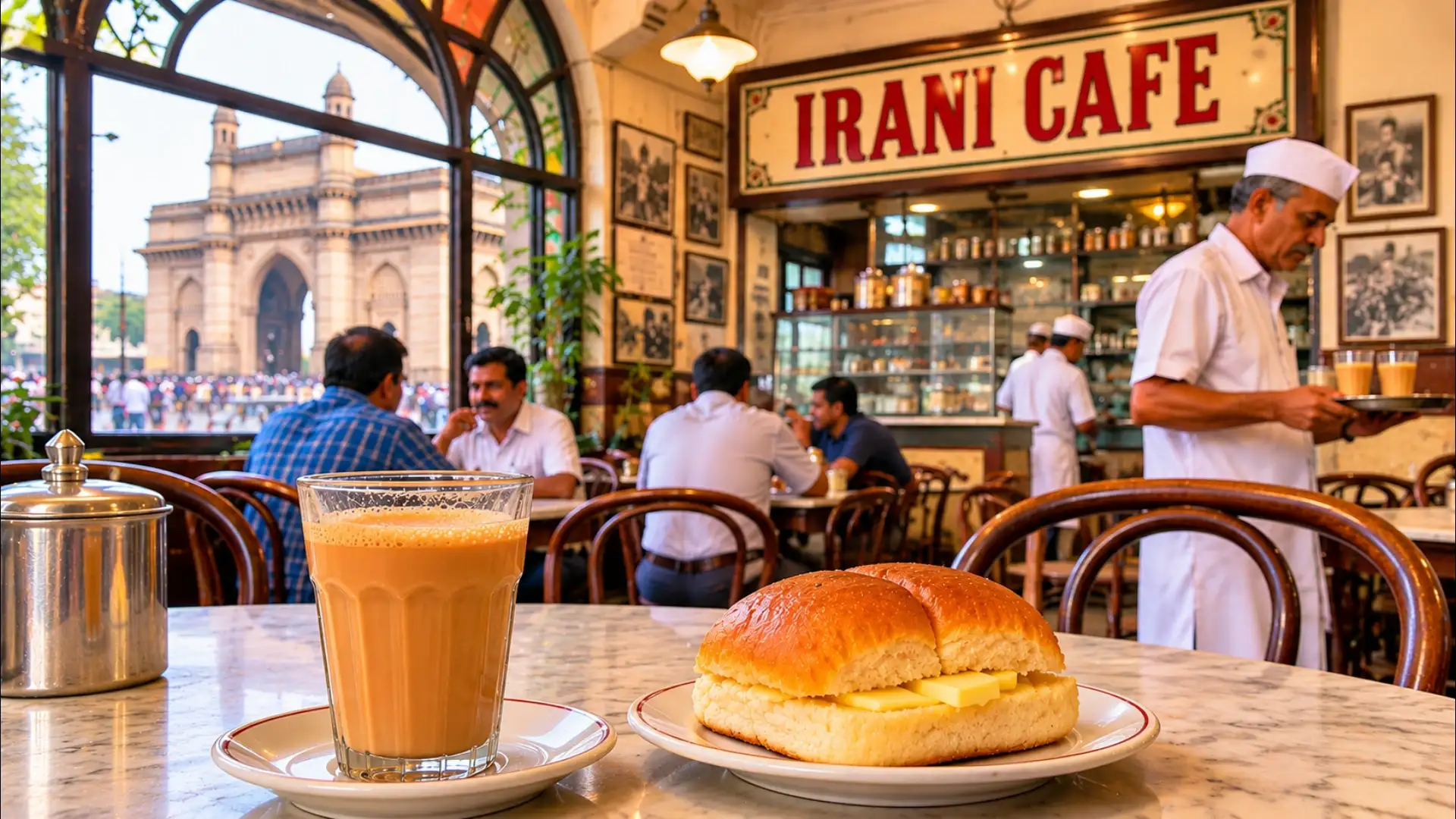
Mumbai's Irani cafes were built by Zoroastrian migrants from Iran, mostly from the regions of Yazd and Kerman, who began arriving in India in the late nineteenth and early twentieth centuries.
They came in two waves: the earlier Parsis, who had left Iran centuries before and were already established in Bombay's trade and industry, and the later Iranis, who arrived with less capital and fewer connections and needed a livelihood they could start quickly.
A tea shop required a small room, a samovar, and the willingness to stay open from before sunrise until after midnight. The Irani cafe was that calculation made physical.
The Irani cafe adapted this for Bombay: an intensely steeped, sweet, milky chai served in thick glass, with a saucer underneath.
Bun maska, a soft white bread roll split and spread with cold butter, was the food that required almost no kitchen and no cook. It kept costs low and kept the counter moving.
The bentwood chairs, the marble-top tables, and the mirrored walls were practical choices suited to a bustling port city. Easy to wipe down, inexpensive, and bright, they allowed settlers to create a welcoming public space that felt neither fully Iranian nor fully Indian, which is precisely why it worked for everyone.
The cafes did not compete with restaurants because they were not restaurants. They were closer to a public room with a kitchen attached. The owners lived above or behind the cafe.
The business was a family operation: the father at the counter, the sons doing deliveries, the mother in the back. This structure kept wages low and hours long.
An Irani cafe in its working decades opened before the first local train and closed after the last. The regulars, mill workers, lawyers, students, nightshift nurses, each had their hour and their table, and the staff knew both.
Some cafes added toasted sandwiches, khari biscuits, and local bakery snacks, items that suited the quick pace of the city. Each addition was a negotiation between what the owner knew how to make and what the neighbourhood would pay for.
The menu of any surviving Irani cafe is, in this sense, a layered document: the original Iranian core, the Parsi baking traditions, and the Bombay improvisations sitting together without explanation.
The ones that remain, Britannia and Company in Ballard Estate, Kyani and Co near Metro Cinema, Sassanian Boulangerie in Dhobi Talao, survive partly because of age and partly because they have become the thing they never set out to be: destinations. The original Irani cafe was not a destination. It was a utility.
The marble table was not charming; it was easy to wipe down. The bentwood chair was not vintage; it was cheap and stackable. The glass jar of biscuits on the counter was not atmospheric; it was inventory.
What the cafes had, without trying, was consistency, the same room, the same chai, the same man behind the counter, across decades when the city around them changed faster than any city should. That consistency is now the rarest thing they offer, which is why a city of twenty million still lines up for a bun maska and a glass of tea in a room that smells of the last century.
Mumbai's Irani cafes were built by Zoroastrian migrants from Iran, mostly from the regions of Yazd and Kerman, who began arriving in India in the late nineteenth and early twentieth centuries.
They came in two waves: the earlier Parsis, who had left Iran centuries before and were already established in Bombay's trade and industry, and the later Iranis, who arrived with less capital and fewer connections and needed a livelihood they could start quickly.
A tea shop required a small room, a samovar, and the willingness to stay open from before sunrise until after midnight. The Irani cafe was that calculation made physical.
What They Brought With Them
The samovar, a large metal urn that keeps water near boiling, came directly from Persian tea culture. In Iran, tea is brewed strong in a small pot set on top of the samovar, then diluted to taste in the glass.The Irani cafe adapted this for Bombay: an intensely steeped, sweet, milky chai served in thick glass, with a saucer underneath.
Bun maska, a soft white bread roll split and spread with cold butter, was the food that required almost no kitchen and no cook. It kept costs low and kept the counter moving.
The bentwood chairs, the marble-top tables, and the mirrored walls were practical choices suited to a bustling port city. Easy to wipe down, inexpensive, and bright, they allowed settlers to create a welcoming public space that felt neither fully Iranian nor fully Indian, which is precisely why it worked for everyone.
The Neighbourhood Logic
Irani cafes clustered around railway stations, courts, hospitals, and markets, places where people arrived tired, waited long, and needed somewhere to sit without being asked to leave. Fort, Ballard Estate, Dadar, Grant Road, and the lanes around Crawford Market each had several.The cafes did not compete with restaurants because they were not restaurants. They were closer to a public room with a kitchen attached. The owners lived above or behind the cafe.
The business was a family operation: the father at the counter, the sons doing deliveries, the mother in the back. This structure kept wages low and hours long.
An Irani cafe in its working decades opened before the first local train and closed after the last. The regulars, mill workers, lawyers, students, nightshift nurses, each had their hour and their table, and the staff knew both.
The Menu as a Record of Negotiation
The original Irani menu was narrow by design: chai, bun maska, mawa cake, and a few biscuits in glass jars. Over decades, the menu absorbed Bombay. Vegetable berry pulao, a fragrant rice dish with dried barberries and saffron, arrived from the Persian kitchen and stayed.Some cafes added toasted sandwiches, khari biscuits, and local bakery snacks, items that suited the quick pace of the city. Each addition was a negotiation between what the owner knew how to make and what the neighbourhood would pay for.
The menu of any surviving Irani cafe is, in this sense, a layered document: the original Iranian core, the Parsi baking traditions, and the Bombay improvisations sitting together without explanation.
What Survives and Why
At their peak in the mid-twentieth century, there were several hundred Irani cafes in Bombay. The number has fallen sharply. Rent, succession, and the arrival of fast-food formats have closed most of them.The ones that remain, Britannia and Company in Ballard Estate, Kyani and Co near Metro Cinema, Sassanian Boulangerie in Dhobi Talao, survive partly because of age and partly because they have become the thing they never set out to be: destinations. The original Irani cafe was not a destination. It was a utility.
The marble table was not charming; it was easy to wipe down. The bentwood chair was not vintage; it was cheap and stackable. The glass jar of biscuits on the counter was not atmospheric; it was inventory.
What the cafes had, without trying, was consistency, the same room, the same chai, the same man behind the counter, across decades when the city around them changed faster than any city should. That consistency is now the rarest thing they offer, which is why a city of twenty million still lines up for a bun maska and a glass of tea in a room that smells of the last century.
Next Story