
Raja Wahab Kashmiri: Student leader from Uri who became a star of the Tamil talkie


Vamanan
From the snow-draped valleys of Uri in Kashmir to the bustling film studios of Salem and Coimbatore in the pioneering decades of the Tamil talkie, Raja Wahab Kashmiri ’s journey was every bit as dramatic as the films he directed. Born on the banks of the Jhelum and laid to rest on the banks of the Varaha in Periyakulam, the gifted director and accomplished actor’s life was criss-crossed by dramatic turns, improbable milestones and changing fortunes.
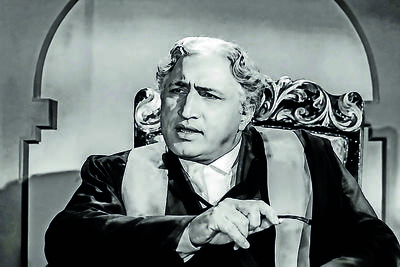
Born in 1912, Wahab Kashmiri studied at Aligarh Muslim University and later became a student leader. After completing his BSc (honours) degree — his son Raja Ibrahim says he took a course in Islamic theology in Cairo — Wahab Kashmiri went to Calcutta, attracted by the politics of Netaji Subash Chandra Bose. But rather than active politics, it was the world of cinema that finally claimed him. In the 1930s, New Theatres in Calcutta emerged as a producer of talkies that created waves across India, with iconic and innovative directors such as Nitin Bose and P C Barua. Wahab Kashmiri was drawn to Bose, whom he became an understudy to and learned the ropes of filmmaking.
Curiously, none of the surviving credits of New Theatres productions from that period carries Wahab Kashmiri’s name. Yet, in an interview published in a film magazine in the 1960s, he described himself as Bose’s first assistant, saying, “He is my guru.”
The opportunity to put his apprenticeship into practice came in 1942, when he was chosen to direct Kannada film ‘Jeevana Nataka’. Produced by celebrated theatre personality Gubbi Veeranna, who also played a prominent role in the film, ‘Jeevana Nataka’ explored the lives of stage actors whose personal conflicts echoed the dramas they performed.
Directing in a language he did not know was a challenge, but Wahab Kashmiri had the screenplay translated into English, while the Kannada dialogues were transliterated into Roman script so he could follow them during filming. Added to this were the shortages and logistical constraints imposed by the Second World War. Despite the obstacles, ‘Jeevana Nataka’, shot at Central Studios in Coimbatore, proved a success and became a milestone in Kannada cinema.
Wahab Kashmiri directed ‘Chitra’ (1946), a film produced by movie mogul T R Sundaram at Salem Modern Theatres . Starring K L V Vasantha, then in great favour with the studio baron, the film is said to have failed despite ‘a racy script’ about cops hunting down a traitor.
If directing Kannada films had broken one frontier, Wahab Kashmiri soon crossed another. S M Nayagam, a Thanjavur-born entrepreneur who had settled in Ceylon (Sri Lanka) and had entered into film production, was impressed by Wahab Kashmiri’s directorial acumen. He employed Wahab Kashmiri to direct the first-ever Sinhala film made in Sri Lanka. ‘ Banda Nagarayata Pemineema ’ (1952) revolved around the humorous cultural clashes, misunderstandings and misadventures of a villager in a new city.
Curiously, Wahab Kashmiri’s directorial chapter ended there, though in the early 1960s he considered reinventing himself as a director with his own production. But the project never took off.
In between, his career as an actor received an unexpected fillip with his debut as the villain in the famous Jupiter Pictures’ ‘Rani’ (1952), starring Bhanumathi in the lead, with S Balachander. Though the film flopped, the performances of Bhanumathi and Wahab Kashmiri won plaudits.
“They are the only ones who enliven the film through their portrayal,” said the film journal ‘Gundusi’. Famous short story writer Jayakanthan , who cast Wahab Kashmiri in his last noticeable role in ‘Yaarukkaaga Azhudhaan’ (1966), felt he had the screen presence Rajinikanth displayed in the early part of his career.
Though Wahab Kashmiri appeared in about a dozen films, including films starring M G Ramachandran and Sivaji Ganesan, most of his roles were little more than fleeting one-scene appearances. The notable exceptions were Kannadasan’s ‘Sivagangai Seemai’ (1959), in which he portrayed an East India Company officer, Colonel Welsh, and Mekala Pictures ‘Kuravanji’, in which he played a dissolute prince.
Wahab Kashmiri married Safeeya Beevi of Pathanamthitta at the Thousand Lights Mosque in Madras in 1953. Interestingly, the bridegroom’s address was that of poet Kannadasan’s residence. Six years later, in 1959, he married Safeeya’s younger sister, Subaida, at Pathanamthitta.
The big turning point in Wahab Kashmiri’s life came in 1967, when he embraced Christianity and, with it, brought his association with cinema to an end. He was baptised as Luther William Kash while his wife took the name Lily. He started the Abraham English Medium Nursery and School first in Sholavandan and later in Vadugapatti, Periyakulam. His son Raja Ibrahim (earlier Luther Abraham Kash) says MGR called on his father during the shooting of ‘Mattukara Velan’ (1970).
In 1979, Wahab Kashmiri had a stroke. He trudged on resolutely for some years, but gave up a few years before his passing in 1989. Truly one of the most remarkable, if now largely forgotten, pioneers of early Indian cinema.
ACTOR, EDUCATIONIST, ENTREPRENEUR
Son of Raja Mohamed Hafeez, belonged to a family whose members were caretakers of the Hazratbal shrine.
From the snow-draped valleys of Uri in Kashmir to the bustling film studios of Salem and Coimbatore in the pioneering decades of the Tamil talkie, Raja Wahab Kashmiri ’s journey was every bit as dramatic as the films he directed. Born on the banks of the Jhelum and laid to rest on the banks of the Varaha in Periyakulam, the gifted director and accomplished actor’s life was criss-crossed by dramatic turns, improbable milestones and changing fortunes.
Born in 1912, Wahab Kashmiri studied at Aligarh Muslim University and later became a student leader. After completing his BSc (honours) degree — his son Raja Ibrahim says he took a course in Islamic theology in Cairo — Wahab Kashmiri went to Calcutta, attracted by the politics of Netaji Subash Chandra Bose. But rather than active politics, it was the world of cinema that finally claimed him. In the 1930s, New Theatres in Calcutta emerged as a producer of talkies that created waves across India, with iconic and innovative directors such as Nitin Bose and P C Barua. Wahab Kashmiri was drawn to Bose, whom he became an understudy to and learned the ropes of filmmaking.
Curiously, none of the surviving credits of New Theatres productions from that period carries Wahab Kashmiri’s name. Yet, in an interview published in a film magazine in the 1960s, he described himself as Bose’s first assistant, saying, “He is my guru.”
The opportunity to put his apprenticeship into practice came in 1942, when he was chosen to direct Kannada film ‘Jeevana Nataka’. Produced by celebrated theatre personality Gubbi Veeranna, who also played a prominent role in the film, ‘Jeevana Nataka’ explored the lives of stage actors whose personal conflicts echoed the dramas they performed.
Directing in a language he did not know was a challenge, but Wahab Kashmiri had the screenplay translated into English, while the Kannada dialogues were transliterated into Roman script so he could follow them during filming. Added to this were the shortages and logistical constraints imposed by the Second World War. Despite the obstacles, ‘Jeevana Nataka’, shot at Central Studios in Coimbatore, proved a success and became a milestone in Kannada cinema.
Wahab Kashmiri directed ‘Chitra’ (1946), a film produced by movie mogul T R Sundaram at Salem Modern Theatres . Starring K L V Vasantha, then in great favour with the studio baron, the film is said to have failed despite ‘a racy script’ about cops hunting down a traitor.
If directing Kannada films had broken one frontier, Wahab Kashmiri soon crossed another. S M Nayagam, a Thanjavur-born entrepreneur who had settled in Ceylon (Sri Lanka) and had entered into film production, was impressed by Wahab Kashmiri’s directorial acumen. He employed Wahab Kashmiri to direct the first-ever Sinhala film made in Sri Lanka. ‘ Banda Nagarayata Pemineema ’ (1952) revolved around the humorous cultural clashes, misunderstandings and misadventures of a villager in a new city.
Curiously, Wahab Kashmiri’s directorial chapter ended there, though in the early 1960s he considered reinventing himself as a director with his own production. But the project never took off.
In between, his career as an actor received an unexpected fillip with his debut as the villain in the famous Jupiter Pictures’ ‘Rani’ (1952), starring Bhanumathi in the lead, with S Balachander. Though the film flopped, the performances of Bhanumathi and Wahab Kashmiri won plaudits.
“They are the only ones who enliven the film through their portrayal,” said the film journal ‘Gundusi’. Famous short story writer Jayakanthan , who cast Wahab Kashmiri in his last noticeable role in ‘Yaarukkaaga Azhudhaan’ (1966), felt he had the screen presence Rajinikanth displayed in the early part of his career.
Though Wahab Kashmiri appeared in about a dozen films, including films starring M G Ramachandran and Sivaji Ganesan, most of his roles were little more than fleeting one-scene appearances. The notable exceptions were Kannadasan’s ‘Sivagangai Seemai’ (1959), in which he portrayed an East India Company officer, Colonel Welsh, and Mekala Pictures ‘Kuravanji’, in which he played a dissolute prince.
Wahab Kashmiri married Safeeya Beevi of Pathanamthitta at the Thousand Lights Mosque in Madras in 1953. Interestingly, the bridegroom’s address was that of poet Kannadasan’s residence. Six years later, in 1959, he married Safeeya’s younger sister, Subaida, at Pathanamthitta.
The big turning point in Wahab Kashmiri’s life came in 1967, when he embraced Christianity and, with it, brought his association with cinema to an end. He was baptised as Luther William Kash while his wife took the name Lily. He started the Abraham English Medium Nursery and School first in Sholavandan and later in Vadugapatti, Periyakulam. His son Raja Ibrahim (earlier Luther Abraham Kash) says MGR called on his father during the shooting of ‘Mattukara Velan’ (1970).
In 1979, Wahab Kashmiri had a stroke. He trudged on resolutely for some years, but gave up a few years before his passing in 1989. Truly one of the most remarkable, if now largely forgotten, pioneers of early Indian cinema.
ACTOR, EDUCATIONIST, ENTREPRENEUR
Son of Raja Mohamed Hafeez, belonged to a family whose members were caretakers of the Hazratbal shrine.
Next Story