
Supreme Court affirms pedestrians' fundamental right to safe footpaths; but cities still squeeze them out


G Ananthakrishnan
After decades of remaining a blind spot of urban policy, pedestrians have taken centrestage, buoyed by the Supreme Court ruling that asserts their fundamental right to safe and well-demarcated footpaths under Article 19(1)(d) of the Constitution.
The court afforded protection to pedestrians in the context of usurpation of walking space by motorised vehicles, and the deadly threat posed by motorists when there is no footpath available. But the order is being posed as an irreconcilable conflict between walkers and street vendors , rather than the dominance of motor vehicles in urban spaces.
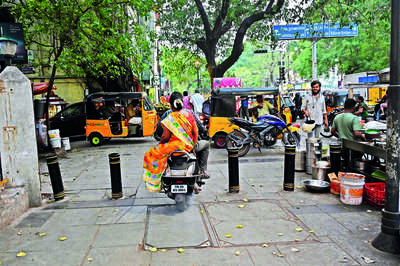
After decades of remaining a blind spot of urban policy, pedestrians have taken centrestage, buoyed by the Supreme Court ruling that asserts their fundamental right to safe and well-demarcated footpaths under Article 19(1)(d) of the Constitution.
The court afforded protection to pedestrians in the context of usurpation of walking space by motorised vehicles, and the deadly threat posed by motorists when there is no footpath available. But the order is being posed as an irreconcilable conflict between walkers and street vendors , rather than the dominance of motor vehicles in urban spaces.
Next Story