
How the Gomti River Shaped Lucknow's Nawabi Soul

A city built on a crescent bend of a river carries the shape of that bend in everything, its oldest neighbourhoods, its grandest gardens, its most repeated metaphors. Lucknow and the Gomti share exactly that kind of relationship: not decoration, but bone structure.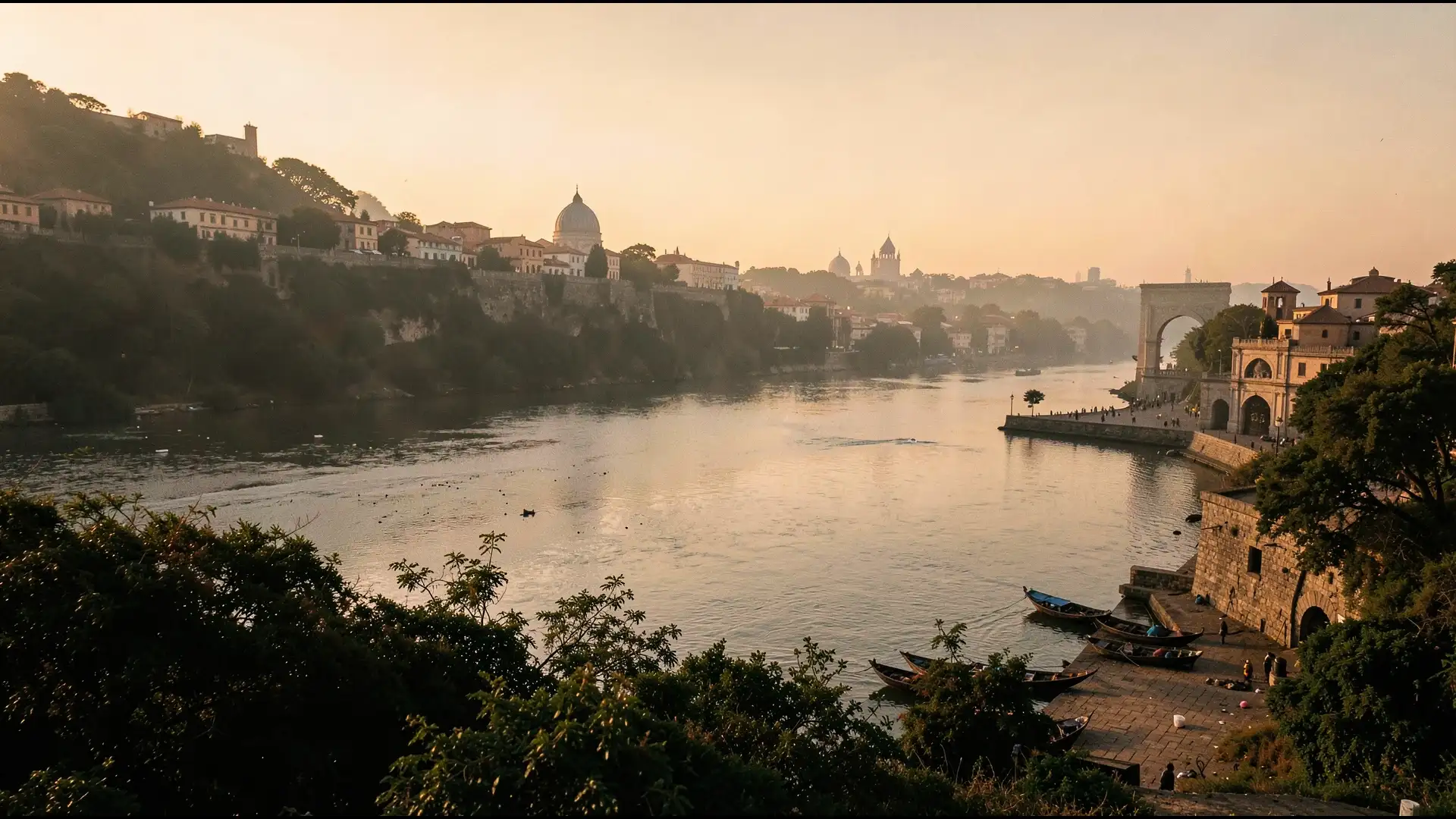
The Lakshman Tila mound, rising near the present-day Husainabad area, marks one such ancient high point. Local tradition holds that Lakshman, younger brother of Ram, rested here, a story that signals how long people have been explaining why this particular bend of the river attracted habitation.
The practical answer is simpler: the bend created a natural moat on three sides, the high bank gave a clear view downstream, and the river itself was the road.
What the Nawabi court added was scale and intention. The Gomti became the front face of power. The Bara Imambara complex, completed in the 1780s under Asaf-ud-Daula, was sited to be seen from the river.
Boats arriving from Faizabad or Jaunpur would have read the skyline of domes and gateways before they saw anything else of the city. The river was the approach, and the approach was theatre.
The Rumi Darwaza, the grand gateway that stands near the Bara Imambara, was built on the land side, but the whole composition of that quarter of the city only makes sense when you understand that the river was the audience.
Gardens, pavilions, and ghats were arranged for a view from the water as much as from the street.
Persian garden design, which the Nawabs inherited through Mughal precedent, required water as its central element. The Gomti made that element available at a scale the city could use.
The ghats along the river were not only for ritual bathing, though they served that purpose too. They were social ground, the place where washermen worked, where fisherfolk kept their boats, where the city's daily commerce moved between the bank and the water.
The ghat at Lakshman Tila and the ghats near the old city quarters were, for centuries, as much a part of Lucknow's daily life as any bazaar.
The poets of the Lucknow school, working through the late Nawabi period and into the colonial era, returned to the Gomti the way poets return to any image that holds more than one feeling at once: loss and continuity, the local and the vast.
After 1857, when the Nawabi order collapsed and the city was remade under British administration, the Gomti remained the one constant that connected the old Lucknow to whatever came after.
The ghats, the bend of the river, the morning light on the water, these survived the political rupture that erased so much else.
The high southern bank still holds the oldest quarters. The sightlines that the Nawabi builders calculated, from water to dome, from gate to river, still work, even where the intervening space has filled with later construction.
The Gomti is narrower and shallower than it was in the eighteenth century; that is a separate and ongoing story. But the shape it pressed into the city, the reason this neighbourhood sits here and that gateway faces that direction, is permanent in the way that geography always is. Rivers do not just run through cities.
Where the River Drew the First Lines
The earliest settlements along what is now Lucknow clustered on the high southern bank of the Gomti, where the ground stayed above the monsoon flood line.The Lakshman Tila mound, rising near the present-day Husainabad area, marks one such ancient high point. Local tradition holds that Lakshman, younger brother of Ram, rested here, a story that signals how long people have been explaining why this particular bend of the river attracted habitation.
The practical answer is simpler: the bend created a natural moat on three sides, the high bank gave a clear view downstream, and the river itself was the road.
The Nawabs and the River They Inherited
When the Nawabs of Awadh made Lucknow their capital in the eighteenth century, they did not find a blank landscape. They found a river town with existing trade routes and a population already organised around the Gomti's rhythms.What the Nawabi court added was scale and intention. The Gomti became the front face of power. The Bara Imambara complex, completed in the 1780s under Asaf-ud-Daula, was sited to be seen from the river.
Boats arriving from Faizabad or Jaunpur would have read the skyline of domes and gateways before they saw anything else of the city. The river was the approach, and the approach was theatre.
The Rumi Darwaza, the grand gateway that stands near the Bara Imambara, was built on the land side, but the whole composition of that quarter of the city only makes sense when you understand that the river was the audience.
Gardens, pavilions, and ghats were arranged for a view from the water as much as from the street.
Water, Gardens, and the Nawabi Idea of Pleasure
The Gomti fed something more than crops and trade. It fed the Nawabi imagination of what a cultivated life looked like. The great gardens of Lucknow, the Sikander Bagh, the Dilkusha, others that survive only in name, depended on proximity to the river for their irrigation channels and for the cooling effect that made an afternoon in a pavilion bearable through the hot months.Persian garden design, which the Nawabs inherited through Mughal precedent, required water as its central element. The Gomti made that element available at a scale the city could use.
The ghats along the river were not only for ritual bathing, though they served that purpose too. They were social ground, the place where washermen worked, where fisherfolk kept their boats, where the city's daily commerce moved between the bank and the water.
The ghat at Lakshman Tila and the ghats near the old city quarters were, for centuries, as much a part of Lucknow's daily life as any bazaar.
The Gomti in Lucknow's Poetry and Memory
No river that runs through a city of poets escapes becoming a metaphor. The Gomti appears in Urdu ghazals and elegies not as backdrop but as participant, the river that received the city's grief, that carried away what could not be kept, that kept moving when the city was forced to stop.The poets of the Lucknow school, working through the late Nawabi period and into the colonial era, returned to the Gomti the way poets return to any image that holds more than one feeling at once: loss and continuity, the local and the vast.
After 1857, when the Nawabi order collapsed and the city was remade under British administration, the Gomti remained the one constant that connected the old Lucknow to whatever came after.
The ghats, the bend of the river, the morning light on the water, these survived the political rupture that erased so much else.
What the River Leaves Behind
Walk the stretch of the Gomti between the Lakshman Tila ghat and the Hardoi Road bridge today and the layers are still visible, if you know what you are looking at.The high southern bank still holds the oldest quarters. The sightlines that the Nawabi builders calculated, from water to dome, from gate to river, still work, even where the intervening space has filled with later construction.
The Gomti is narrower and shallower than it was in the eighteenth century; that is a separate and ongoing story. But the shape it pressed into the city, the reason this neighbourhood sits here and that gateway faces that direction, is permanent in the way that geography always is. Rivers do not just run through cities.
Next Story