
Banarasi Paan: What Makes Varanasi's Paan Truly Different

The leaf does most of the work before anything goes inside it. Banarasi paan famously uses the Magahi variety of betel leaf, cultivated in the alluvial soil of Bihar’s Magadh belt and brought fresh to Varanasi’s wholesale markets. The leaf is thinner, softer, and less pungent than the varieties used in Kolkata or Mumbai paan. Chew it plain and it leaves a mild sweetness, almost no bitterness. That gentleness is the foundation everything else is built on.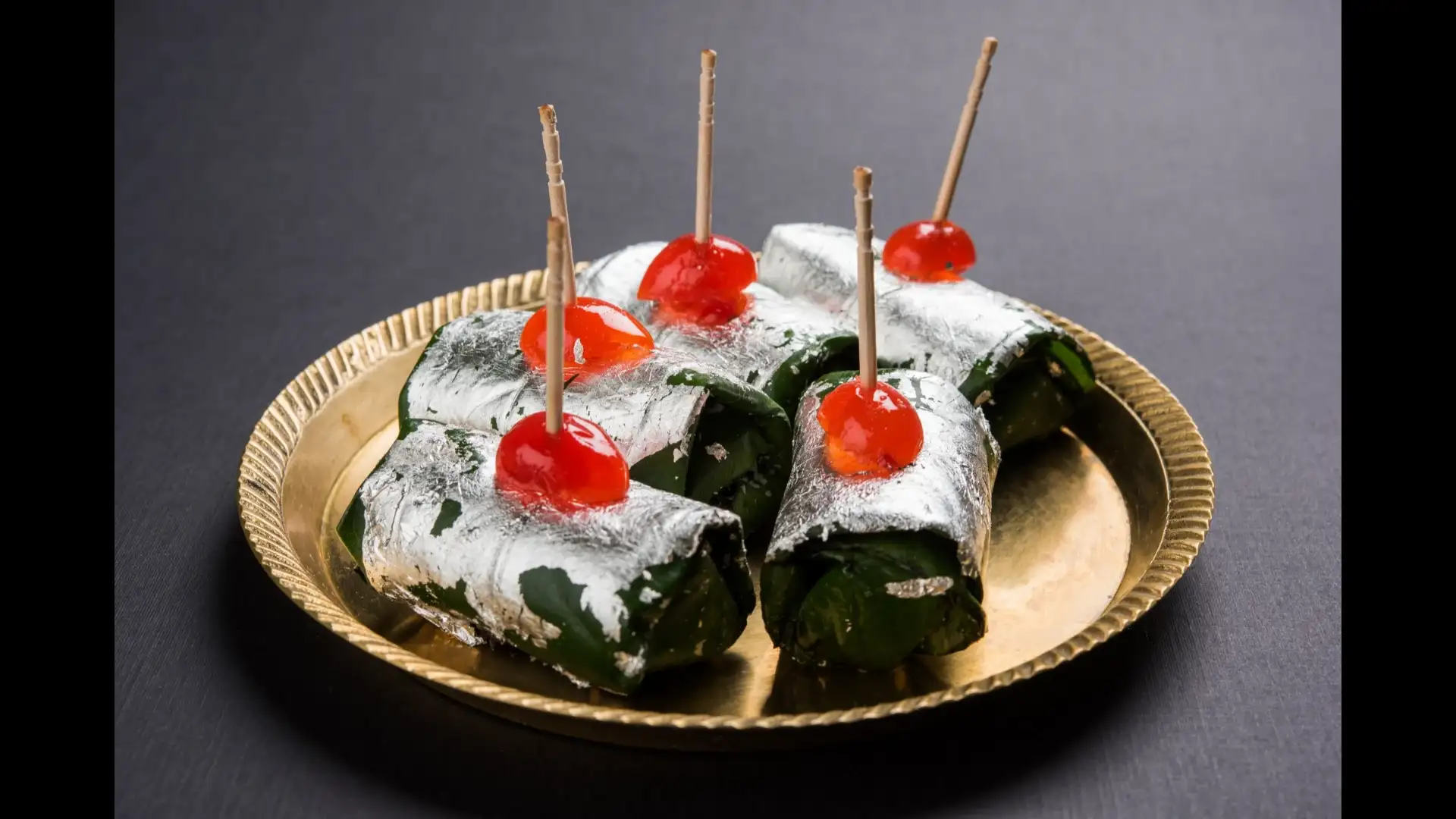
The leaf that comes out of this system is pale green, almost translucent at the edges, and pliable enough to fold without cracking. A paan-wallah in Varanasi will press a leaf between two fingers to test it before buying a batch. If it tears, the whole batch is set aside.
Together they trigger the mild stimulant reaction that paan is known for and give the mouth its characteristic red tinge. Over this goes a precise arrangement: gulkand, which is a preserve of rose petals slow-cooked with sugar; fennel seeds; cardamom; and cloves.
Some shops add a sliver of coconut or a small amount of murabba, a fruit preserve. The paan is then folded into a tight triangle and sometimes finished with a silver or gold leaf pressed onto the outside.
The order of layering is not decoration, each ingredient sits where it does because of when it dissolves against the cheek and how it mixes with saliva as the paan is chewed down.
The craft is not written down anywhere. A son watches a father for years before he is trusted with the chuna spreading, because too much burns the mouth and too little leaves the paan flat.
The ratio of gulkand to katha is adjusted by season: in summer, more gulkand for sweetness and cooling; in winter, more katha and a heavier hand with cloves. This seasonal calibration is entirely by feel and by the paan-wallah's reading of the weather that morning.
There is no elaborate menu or seating. You ask for meetha, the paan-wallah prepares it to order, and you eat it standing at the counter. That is the entire transaction, and it has remained the same for decades.
The gulkand can be sourced, the chuna can be mixed, the katha can be packed and shipped, but the leaf that arrives fresh in Varanasi’s mandi from a bareja in Bihar’s Magadh belt and gets cured locally is not the same leaf that lands in a Delhi market days later.
The paan is inseparable from the supply chain that keeps it fresh, and that supply chain is local by necessity. Every version made elsewhere is an approximation of the original, built on a leaf that has already started to change.
The Leaf and the Soil Behind It
Magahi betel leaves are grown in a belt of land where the soil holds moisture without waterlogging, and where winter temperatures stay cool enough to slow the leaf's growth and concentrate its oils. Growers cover the vines with thatched structures called bareja to protect them from direct sun.The leaf that comes out of this system is pale green, almost translucent at the edges, and pliable enough to fold without cracking. A paan-wallah in Varanasi will press a leaf between two fingers to test it before buying a batch. If it tears, the whole batch is set aside.
What Goes Inside, and Why the Order Matters
The classic meetha paan of Varanasi layers katha and chuna first, spread thin across the leaf's surface. Katha is a dark paste made from the heartwood of the khair tree; chuna is slaked lime.Together they trigger the mild stimulant reaction that paan is known for and give the mouth its characteristic red tinge. Over this goes a precise arrangement: gulkand, which is a preserve of rose petals slow-cooked with sugar; fennel seeds; cardamom; and cloves.
Some shops add a sliver of coconut or a small amount of murabba, a fruit preserve. The paan is then folded into a tight triangle and sometimes finished with a silver or gold leaf pressed onto the outside.
The order of layering is not decoration, each ingredient sits where it does because of when it dissolves against the cheek and how it mixes with saliva as the paan is chewed down.
The Paan-Wallah as a Practitioner
The paan shops of Varanasi's old lanes, particularly around Godaulia, Vishwanath Gali, and Dasaswamedh, are often family businesses passed through several generations.The craft is not written down anywhere. A son watches a father for years before he is trusted with the chuna spreading, because too much burns the mouth and too little leaves the paan flat.
The ratio of gulkand to katha is adjusted by season: in summer, more gulkand for sweetness and cooling; in winter, more katha and a heavier hand with cloves. This seasonal calibration is entirely by feel and by the paan-wallah's reading of the weather that morning.
One Real Place Worth Knowing
Keshav Tambul Bhandar in Varanasi’s Lanka area, near Banaras Hindu University, is one of the city's best-known historic paan shops, celebrated for a meetha paan that has remained largely unchanged across generations.There is no elaborate menu or seating. You ask for meetha, the paan-wallah prepares it to order, and you eat it standing at the counter. That is the entire transaction, and it has remained the same for decades.
Why Other Cities Cannot Copy It Exactly
Attempts to replicate Banarasi paan in Delhi or Mumbai run into the same problem: the Magahi leaf does not travel well. It begins to toughen within a day or two of being cut from the vine, and the refrigeration that extends its life also dulls its flavour.The gulkand can be sourced, the chuna can be mixed, the katha can be packed and shipped, but the leaf that arrives fresh in Varanasi’s mandi from a bareja in Bihar’s Magadh belt and gets cured locally is not the same leaf that lands in a Delhi market days later.
The paan is inseparable from the supply chain that keeps it fresh, and that supply chain is local by necessity. Every version made elsewhere is an approximation of the original, built on a leaf that has already started to change.
Next Story