
Why Hyderabad Is Called the City of Pearls

Long before its famous cuisine and sprawling tech corridors, Hyderabad was a city that smelled of saltwater in a place nowhere near the coast. Pearls arrived here in such quantities, and were cut, drilled, and sold here so reliably, that the city became the address the world's pearl trade used for centuries.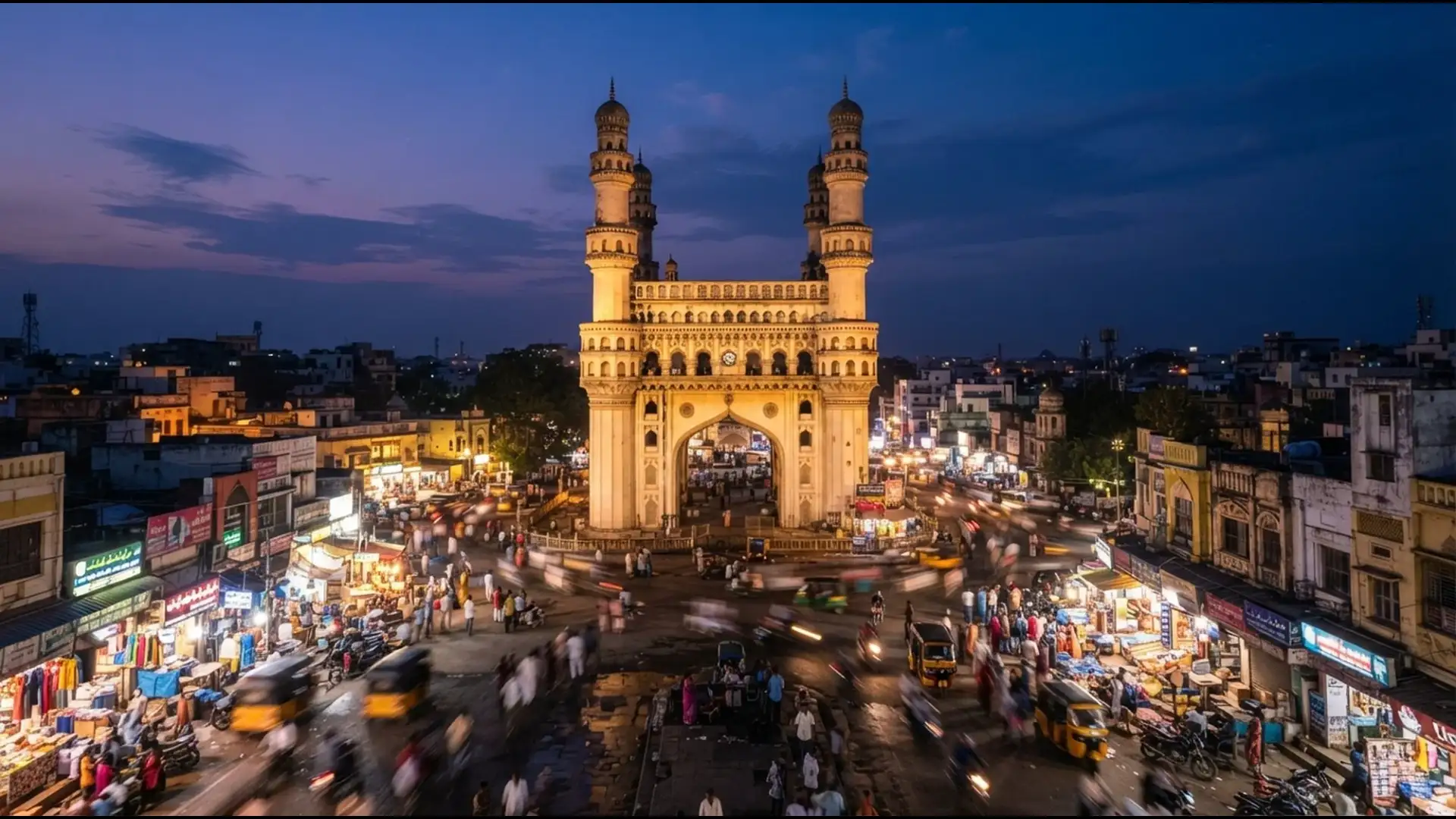
The Golconda Sultanate, which controlled the Deccan plateau from the mid-sixteenth century, was already famous for diamonds mined at Kollur and Paritala.
Pearls were the natural companion trade. By the time the Nizams of Hyderabad inherited the city in the early eighteenth century, the pearl market was already a fixture, and the Nizams made it grander still.
A court that bought pearls by the kilogram attracted every serious merchant. Second, Hyderabad had a community of skilled craftsmen, sorters, drillers, stringers, whose expertise was inherited across generations.
Sorting alone was a specialised art: pearls were graded by size through a set of graduated sieves called chalni, and a trained eye could read lustre, orient, and roundness in seconds. Third, the city's position at the crossroads of Deccan trade routes made it easier to reach than any coastal port for merchants coming from the north and the interior.
The lanes around Laad Bazaar, still standing, still selling bangles and jewellery, were where pearl strings changed hands.
A buyer could walk from a wholesaler carrying Gulf pearls to a craftsman who would drill and string them to order, to a retailer who would sell the finished piece to a Hyderabadi bride's family, all within a few hundred metres.
The Charminar itself, built in 1591 by Muhammad Quli Qutb Shah, stands at the centre of this old commercial district, and its image became inseparable from the city's identity as a place of beautiful, costly things.
A cultured pearl, grown by inserting an irritant into a farmed oyster, could be produced in volume and sold at a fraction of the price of a wild-harvested one.
The Gulf diving trade collapsed. Hyderabad's wholesale market contracted sharply. But the craftsmen stayed, the bazaars stayed, and the reputation stayed. Laad Bazaar still draws buyers looking for pearl jewellery.
The drilling and stringing workshops in the lanes off Patthargatti still operate, though the pearls now arrive from Japanese and South Sea cultured beds as well as Chinese freshwater farms rather than from wild Gulf oysters.
The nickname outlasted the trade that earned it because a city's character, once set by a century of concentrated craft and commerce, does not reset when the economics shift.
Hyderabad was called the City of Pearls because it was genuinely the place where the world's pearl trade came to be finished and sold. The lane where that happened is still there, and the skill that made it matter is still being passed down, even if the oysters are now farmed.
Where the Pearls Came From
Hyderabad has no coastline. The pearls did not come from its rivers. They came from the Persian Gulf, from the oyster beds off Bahrain, Kuwait, and the Trucial Coast, carried overland and by sea to a city that had the buyers, the craftsmen, and the rulers willing to pay extraordinary sums for the finest specimens.The Golconda Sultanate, which controlled the Deccan plateau from the mid-sixteenth century, was already famous for diamonds mined at Kollur and Paritala.
Pearls were the natural companion trade. By the time the Nizams of Hyderabad inherited the city in the early eighteenth century, the pearl market was already a fixture, and the Nizams made it grander still.
What Made Hyderabad the Right City
Three things concentrated the trade here rather than at a port. First, the Nizams were among the wealthiest rulers in the world and were themselves obsessive collectors of jewellery.A court that bought pearls by the kilogram attracted every serious merchant. Second, Hyderabad had a community of skilled craftsmen, sorters, drillers, stringers, whose expertise was inherited across generations.
Sorting alone was a specialised art: pearls were graded by size through a set of graduated sieves called chalni, and a trained eye could read lustre, orient, and roundness in seconds. Third, the city's position at the crossroads of Deccan trade routes made it easier to reach than any coastal port for merchants coming from the north and the interior.
Charminar and the Bazaars Around It
The trade had a geography. The neighbourhood of Patthargatti, running north from the Charminar, was the heart of it. Merchants from Persia and Arabia rented rooms in the caravanserais nearby.The lanes around Laad Bazaar, still standing, still selling bangles and jewellery, were where pearl strings changed hands.
A buyer could walk from a wholesaler carrying Gulf pearls to a craftsman who would drill and string them to order, to a retailer who would sell the finished piece to a Hyderabadi bride's family, all within a few hundred metres.
The Charminar itself, built in 1591 by Muhammad Quli Qutb Shah, stands at the centre of this old commercial district, and its image became inseparable from the city's identity as a place of beautiful, costly things.
The Trade's Decline and What Remained
The cultured pearl, developed in Japan in the early twentieth century, combined with the global economic crash of the 1930s, broke the economics of natural pearl trading everywhere in the world.A cultured pearl, grown by inserting an irritant into a farmed oyster, could be produced in volume and sold at a fraction of the price of a wild-harvested one.
The Gulf diving trade collapsed. Hyderabad's wholesale market contracted sharply. But the craftsmen stayed, the bazaars stayed, and the reputation stayed. Laad Bazaar still draws buyers looking for pearl jewellery.
The drilling and stringing workshops in the lanes off Patthargatti still operate, though the pearls now arrive from Japanese and South Sea cultured beds as well as Chinese freshwater farms rather than from wild Gulf oysters.
The nickname outlasted the trade that earned it because a city's character, once set by a century of concentrated craft and commerce, does not reset when the economics shift.
Hyderabad was called the City of Pearls because it was genuinely the place where the world's pearl trade came to be finished and sold. The lane where that happened is still there, and the skill that made it matter is still being passed down, even if the oysters are now farmed.
Next Story