
India signed mobility pacts with 26 countries, says EAM S Jaishankar


New Delhi, India has signed 28 Migration and Mobility Partnership Agreements (MMPAs) or their equivalents with 26 countries and negotiations are underway with several others, External Affairs Minister S Jaishankar said on Tuesday.
In his address at Human Resource Mobility Forum hosted by the Ministry of External Affair here, Jaishankar also underlined the importance of collective responsibility of nations to combat illegal migration and human trafficking, and asserted that "trusted mobility pathways" can contribute to stronger economies.
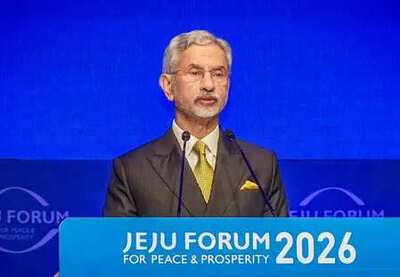
He said New Delhi views mobility as a "very important pillar" of international cooperation, adding these partnerships are based on "mutual benefit, shared responsibility, and long-term sustainability".
When managed effectively, such partnerships create value for the source countries, the destination countries, and for employers, workers, and for the communities, the external affairs minister (EAM) said.
"We also recognise the need for bilateral collaborations in ensuring safe, orderly and legal migration. As on date India has signed 28 Migration and Mobility Partnership Agreements (MMPAs) or their equivalents with 26 countries and several others are currently under negotiation," he said.
Jaishankar said that equally important is the collective responsibility of nations to combat illegal migration, exploitative practices, fraudulent intermediaries, and human trafficking.
"These challenges compromise the credibility of legal mobility ecosystems and can place vulnerable individuals at risk," the EAM said.
Several policymakers, industry leaders, employers, and practitioners have gathered for the Forum that seeks to offer opportunities to exchange ideas, learn from experiences, and explore new approaches towards mobility.
Jaishankar said the world is undergoing a "profound transformation", and as part of that, demographic patterns are changing sharply across continents.
Technological innovation is reshaping industries at an unprecedented pace. Artificial intelligence, automation, digitalisation, and green transition are also redefining skills that are required for tomorrow's economy, he said.
"But the challenges of yesteryears also remain with us, be they of health, manufacturing, construction or agriculture. At the same time, societies are becoming increasingly interconnected, and the ability of nations to think creatively will significantly influence their prospects for future prosperity," he underlined.
Human resource mobility therefore represents far more than the movement of people from one place to another. It is about "connecting aspirations with opportunities", linking "talent with demand".
"It is about creating pathways through which individuals can contribute to economic progress, and this is the bottomline; it is both economic growth and social wellbeing that we are talking about," he added.
The EAM said India's vision for mobility is "not limited to facilitating overseas employment opportunities".
"We in fact view mobility as a very important pillar of international cooperation. These partnerships are based on mutual benefit, shared responsibility, and long-term sustainability.
"India's commitment to safe and legal mobility is reflected in the eMigrate platform. And since its inception, more than 50 lakh, i.e. five million emigration clearances have been issued. This digital ecosystem has become a global example of leveraging technology to protect migrant workers while facilitating mobility," he said.
The green economy will create demands for new skills and capabilities. But, the orthodox demands also continue. Healthcare and care giving services will become especially important with ageing populations. So the "silver economy" is as important as the tech one", he added.
In his address, Jaishankar also underlined that "we must ensure that workers are prepared not just for today's opportunities, but also for the demands of tomorrow".
On the Forum, he said, such a dialogue is "essential because the opportunities and challenges associated with mobility transcend national boundaries".
"No country can address them in isolation. And no department within the government similarly can do it alone," the EAM said.
In his address at Human Resource Mobility Forum hosted by the Ministry of External Affair here, Jaishankar also underlined the importance of collective responsibility of nations to combat illegal migration and human trafficking, and asserted that "trusted mobility pathways" can contribute to stronger economies.
He said New Delhi views mobility as a "very important pillar" of international cooperation, adding these partnerships are based on "mutual benefit, shared responsibility, and long-term sustainability".
When managed effectively, such partnerships create value for the source countries, the destination countries, and for employers, workers, and for the communities, the external affairs minister (EAM) said.
"We also recognise the need for bilateral collaborations in ensuring safe, orderly and legal migration. As on date India has signed 28 Migration and Mobility Partnership Agreements (MMPAs) or their equivalents with 26 countries and several others are currently under negotiation," he said.
Jaishankar said that equally important is the collective responsibility of nations to combat illegal migration, exploitative practices, fraudulent intermediaries, and human trafficking.
"These challenges compromise the credibility of legal mobility ecosystems and can place vulnerable individuals at risk," the EAM said.
Several policymakers, industry leaders, employers, and practitioners have gathered for the Forum that seeks to offer opportunities to exchange ideas, learn from experiences, and explore new approaches towards mobility.
Jaishankar said the world is undergoing a "profound transformation", and as part of that, demographic patterns are changing sharply across continents.
Technological innovation is reshaping industries at an unprecedented pace. Artificial intelligence, automation, digitalisation, and green transition are also redefining skills that are required for tomorrow's economy, he said.
"But the challenges of yesteryears also remain with us, be they of health, manufacturing, construction or agriculture. At the same time, societies are becoming increasingly interconnected, and the ability of nations to think creatively will significantly influence their prospects for future prosperity," he underlined.
Human resource mobility therefore represents far more than the movement of people from one place to another. It is about "connecting aspirations with opportunities", linking "talent with demand".
"It is about creating pathways through which individuals can contribute to economic progress, and this is the bottomline; it is both economic growth and social wellbeing that we are talking about," he added.
The EAM said India's vision for mobility is "not limited to facilitating overseas employment opportunities".
"We in fact view mobility as a very important pillar of international cooperation. These partnerships are based on mutual benefit, shared responsibility, and long-term sustainability.
"India's commitment to safe and legal mobility is reflected in the eMigrate platform. And since its inception, more than 50 lakh, i.e. five million emigration clearances have been issued. This digital ecosystem has become a global example of leveraging technology to protect migrant workers while facilitating mobility," he said.
The green economy will create demands for new skills and capabilities. But, the orthodox demands also continue. Healthcare and care giving services will become especially important with ageing populations. So the "silver economy" is as important as the tech one", he added.
In his address, Jaishankar also underlined that "we must ensure that workers are prepared not just for today's opportunities, but also for the demands of tomorrow".
On the Forum, he said, such a dialogue is "essential because the opportunities and challenges associated with mobility transcend national boundaries".
"No country can address them in isolation. And no department within the government similarly can do it alone," the EAM said.
Next Story