
Degrees or Skills? What Truly Matters in Today’s Job Market

In today’s fast changing time, education is no longer limited to textbooks and classrooms. With evolving industries and new career paths, the debate between skill based knowledge and degree based education has become more relevant than ever. While degrees have been considered a symbol of success, practical skills are now gaining equal if not more importance in the job market .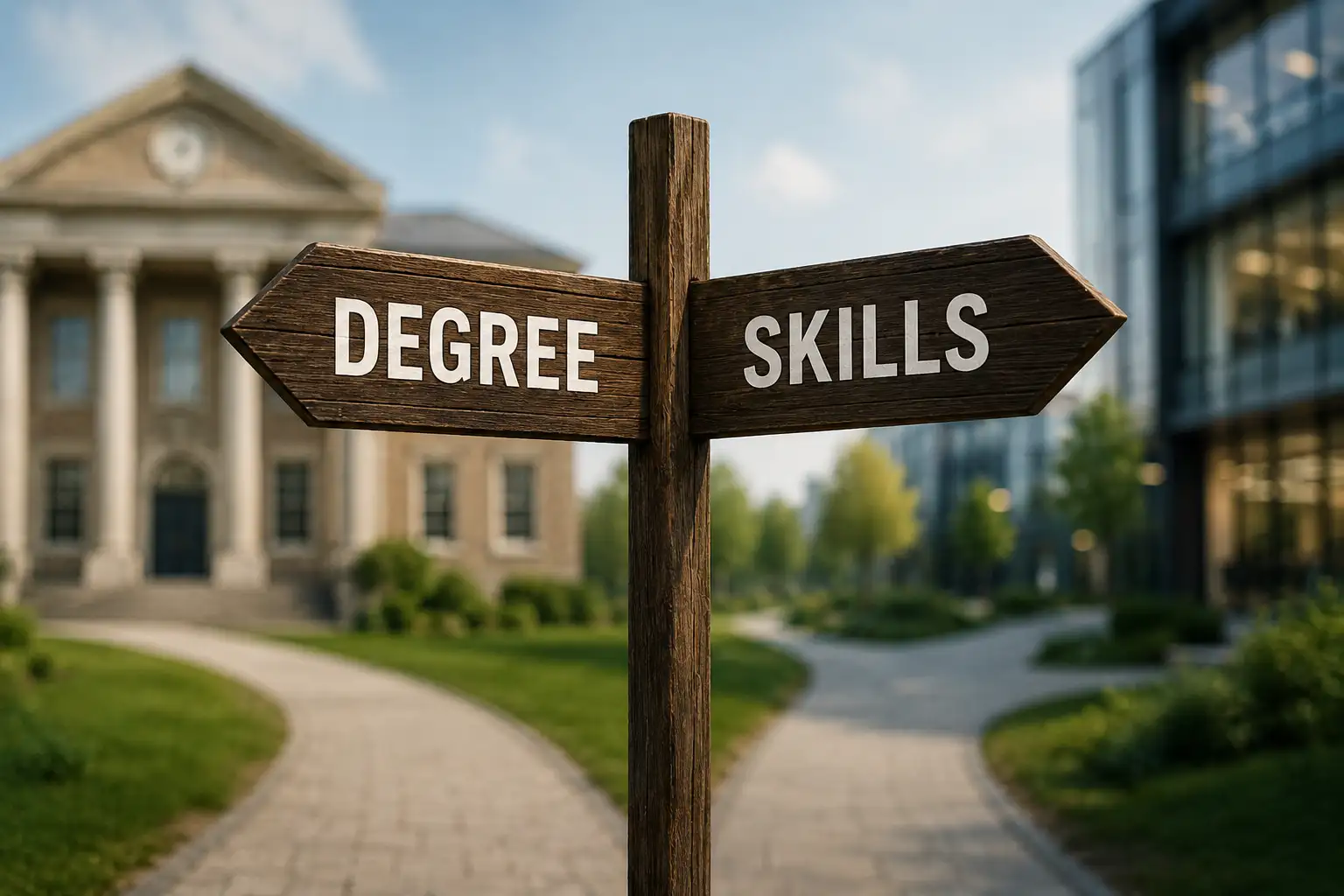
The future of education lies in blending degree-based learning with skill-based knowledge. While degrees still hold importance in many fields, skills are what truly drive success in today’s competitive world. Education should focus not only on earning certificates but also on building abilities that help individuals grow, adapt, and thrive in real life.
Understanding Degree-based education
Degree based education focuses on formal education earned through schools, college and universities. It just provides structured learning, theoretical knowledge and recognized certifications. Degrees help build an academic career and are often required for professionals. However many degree programs emphasise theory more than real world application.What is skill based Knowledge ?
Skill based education focuses on learning abilities that can actually be a part of real life situations. These skills can include communication, coding, design, and digital marketing. Skills are often learned through hands-on training, online courses, internships, workshops and real work experience.You may also like
- Why is CA Day celebrated on July 1? History, significance, theme, date and key facts explained
- Indian-American groups, lawmakers welcome US Supreme Court birthright citizenship ruling
- Four Indian Americans named to Carnegie's Great Immigrants list for 2026
- Japan visa rules push out foreign residents
- Kerala-born Alhind to handle visa, passport & consular matters for Indians in UAE
Employability: Skills vs Degrees
Today, employers are increasingly looking for what a candidate can do better rather than just a certificate they hold. A person with strong and relevant skills can often outperform someone with only a degree but limited practical exposure. Skills make individuals job ready, adaptable and confident in handling real workplace challenges.Accessibility and cost factor
Degree based education often requires significant time and financial investment. In contrast, skill based learning is usually more affordable and flexible. Many skills can be learned online or through short term courses, making education more accessible to a wider population, including those who cannot afford long term academic programs.The Ideal Balance Between Skills and Degrees
it is difficult to choose between one and another, the best approach is to create a balance between both. Degrees provide foundational knowledge and credibility, while skills and practical value. when combined, they create well-rounded individuals who are both knowledgeable and capable.The future of education lies in blending degree-based learning with skill-based knowledge. While degrees still hold importance in many fields, skills are what truly drive success in today’s competitive world. Education should focus not only on earning certificates but also on building abilities that help individuals grow, adapt, and thrive in real life.






More from our partners


Loving Newspoint? Download the app now
