
Why India Is Classified As A Subcontinent And Not Just A Country

Many geography students often ask: Why is India called a subcontinent ? The answer lies in its extraordinary geography, climate, biodiversity and demographic weight. Although India is part of the Asian continent, it stands out as a distinct and self-contained region known as the Indian subcontinent .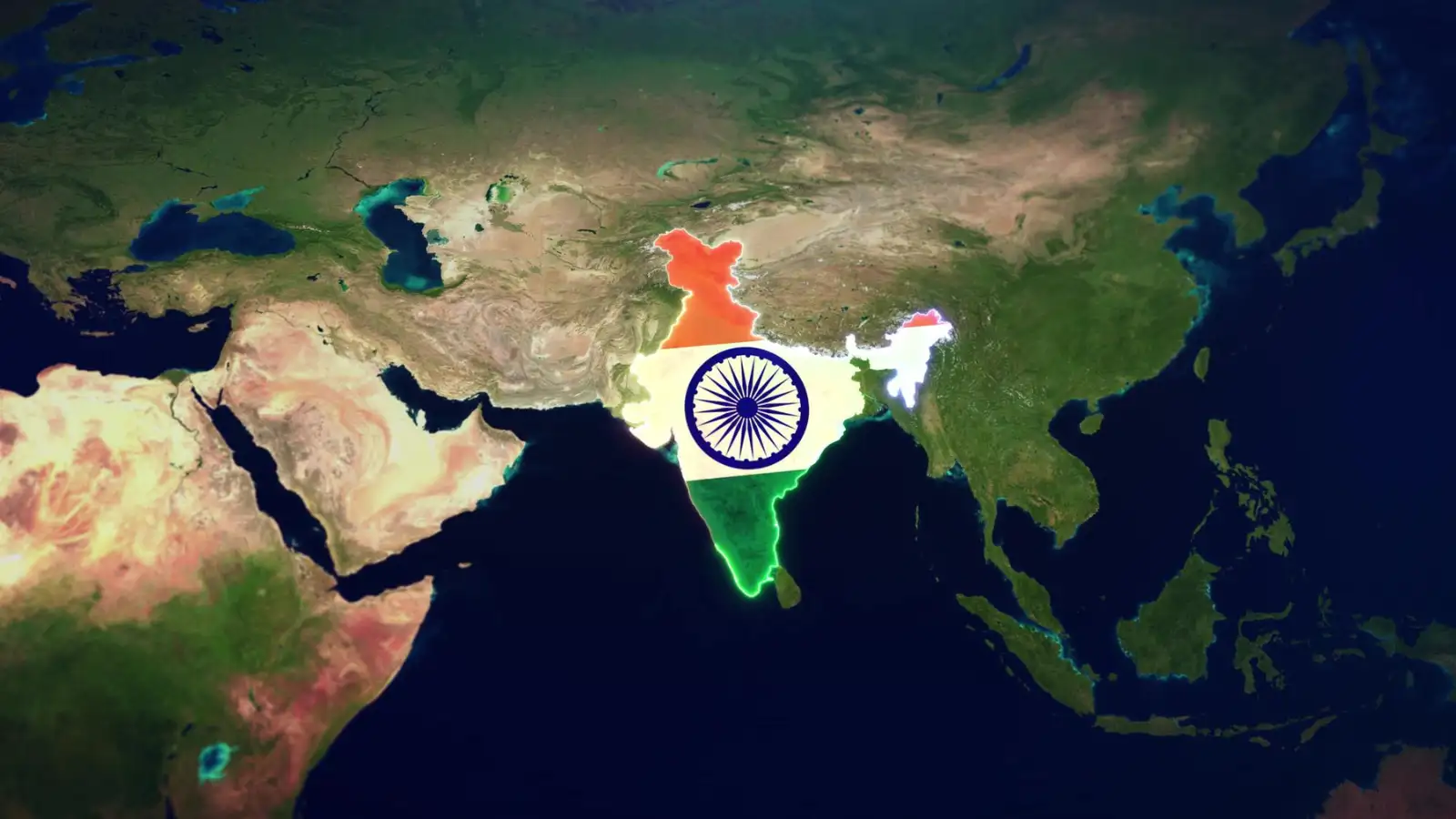
One of the primary reasons India is called a subcontinent is its vast territorial size. Covering nearly 3.8 million square kilometres, India is comparable in scale to Europe. A subcontinent must be a large, clearly distinguishable landmass within a continent, and India meets this geographical requirement convincingly.
Natural boundaries further strengthen this classification. The Arabian Sea to the west, the Bay of Bengal to the east and the Indian Ocean to the south create clear maritime borders. To the north, the Himalayas form a dramatic physical barrier. This Himalayan wall has historically limited land movement from Central Asia, allowing the Indian subcontinent to evolve with relative geographic isolation.
One of the primary reasons India is called a subcontinent is its vast territorial size. Covering nearly 3.8 million square kilometres, India is comparable in scale to Europe. A subcontinent must be a large, clearly distinguishable landmass within a continent, and India meets this geographical requirement convincingly.
Natural boundaries further strengthen this classification. The Arabian Sea to the west, the Bay of Bengal to the east and the Indian Ocean to the south create clear maritime borders. To the north, the Himalayas form a dramatic physical barrier. This Himalayan wall has historically limited land movement from Central Asia, allowing the Indian subcontinent to evolve with relative geographic isolation.
Next Story