
Word Of The Day: Énouement - Meaning, Usage And Examples

Remember those times when we used to imagine who we might become one day and what our future would look like? But when that future finally arrives, we realize that it rarely turns out the way we once pictured it. It hits us with a strange feeling when we become aware that the future we once dreamed about has now become the present. This present carries its own meaning, lessons, and beauty. Some dreams changed, some never came true, and some became something entirely different. That mix of reflection, realisation and acceptance is known as énouement.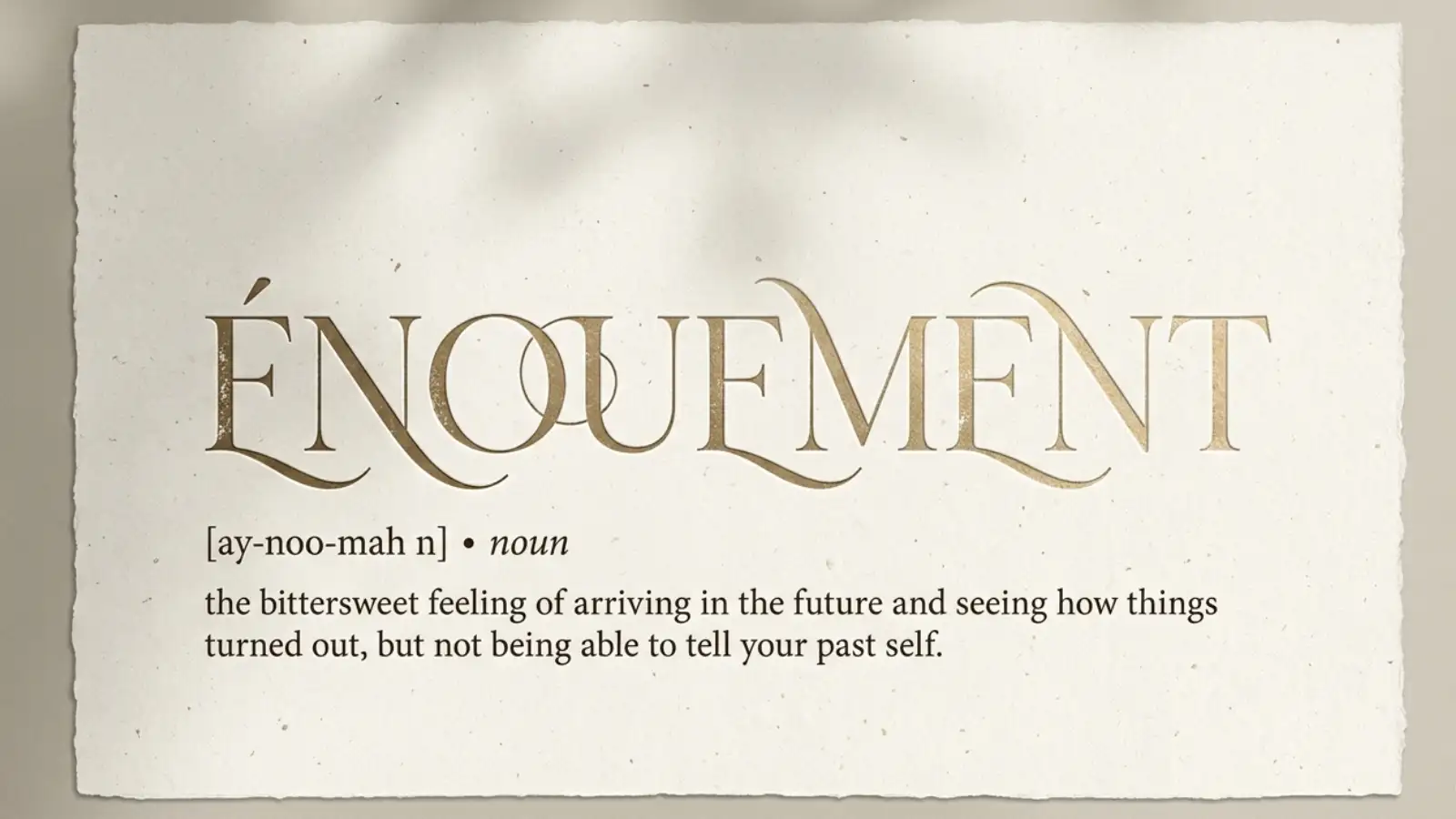
The meaning of this word is “the bittersweetness of having arrived here in the future”. It simply reflects the emotions a person feels when they realise that the future they once dreamed about has finally become reality. It captures the emotion or feeling of meeting your future self and noticing what has changed, what has remained the same, and what never came to pass. The word may sound familiar because it resembles “denouement”, which means “the conclusion or resolution of a plot”.
The phonetic spelling is /eɪˈnuːmɑːnt/.
How Can You Use 'Énouement' In A Sentence
It is a powerful word used to describe a deeply personal emotional realization or reflection, so it should not be used casually for someone else’s story. Énouement is less about what happened, and more about how it feels to finally see it clearly.
The meaning of this word is “the bittersweetness of having arrived here in the future”. It simply reflects the emotions a person feels when they realise that the future they once dreamed about has finally become reality. It captures the emotion or feeling of meeting your future self and noticing what has changed, what has remained the same, and what never came to pass. The word may sound familiar because it resembles “denouement”, which means “the conclusion or resolution of a plot”.
Origin
Énouement is inspired by the French word ‘Dénouement’, which refers to the final resolution of a story. However, ‘Énouement ’ itself is a newly invented word styled to resemble a French word. It was created by John Koenig for The Dictionary of Obscure Sorrows to describe complex human emotions that lack exact words in everyday vocabulary. The word reflects a personal realisation of how one’s own life story has unfolded. Although Énouement might sound French, it is not a French term but a modern invented expression.You may also like
- Countries scramble to track passengers of virus-hit cruise ship
- West Bengal Board High Madrasah, Alim, Fazil results 2026 releasing tomorrow: Check how to download scorecards
- UPSC NDA 1 Result 2026: NDA-1 Results to be Released Soon; Download the PDF Here from upsc.gov.in..
- CBSE 12th Results 2026: Only a Few Days Remain Until the CBSE Class 12 Results; Here Are 5 Ways to Check Your Scores..
- AP ECET 2026 result out today, rank cards to be released at cets.apsche.ap.gov.in, counselling to begin in June
Pronunciation Of Énouement
It is pronounced as ay-NOO-mahnt.The phonetic spelling is /eɪˈnuːmɑːnt/.
Synonyms Of Énouement
- Reflection
- Wistfulness
- Bittersweetness
- Realization
- Perspective
Antonyms Of Énouement
- Uncertainty
- Confusion
- AImlessness
- Detachment
- Indifference
How Can You Use 'Énouement' In A Sentence
- She felt a wave of énouement at her school reunion.
- Looking around his quiet apartment, he sensed énouement more than regret.
- Birthdays sometimes bring a touch of énouement.
- There was an énouement in realizing life became gentler than expected.
- He smiled with énouement at the dreams that had changed.
Avoid These Mistakes
While using this word, avoid applying it to simple nostalgia, as ‘Énouement’ is not just about missing the past. It specifically refers to reaching the future you once imagined and reflecting on it. Although the word can carry a sense of disappointment, avoid confusing it with regret, as it is not entirely negative. It relates to personal expectations and present reality rather than random twists or unexpected life events. Also, avoid treating it as an official ancient French word, because it is actually a modern term that only appears French.It is a powerful word used to describe a deeply personal emotional realization or reflection, so it should not be used casually for someone else’s story. Énouement is less about what happened, and more about how it feels to finally see it clearly.






More from our partners


Loving Newspoint? Download the app now
