
10 Most Rewatchable Shonen Anime, Ranked

Anime has room for almost every kind of story, but shonen series continue to command enormous attention with their combination of action, emotion and memorable characters. While the era of endlessly running hundreds of episodes is fading, the genre's biggest titles remain remarkably durable. Some shows become more rewarding once viewers know their twists, while others simply deliver such strong characters and entertainment that returning to them feels effortless. These 10 anime stand out for exactly that quality.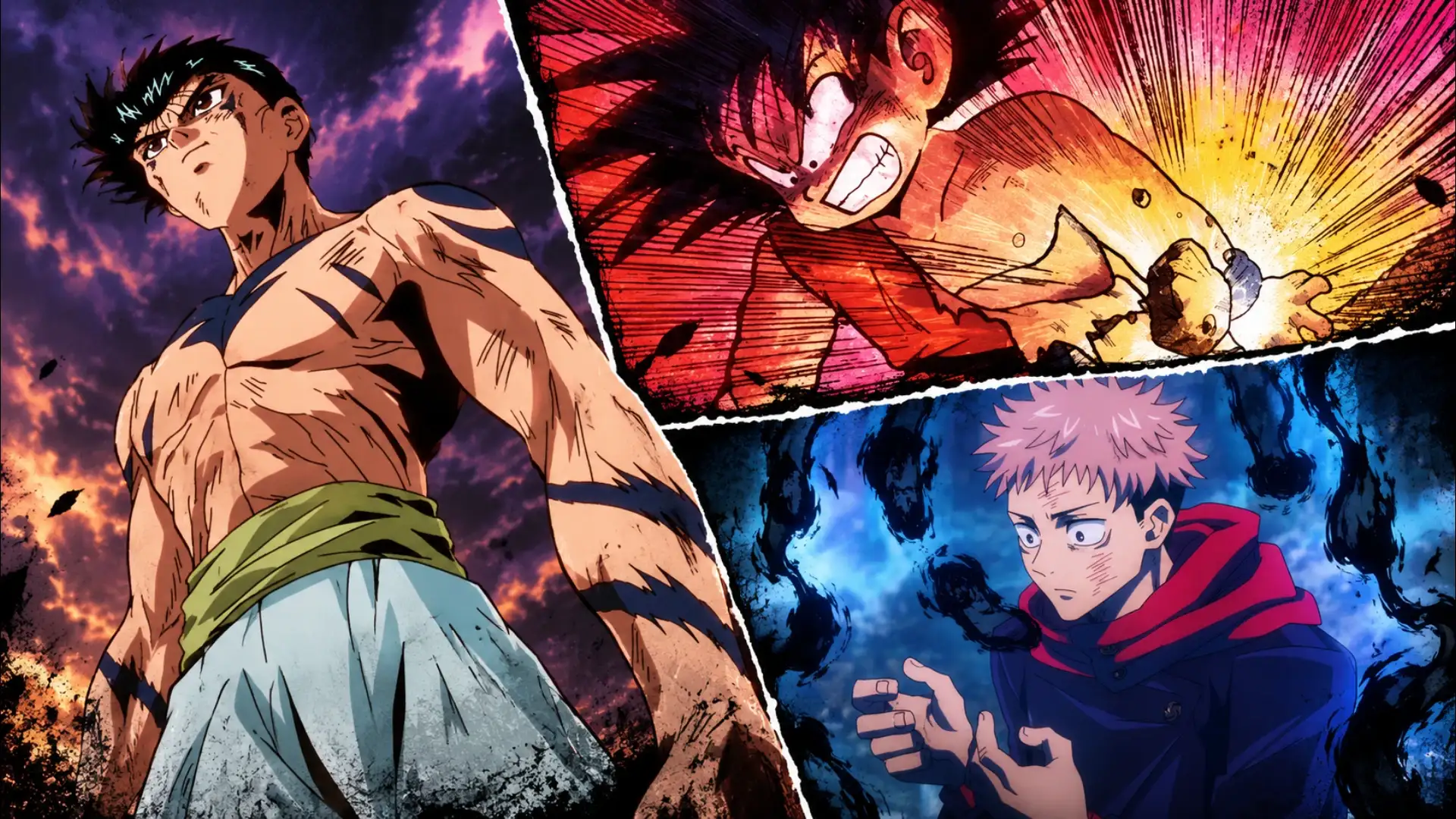
Its appeal does not disappear once the major fights are familiar. In fact, the story can become easier to appreciate during a second viewing.
Small details that initially seem insignificant can take on a completely different meaning after viewers know how particular storylines develop. The series also avoids being weighed down by excessive filler, keeping its narrative tightly focused on the main plot.
Its non-linear storytelling rewards viewers who pay close attention. Characters, events and seemingly minor details often overlap in ways that become more apparent when the story is watched again.
Goku's early adventures move comfortably between fantasy, comedy, martial arts competitions and larger supernatural threats. That mixture prevents the story from becoming dependent on a single formula.
The series also benefits from a more focused approach to its storytelling. Compared with the repetitive stretches and filler that became associated with later instalments, the original Dragon Ball maintains a stronger sense of adventure.
For viewers returning to the series, its changing locations, eccentric characters and martial arts encounters provide plenty of reasons to keep watching. It captures the adventurous spirit of the franchise before its focus shifted increasingly towards large-scale battles.
One of the series' biggest strengths is its controlled cast. Yusuke, Kuwabara, Kurama and Hiei form a central group in which every member receives meaningful opportunities to contribute.
The anime is divided into four major sagas, giving its lengthy run a clear structure. That makes returning to the series less daunting than its episode count might suggest.
The Dark Tournament is particularly effective on repeat viewings. Despite its extended run of battles, the competition maintains enough variety and character development to prevent it from becoming monotonous.
Rather than following one protagonist throughout the entire story, Hirohiko Araki's saga moves through different generations of the Joestar family. Each major part introduces a new lead character, setting, supporting cast, villain and storytelling style.
That structural change keeps the anime from settling into a predictable rhythm. One storyline might lean heavily into adventure, while another adopts a darker or more unusual approach.
The enormous range of Stand abilities adds another reason to revisit the series. With so many unusual powers and creative battles, viewers can spot new details and appreciate the strategic thinking behind confrontations they already know.
Recurring themes, characters and ideas also connect the different generations, giving long-time viewers another layer to explore.
Edward and Alphonse Elric are driven by a desperate attempt to repair the damage caused by a disastrous experiment. Their search for a solution gradually becomes a much larger story involving alchemy, politics, war and hidden conspiracies.
The series' power system is particularly important because alchemy is built around consequences. Strength is never presented as something completely free of responsibility, and this principle shapes many of the characters' decisions.
A rewatch can make the storytelling even more rewarding. Foreshadowing, character motivations and seemingly minor developments become easier to recognise once viewers understand the larger picture.
Edward's emotional development is equally important. His growth is not simply about becoming a stronger fighter; it is about confronting the consequences of his choices and protecting the bond he shares with his brother.
The series follows Shoyo Hinata, whose relatively short stature does not stop him from pursuing volleyball with extraordinary determination. His journey gradually expands into a story about teamwork, rivalry, forgiveness and personal improvement.
Across its four seasons, Haikyu!! introduces different challenges rather than repeatedly presenting the same type of match. Each stage develops Hinata and his teammates while also strengthening the relationships between the players.
The matches themselves are another reason the anime rewards repeat viewings. The first watch can be dominated by the immediate tension of each point, while subsequent viewings make it easier to notice tactical details and subtle hints about how players and teams will develop.
The evolving relationships between Hinata, his teammates and his rivals add another emotional layer that becomes increasingly apparent over time.
The series begins with humanity fighting for survival against terrifying man-eating Titans. As the story expands, however, its conflict becomes much more complicated. Questions surrounding power, propaganda, political control and the justification of violence gradually become central to the narrative.
That transformation is one of the reasons a second viewing can be so revealing. Information that initially appears insignificant can later become crucial, while early scenes can carry meanings that are impossible to recognise without knowledge of what eventually happens.
The series also does not shy away from bleak themes, brutal deaths and disturbing imagery. Its world becomes increasingly complex as the distinction between hero and enemy grows less straightforward.
For viewers willing to return to its darker story, the extensive foreshadowing makes Attack On Titan particularly rewarding.
The series has a distinctive ability to shift between completely ridiculous situations and surprisingly serious storytelling. An episode can focus on absurd comedy before a later storyline delivers an emotional or action-heavy climax.
Its world also continues to expand as new characters, recurring jokes and long-running ideas are introduced. Those callbacks become even more enjoyable once viewers are familiar with the wider cast.
Gintama's willingness to experiment is central to its longevity. It does not insist on maintaining one tone or one storytelling format, which means repeated viewings can feel different depending on which elements viewers are paying attention to.
Its dramatic arcs can stand alongside major action anime, while its deliberately silly episodes provide a completely different kind of entertainment.
His progress is tied closely to determination, training and the consequences of his decisions. The series' Nen system also gives battles considerable strategic depth because victory is not always determined by who possesses the greatest amount of raw power.
Another strength is the variety of its major story arcs. Hunter x Hunter can move from conventional adventure and combat into darker crime stories, political conflicts and fantastical scenarios without losing its identity.
That variety gives the anime strong replay value. A second viewing can reveal character motivations and strategic details that were easy to miss when the focus was entirely on discovering what would happen next.
Its willingness to challenge familiar shonen formulas remains one of its defining strengths.
Kusuo Saiki possesses an extraordinary collection of psychic abilities, but his greatest wish is remarkably ordinary: he wants people to leave him alone.
That contradiction drives much of the humour. Instead of using his powers to become a celebrated hero, Saiki constantly tries to prevent them from disrupting his attempt to live a normal life.
The anime's rapid pacing gives it a distinctive sketch-comedy quality. Jokes arrive quickly, situations escalate almost immediately and episodes are packed with short comedic scenarios rather than prolonged storylines.
That structure also makes the series particularly easy to revisit. Because the comedy is built around character dynamics, timing and absurd situations rather than a single mystery that needs to be solved, knowing what happens does little to reduce its entertainment value.
Saiki K. demonstrates that a shonen anime does not need epic battles or a sprawling dramatic narrative to become a series audiences can happily return to again and again.
Image Courtesy: ChatGPT
1. Jujutsu Kaisen
Jujutsu Kaisen has quickly established itself among the defining modern shonen anime. Across three seasons and 59 episodes, along with its prequel film, the series has built a devoted following around its supernatural battles, striking animation and intricate cursed-energy system.Its appeal does not disappear once the major fights are familiar. In fact, the story can become easier to appreciate during a second viewing.
Small details that initially seem insignificant can take on a completely different meaning after viewers know how particular storylines develop. The series also avoids being weighed down by excessive filler, keeping its narrative tightly focused on the main plot.
Its non-linear storytelling rewards viewers who pay close attention. Characters, events and seemingly minor details often overlap in ways that become more apparent when the story is watched again.
2. Dragon Ball
The original Dragon Ball remains one of the most accessible and consistently entertaining entries in the franchise. While Dragon Ball Z is responsible for many of the series' most famous battles and moments, the original anime offers considerably more variety.Goku's early adventures move comfortably between fantasy, comedy, martial arts competitions and larger supernatural threats. That mixture prevents the story from becoming dependent on a single formula.
The series also benefits from a more focused approach to its storytelling. Compared with the repetitive stretches and filler that became associated with later instalments, the original Dragon Ball maintains a stronger sense of adventure.
For viewers returning to the series, its changing locations, eccentric characters and martial arts encounters provide plenty of reasons to keep watching. It captures the adventurous spirit of the franchise before its focus shifted increasingly towards large-scale battles.
3. Yu Yu Hakusho
Yoshihiro Togashi's Yu Yu Hakusho remains one of the most influential battle shonen anime of the 1990s. Its 112 episodes follow Yusuke Urameshi as he develops from a troublesome teenager into a spirit detective caught between different worlds.One of the series' biggest strengths is its controlled cast. Yusuke, Kuwabara, Kurama and Hiei form a central group in which every member receives meaningful opportunities to contribute.
The anime is divided into four major sagas, giving its lengthy run a clear structure. That makes returning to the series less daunting than its episode count might suggest.
The Dark Tournament is particularly effective on repeat viewings. Despite its extended run of battles, the competition maintains enough variety and character development to prevent it from becoming monotonous.
4. JoJo's Bizarre Adventure
JoJo's Bizarre Adventure has one major advantage over many long-running shonen series: it constantly reinvents itself.Rather than following one protagonist throughout the entire story, Hirohiko Araki's saga moves through different generations of the Joestar family. Each major part introduces a new lead character, setting, supporting cast, villain and storytelling style.
That structural change keeps the anime from settling into a predictable rhythm. One storyline might lean heavily into adventure, while another adopts a darker or more unusual approach.
The enormous range of Stand abilities adds another reason to revisit the series. With so many unusual powers and creative battles, viewers can spot new details and appreciate the strategic thinking behind confrontations they already know.
Recurring themes, characters and ideas also connect the different generations, giving long-time viewers another layer to explore.
5. Fullmetal Alchemist: Brotherhood
Fullmetal Alchemist: Brotherhood tells its story across 64 episodes, giving the Elric brothers' journey enough room for emotional depth without stretching the central narrative unnecessarily.Edward and Alphonse Elric are driven by a desperate attempt to repair the damage caused by a disastrous experiment. Their search for a solution gradually becomes a much larger story involving alchemy, politics, war and hidden conspiracies.
The series' power system is particularly important because alchemy is built around consequences. Strength is never presented as something completely free of responsibility, and this principle shapes many of the characters' decisions.
A rewatch can make the storytelling even more rewarding. Foreshadowing, character motivations and seemingly minor developments become easier to recognise once viewers understand the larger picture.
Edward's emotional development is equally important. His growth is not simply about becoming a stronger fighter; it is about confronting the consequences of his choices and protecting the bond he shares with his brother.
6. Haikyu!!
Shonen anime is not limited to supernatural battles, and Haikyu!! proves that a volleyball match can generate the same excitement as a major action sequence.The series follows Shoyo Hinata, whose relatively short stature does not stop him from pursuing volleyball with extraordinary determination. His journey gradually expands into a story about teamwork, rivalry, forgiveness and personal improvement.
Across its four seasons, Haikyu!! introduces different challenges rather than repeatedly presenting the same type of match. Each stage develops Hinata and his teammates while also strengthening the relationships between the players.
The matches themselves are another reason the anime rewards repeat viewings. The first watch can be dominated by the immediate tension of each point, while subsequent viewings make it easier to notice tactical details and subtle hints about how players and teams will develop.
The evolving relationships between Hinata, his teammates and his rivals add another emotional layer that becomes increasingly apparent over time.
7. Attack On Titan
Attack On Titan is not necessarily the easiest anime to revisit, but it is one of the most rewarding for viewers interested in detailed storytelling.The series begins with humanity fighting for survival against terrifying man-eating Titans. As the story expands, however, its conflict becomes much more complicated. Questions surrounding power, propaganda, political control and the justification of violence gradually become central to the narrative.
That transformation is one of the reasons a second viewing can be so revealing. Information that initially appears insignificant can later become crucial, while early scenes can carry meanings that are impossible to recognise without knowledge of what eventually happens.
The series also does not shy away from bleak themes, brutal deaths and disturbing imagery. Its world becomes increasingly complex as the distinction between hero and enemy grows less straightforward.
For viewers willing to return to its darker story, the extensive foreshadowing makes Attack On Titan particularly rewarding.
8. Gintama
With more than 360 episodes, Gintama might appear to be an intimidating commitment. Yet its unusual combination of comedy, action and drama makes the enormous episode count considerably easier to handle.The series has a distinctive ability to shift between completely ridiculous situations and surprisingly serious storytelling. An episode can focus on absurd comedy before a later storyline delivers an emotional or action-heavy climax.
Its world also continues to expand as new characters, recurring jokes and long-running ideas are introduced. Those callbacks become even more enjoyable once viewers are familiar with the wider cast.
Gintama's willingness to experiment is central to its longevity. It does not insist on maintaining one tone or one storytelling format, which means repeated viewings can feel different depending on which elements viewers are paying attention to.
Its dramatic arcs can stand alongside major action anime, while its deliberately silly episodes provide a completely different kind of entertainment.
9. Hunter x Hunter
Hunter x Hunter takes familiar battle shonen conventions and frequently turns them in unexpected directions. Gon Freecss may be exceptionally talented, but the story does not simply present him as an unbeatable prodigy destined for greatness.His progress is tied closely to determination, training and the consequences of his decisions. The series' Nen system also gives battles considerable strategic depth because victory is not always determined by who possesses the greatest amount of raw power.
Another strength is the variety of its major story arcs. Hunter x Hunter can move from conventional adventure and combat into darker crime stories, political conflicts and fantastical scenarios without losing its identity.
That variety gives the anime strong replay value. A second viewing can reveal character motivations and strategic details that were easy to miss when the focus was entirely on discovering what would happen next.
Its willingness to challenge familiar shonen formulas remains one of its defining strengths.
10. The Disastrous Life Of Saiki K.
Not every rewatchable shonen anime needs enormous battles or complicated power systems. The Disastrous Life of Saiki K. takes a completely different route with fast-paced supernatural comedy.You may also like
- Roy K John turns Kerala's gardens into spaces of memory and imagination
- Asiya Firdose bids farewell to 'Shravani Subramanya'; actress reportedly set to enter Bigg Boss Kannada 13
- Bipasha Basu makes screen comeback with Hansal Mehta's 'Barabanki', begins shooting for 1984 crime thriller in Mumbai also starring Sunny Kaushal and Vishal Jethwa
- Lea Salonga honoured with Hollywood Walk of Fame star; becomes first Filipino recipient
- Hyderabad Goes Wild as Emraan Hashmi Takes Over DJ Booth
Kusuo Saiki possesses an extraordinary collection of psychic abilities, but his greatest wish is remarkably ordinary: he wants people to leave him alone.
That contradiction drives much of the humour. Instead of using his powers to become a celebrated hero, Saiki constantly tries to prevent them from disrupting his attempt to live a normal life.
The anime's rapid pacing gives it a distinctive sketch-comedy quality. Jokes arrive quickly, situations escalate almost immediately and episodes are packed with short comedic scenarios rather than prolonged storylines.
That structure also makes the series particularly easy to revisit. Because the comedy is built around character dynamics, timing and absurd situations rather than a single mystery that needs to be solved, knowing what happens does little to reduce its entertainment value.
Saiki K. demonstrates that a shonen anime does not need epic battles or a sprawling dramatic narrative to become a series audiences can happily return to again and again.
Image Courtesy: ChatGPT






Loving Newspoint? Download the app now
