
3 Attack on Titan Characters That Showcase the Series' Incredible Depth

Attack on Titan is loaded with excellent characters, but a few characters show the series' profound depth more than others. Lauded as one of the greatest anime of all time thanks to the sheer depth of its story, the maturity of its themes, and its excellent writing, Hajime Isayama's Attack on Titan enchanted readers with a world of unparalleled magnitude over the course of its nearly 12-year manga run.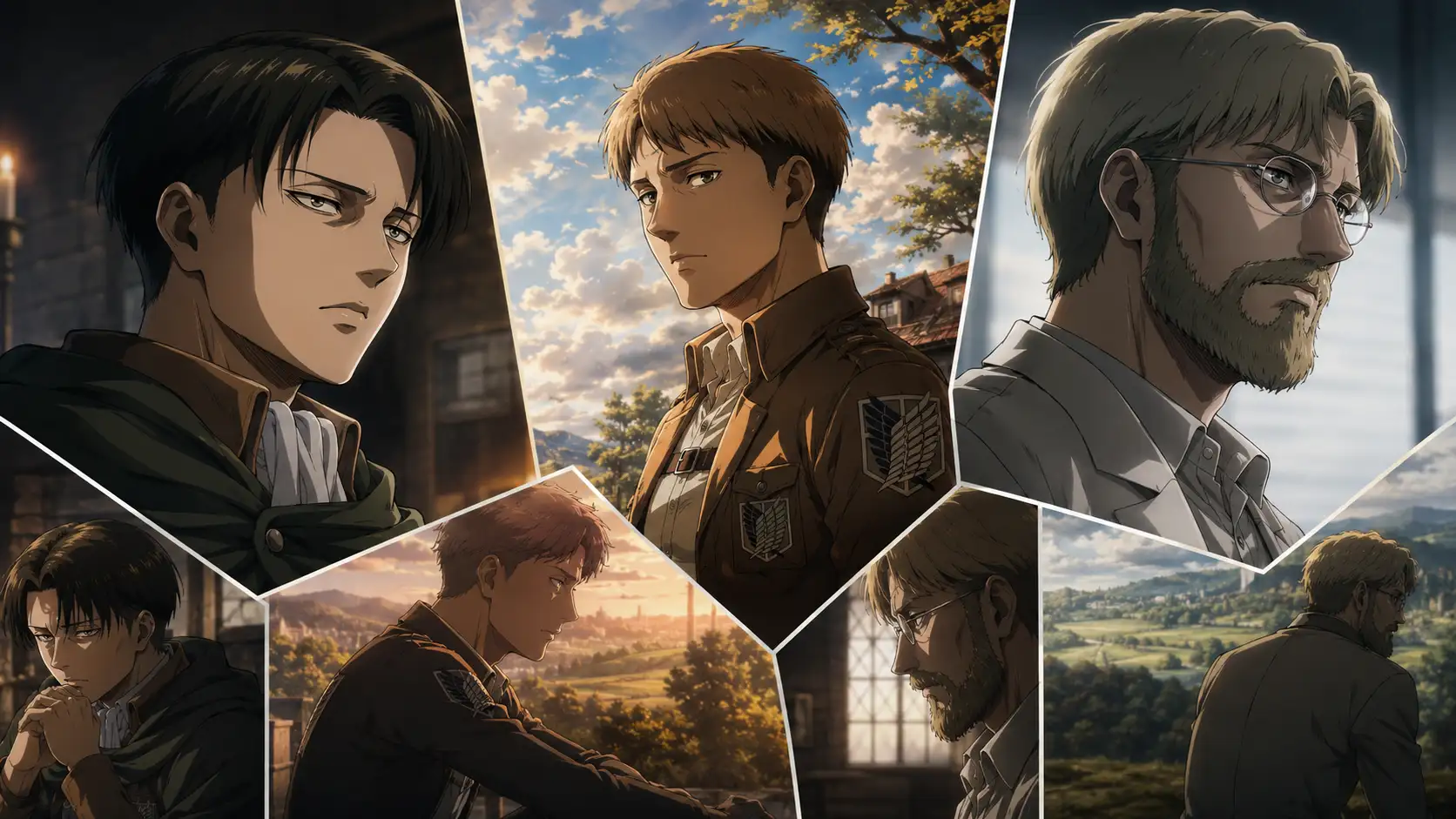
Discussions of Attack on Titan's best characters often focus on qualities like strength, leadership, or overall plot impact. Obviously, characters like Eren, Armin, and Mikasa tend to make the top of those lists. But those characters don't fully show how Attack on Titan became such a deeply beloved title.
Later, when his closest friend Marco dies in front of him, Jean has major character development. Through the pain, he resolves to become as strong as he can in order to save those around him as much as to solidify his own ideal life. He never quite sacrifices his own ideals, but he realizes that his humble goals are inseparable from the safety and welfare of those around him.
The simple fact is that, for the most part, the underground city where Levi grew up isn't really discussed. It only really appears in a handful of episodes throughout the anime's run, and often only with a glancing view; most of its description comes from Levi's OVA, A Choice with No Regrets: Part One. Nonetheless, the squalor of the underground is incredibly apparent in every aspect of Levi's personality.
Levi's pragmatism and motto of having to adapt while committing to one's decisions are both heavily ingrained in the conditions Levi faced in the underground; discovered as an orphan following his mother's death, Kenny takes in Levi until he can fend for himself. In the underground, that meant adaptability at every level.
The prime point of this contrast is in how, in the end, each relates to Eldians. For Reiner, humanization of the Eldians was always possible because his problem was never deeply ideological to begin with. For Zeke, Eldians never needed to be humanized; their humanity was always the problem—the ability to rebel and revolt, to suffer in victory and in defeat, to love and leave unloved. Eldians' humanity was inherent to their seemingly incessant subjugation, while their inhumanity was strangely inherent to the conditions of their humanity.
Discussions of Attack on Titan's best characters often focus on qualities like strength, leadership, or overall plot impact. Obviously, characters like Eren, Armin, and Mikasa tend to make the top of those lists. But those characters don't fully show how Attack on Titan became such a deeply beloved title.
Jean Kirsten
Jean is a relatively straightforward character, but he was also Isayama's favorite Attack on Titan character for a time, precisely because of his humanity and simplicity. Compared to the triumphant goals, lofty ideals, and superhuman abilities many other main characters carry, Jean feels strangely relatable: he's simply somebody caught up in something much bigger than himself. His story starts out as such: he's brash, even unlikable, and jealous, but enlists as a cadet with the hopes of eventually having an easy domestic life.You may also like
- R. Madhavan expresses faith in government's action on NEET row, tells students 'don't lose faith'
- Ranbir Kapoor and Yash head to the US for the 'Ramayana' trailer launch; when will it be released in India?
- In 1978, the birth of the world's first IVF baby opened a new era in reproductive medicine, transforming fertility science and offering hope to millions struggling to conceive
- Tom Holland desires to 'use no doubles, to do all of the dancing' in Fred Astaire biopic
- Jana Nayagan (Movie Review): Vijay's Grand Farewell is a Powerful Celebration of Heroism and Hope
Later, when his closest friend Marco dies in front of him, Jean has major character development. Through the pain, he resolves to become as strong as he can in order to save those around him as much as to solidify his own ideal life. He never quite sacrifices his own ideals, but he realizes that his humble goals are inseparable from the safety and welfare of those around him.
Levi Ackerman
Levi Ackerman is beloved and has even been called Attack on Titan's true hero. However, while many assessments of Levi focus on his heroism, leadership, and combat prowess, he's an incredibly compelling character in terms of what he adds to Attack on Titan's world.The simple fact is that, for the most part, the underground city where Levi grew up isn't really discussed. It only really appears in a handful of episodes throughout the anime's run, and often only with a glancing view; most of its description comes from Levi's OVA, A Choice with No Regrets: Part One. Nonetheless, the squalor of the underground is incredibly apparent in every aspect of Levi's personality.
Levi's pragmatism and motto of having to adapt while committing to one's decisions are both heavily ingrained in the conditions Levi faced in the underground; discovered as an orphan following his mother's death, Kenny takes in Levi until he can fend for himself. In the underground, that meant adaptability at every level.
Zeke Yeager
Zeke Yeager is Attack on Titan's most misunderstood character, and the nuances of his writing tend to be missed. Much like Floch can be contrasted with Jean as examples of how Attack on Titan shows characters reacting to grave trauma, Zeke can be contrasted with Reiner to show the complex psychology behind Honorary Marleyans. While Reiner's initial ambitions were practical, Zeke's ambitions were always deeply ideological.The prime point of this contrast is in how, in the end, each relates to Eldians. For Reiner, humanization of the Eldians was always possible because his problem was never deeply ideological to begin with. For Zeke, Eldians never needed to be humanized; their humanity was always the problem—the ability to rebel and revolt, to suffer in victory and in defeat, to love and leave unloved. Eldians' humanity was inherent to their seemingly incessant subjugation, while their inhumanity was strangely inherent to the conditions of their humanity.






Loving Newspoint? Download the app now
