
3 Legendary Weekly Shonen Jump Manga Every Fan Should Read

Weekly Shonen Jump has shaped the anime and manga industry for decades, publishing countless series that have gone on to become global phenomena. While the magazine is best known for action-heavy adventures, its greatest strength has always been its incredible variety.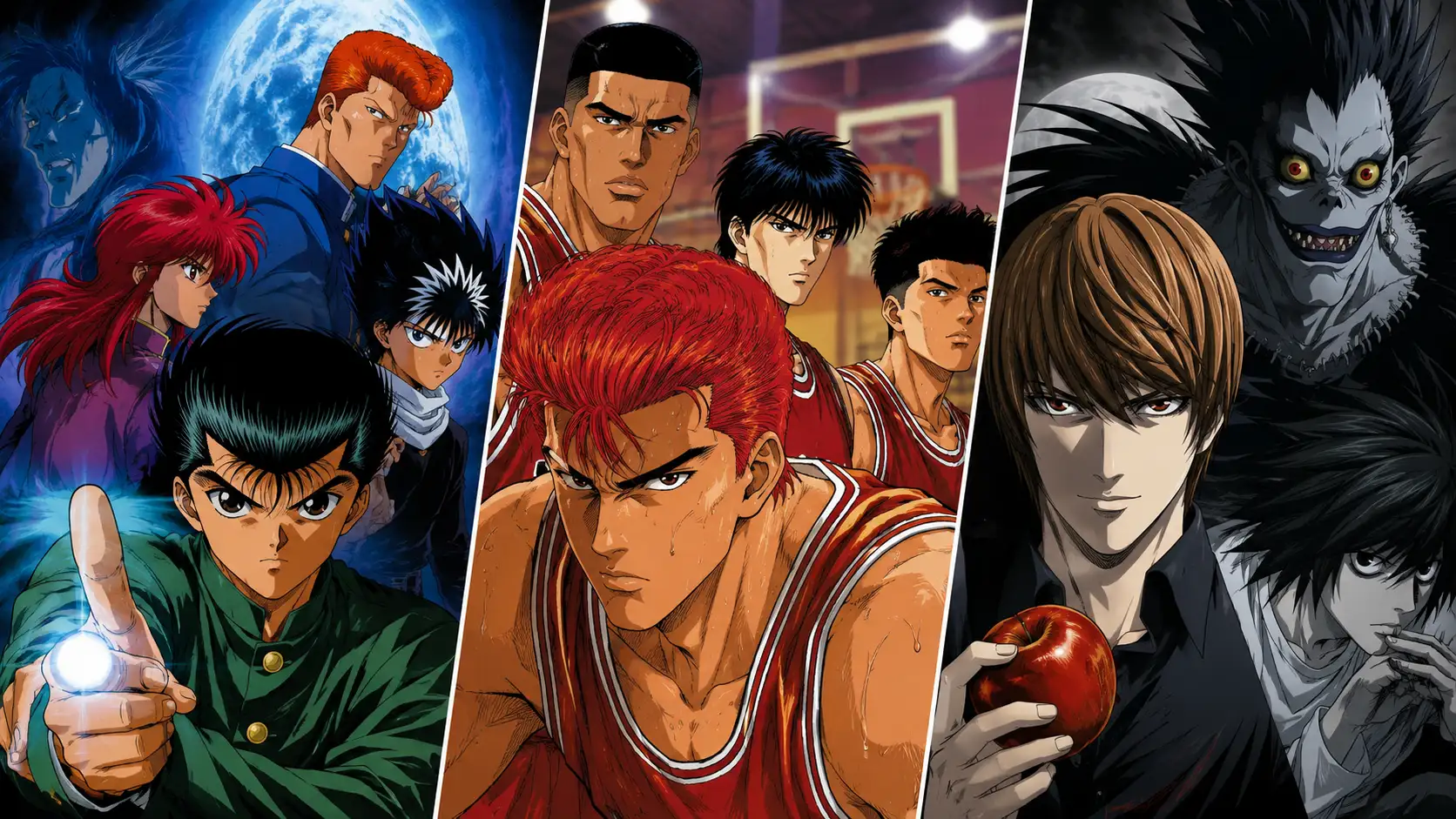
Creating a truly great manga is difficult, but maintaining that quality over hundreds of chapters is even harder. Some series revolutionised their genre, others introduced unforgettable characters, and a handful completely changed readers' expectations of what a Shonen Jump story could achieve. Decades later, these manga remain essential reading, proving exactly why they continue to define the magazine's remarkable legacy.
The manga's greatest achievement may be the Dark Tournament, an arc that still ranks among the finest tournament stories in shonen history. Later storylines such as Chapter Black proved the series could tackle darker themes without sacrificing its entertaining action or sharp humor. Rather than feeling like a product of the early 1990s, Yu Yu Hakusho still serves as the blueprint that todayʻs battle manga continue to follow.
Takehiko Inoue's artwork also changed expectations for sports storytelling by capturing movement with remarkable realism and intensity. Every rebound, pass, and buzzer-beater carries tremendous emotional weight because the matches are driven by believable teamwork rather than unrealistic abilities. Even after the manga's famously abrupt ending, Takehiko Inoue revisited the cast in Slam Dunk: 10 Days After, proving just how deeply readers remained invested in these characters.
The story also refuses to offer easy answers about justice, morality, or absolute power. Light begins with noble intentions before gradually convincing himself that every horrific decision is justified, making his transformation one of manga's most fascinating character studies. Combined with striking artwork and consistently unpredictable pacing, Death Note remains one of the strongest psychological thrillers ever published in Shonen Jump.
Creating a truly great manga is difficult, but maintaining that quality over hundreds of chapters is even harder. Some series revolutionised their genre, others introduced unforgettable characters, and a handful completely changed readers' expectations of what a Shonen Jump story could achieve. Decades later, these manga remain essential reading, proving exactly why they continue to define the magazine's remarkable legacy.
Yu Yu Hakusho
Before battle shonen became dominated by elaborate power systems and increasingly larger-scale conflicts, Yu Yu Hakusho showed how supernatural action could thrive through exceptional characters and tightly written arcs. Yusuke Urameshi's journey from delinquent to Spirit World's greatest defender never loses sight of his personality, while Kuwabara, Kurama, and Hiei receive meaningful development of their own. Every major storyline builds naturally upon the last, making the cast feel stronger together.You may also like
- Did Nia Sharma just confirm dating Sikander Singh?
- 'Join BJP or we know where your parents live': CJP founder Abhijeet Dipke's father alleges threat
- Rain songs take me back to my childhood: Bhoomi Trivedi
- Archana Puran Singh recalls being caned 10 times at age 6: 'I only remember getting caned'
- Rishi Kapoor cried "like a baby," but Amitabh Bachchan didn't attend Mukri's funeral, recalls his daughter: 'Filmo ki dosti aisi hi hoti hai'
The manga's greatest achievement may be the Dark Tournament, an arc that still ranks among the finest tournament stories in shonen history. Later storylines such as Chapter Black proved the series could tackle darker themes without sacrificing its entertaining action or sharp humor. Rather than feeling like a product of the early 1990s, Yu Yu Hakusho still serves as the blueprint that todayʻs battle manga continue to follow.
Slam Dunk
Long before sports manga became mainstream worldwide, Slam Dunk proved basketball could produce stories every bit as exciting as supernatural battles. Hanamichi Sakuragi initially joins Shohoku's basketball team for shallow reasons, but his gradual passion for the sport transforms him into one of manga's most memorable protagonists. Watching his talent develop through persistence makes every improvement satisfying.Takehiko Inoue's artwork also changed expectations for sports storytelling by capturing movement with remarkable realism and intensity. Every rebound, pass, and buzzer-beater carries tremendous emotional weight because the matches are driven by believable teamwork rather than unrealistic abilities. Even after the manga's famously abrupt ending, Takehiko Inoue revisited the cast in Slam Dunk: 10 Days After, proving just how deeply readers remained invested in these characters.
Death Note
Shonen Jump manga rarely ever relies heavily on intelligence, yet Death Note remained just as thrilling as any action series. The rivalry between Light Yagami and L creates a relentless game of strategy where every conversation, hidden clue, and calculated risk feels more suspenseful than a traditional fight scene. Readers constantly question who holds the advantage because both remain several steps ahead.The story also refuses to offer easy answers about justice, morality, or absolute power. Light begins with noble intentions before gradually convincing himself that every horrific decision is justified, making his transformation one of manga's most fascinating character studies. Combined with striking artwork and consistently unpredictable pacing, Death Note remains one of the strongest psychological thrillers ever published in Shonen Jump.






Loving Newspoint? Download the app now
