
3 Shonen Anime That Make One Piece’s Biggest Strengths Feel Less Impressive

Calling One Piece ‘mid’ sounds ridiculous when the series has spent decades building one of anime’s largest worlds and most recognizable casts. However, while its influence is undeniable, that does not mean every part of the journey deserves automatic praise. The anime’s glacial pacing and overcrowded storylines have made it increasingly difficult to separate the strength of Eiichiro Oda’s ideas from the weaknesses of the anime adaptation.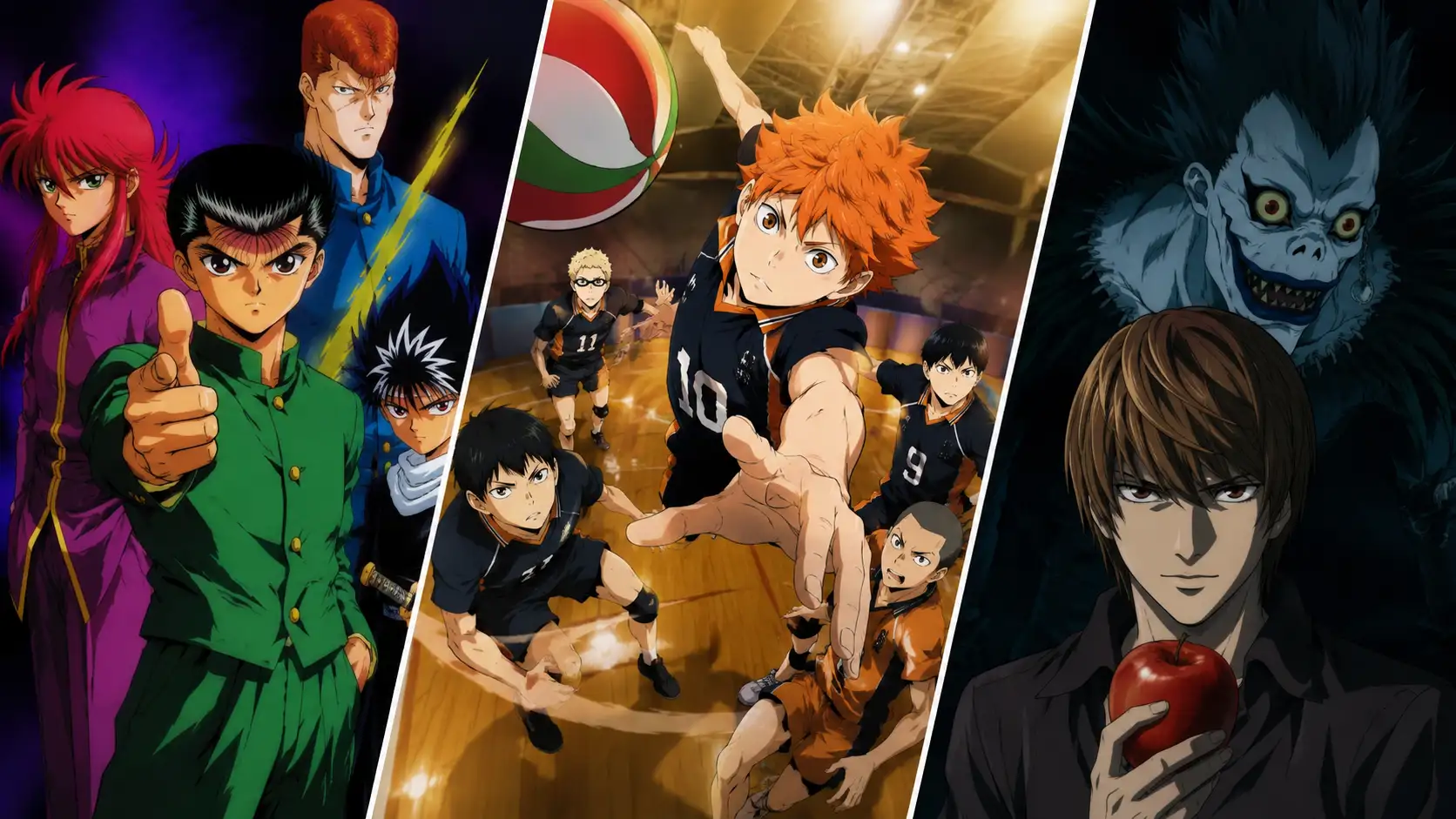
Several shonen anime achieve comparable emotional impact with far greater discipline. These masterpieces demonstrate that ambition does not require an endless runtime. They tell focused stories, use their casts more efficiently, and deliver action that remains tied to character growth. One Piece may still be a giant of the genre, but these series make some of the show’s most celebrated qualities look far less exceptional.
The Dark Tournament Arc remains the clearest example of the anime’s discipline. It contains memorable opponents, personal rivalries, and exhibits escalating power without making every round feel interchangeable. Even minor battles contribute to the development of the core cast or reveal something important about the tournament’s larger conflict. One Piece has produced excellent tournament-like confrontations, but its arcs frequently become crowded with secondary battles and prolonged countdowns. Yu Yu Hakusho reaches similar emotional heights with far greater control.
One Piece also introduces countless memorable characters, but many receive one major backstory before becoming emotionally static. Some vanish after their arcs, returning hundreds of episodes later primarily because the plot requires another ally. Haikyuu!! continually shows how previous encounters reshape the players. The series also understands how to make progress satisfying without inflating every achievement. One Piece often mistakes accumulation for development. Haikyuu!! proves that a shonen anime can have an expansive ensemble while ensuring nearly everyone continues to grow.
Death Note has no such luxury. Its story depends on pressure, forcing it to use dialogue with the same urgency that battle shonen reserve for physical confrontations. The absence of conventional action never makes the series feel inactive because the characters are always attempting to gain control. Light also represents a more transformative protagonist than Luffy. The latter portion of Death Note remains divisive, but even its weaker stretch moves with greater urgency than many celebrated One Piece arcs.
Several shonen anime achieve comparable emotional impact with far greater discipline. These masterpieces demonstrate that ambition does not require an endless runtime. They tell focused stories, use their casts more efficiently, and deliver action that remains tied to character growth. One Piece may still be a giant of the genre, but these series make some of the show’s most celebrated qualities look far less exceptional.
Yu Yu Hakusho
Yu Yu Hakusho follows Yusuke Urameshi, a delinquent who receives another chance at life and becomes a Spirit Detective responsible for investigating supernatural threats. The setup gradually brings Yusuke together with Kuwabara, Kurama and Hiei. One Piece has an unforgettable cast, but its expanding scale frequently separates the crew or reduces individual members to repeated jokes. Yu Yu Hakusho keeps its core group close enough for their relationships to remain active parts of the story.You may also like
- Pankaj Tripathi calls life an 'interesting journey' amid international recognition
- Did Uorfi Javed take Rs 1 lakh to support Cockroach Janta Party?
- 'KBC 18': Aamir-Sunny to join Big B for premiere episode
- Karthik Subbaraj unveils 'Dorothy with Keerthy Suresh, film to premiere at TIFF before theatrical release: 'A story that is very very close to my hear'
- Prabhas starrer's 'Adipurush' memes resurface on social media as Nitesh Tiwari's and Ranbir Kapoor led 'Ramayana' faces costume backlash
The Dark Tournament Arc remains the clearest example of the anime’s discipline. It contains memorable opponents, personal rivalries, and exhibits escalating power without making every round feel interchangeable. Even minor battles contribute to the development of the core cast or reveal something important about the tournament’s larger conflict. One Piece has produced excellent tournament-like confrontations, but its arcs frequently become crowded with secondary battles and prolonged countdowns. Yu Yu Hakusho reaches similar emotional heights with far greater control.
Haikyuu!!
Haikyuu!! has a large cast, but it rarely treats anyone as just a set piece. The series takes a relatively simple sports premise and uses it to develop an enormous cast with remarkable efficiency. Players improve through specific weaknesses and repeated failures that remain relevant long after individual matches end. Even rival teams receive meaningful development. Opponents are not obstacles waiting to be removed so Karasuno can advance. They have their own ambitions and relationships, making defeat painful regardless of which side loses.One Piece also introduces countless memorable characters, but many receive one major backstory before becoming emotionally static. Some vanish after their arcs, returning hundreds of episodes later primarily because the plot requires another ally. Haikyuu!! continually shows how previous encounters reshape the players. The series also understands how to make progress satisfying without inflating every achievement. One Piece often mistakes accumulation for development. Haikyuu!! proves that a shonen anime can have an expansive ensemble while ensuring nearly everyone continues to grow.
Death Note
Death Note demonstrates how powerful shonen storytelling can become when every episode has a clear dramatic function. Light and L are rarely allowed to remain comfortable. Each victory creates a new vulnerability, and even minor decisions permanently alter the balance between them. That focus makes One Piece look especially indulgent. A single One Piece arc can spend dozens of episodes moving characters toward confrontations viewers already know are coming. The anime repeatedly pauses its momentum for extended reactions, flashbacks, and filler sequences.Death Note has no such luxury. Its story depends on pressure, forcing it to use dialogue with the same urgency that battle shonen reserve for physical confrontations. The absence of conventional action never makes the series feel inactive because the characters are always attempting to gain control. Light also represents a more transformative protagonist than Luffy. The latter portion of Death Note remains divisive, but even its weaker stretch moves with greater urgency than many celebrated One Piece arcs.






Loving Newspoint? Download the app now
