
5 Superhero Anime Gems That Deserve A Spot On Your Watchlist

Anime has never been restricted to one type of storytelling. Superhero adventures have found a natural home in the medium, producing everything from colourful action series to darker examinations of power and justice. While My Hero Academia and One-Punch Man have attracted huge international audiences, several other titles have remained largely outside the mainstream conversation. These overlooked shows take very different approaches to the superhero formula, mixing it with mecha, science fiction, crime, horror and political drama.
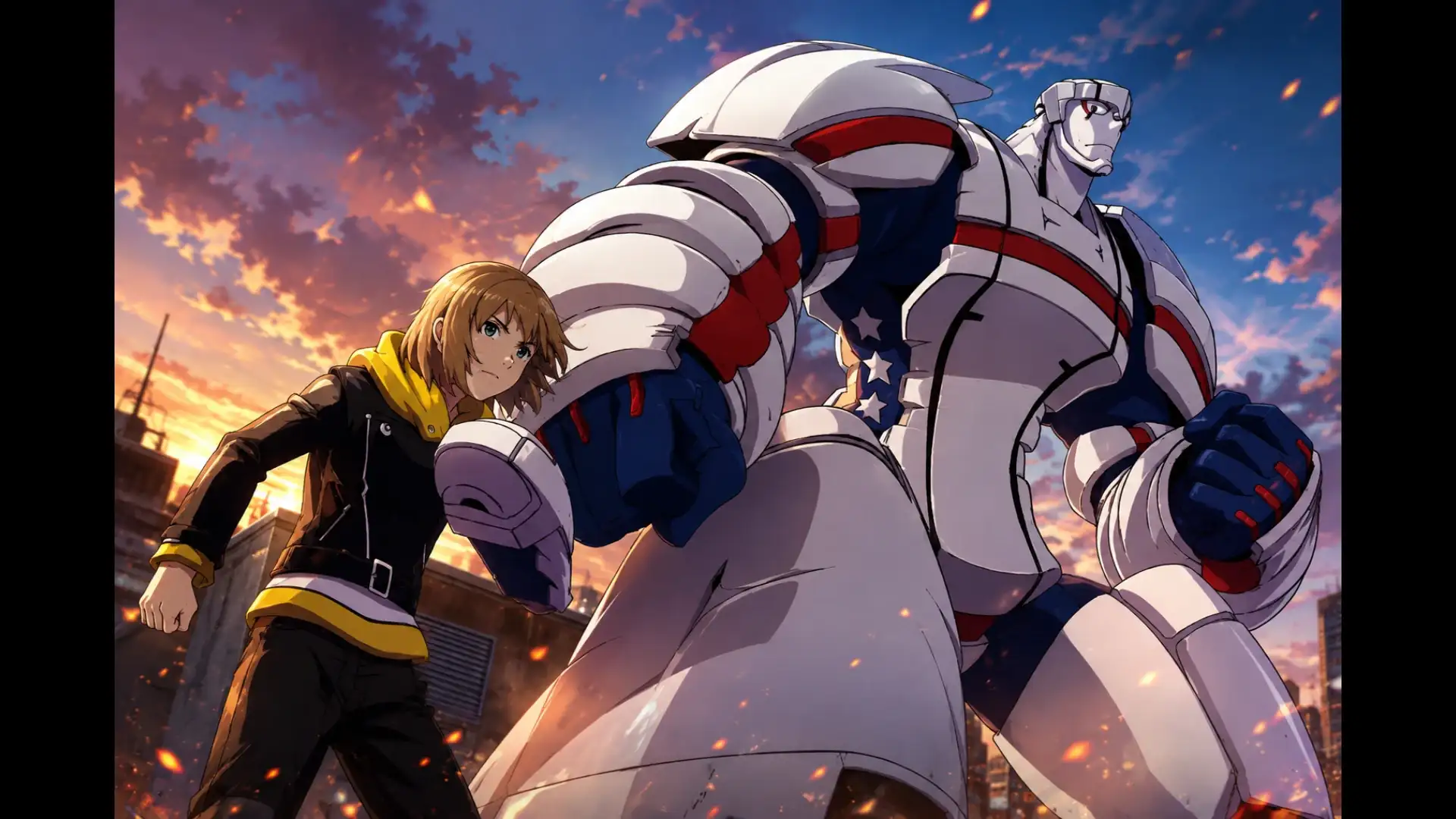
Heroman Blends Superheroes With Classic Mecha Adventure
Heroman stands out because of its unusual creative history and straightforward emotional appeal. Developed as an original anime project involving Stan Lee and Studio Bones, the 26-episode series combines superhero storytelling with giant-robot action.At its centre is Joey, a teenager who feels like an outsider and struggles with his circumstances. Unable to buy the popular Heybo robot toy that everyone seems to want, he instead finds a discarded and damaged model.
Everything changes when lightning strikes the toy. The machine transforms into the enormous Heroman, giving Joey a powerful ally as the pair are drawn into a battle against the alien Skrugg.
The premise has the energy of an old Saturday morning adventure cartoon, but the animation gives the series a distinctly Japanese visual identity. Joey and Heroman also have an appealing partnership, with Joey gradually becoming more confident as their battles continue.
The series follows a familiar hero-versus-villain framework, yet its 26 episodes introduce enough variety in the conflicts to keep the formula from becoming overly predictable.
Birdy The Mighty Decode Turns A Body-Sharing Premise Into Something Bigger
Birdy the Mighty: Decode takes a very different route. It combines science fiction, comedy, action and superhero elements through the unusual partnership between an extraterrestrial police officer and an ordinary schoolboy.Birdy Cephron Altera is an intergalactic law-enforcement officer investigating alien criminals on Earth. During one mission, she accidentally kills a high school student named Tsutomu.
She saves his life by merging him with her own body, leaving the pair sharing consciousness while Tsutomu's physical body is reconstructed.
That arrangement becomes the foundation for an increasingly complicated partnership. Birdy continues pursuing dangerous extraterrestrial criminals while Tsutomu is forced to adapt to a life that is suddenly far removed from anything he expected.
The original Birdy the Mighty OVA from the 1990s established the concept, but Birdy the Mighty: Decode expanded it substantially with two television seasons. According to critics and animation fans, the later adaptation is particularly notable for its character development and energetic action.
Its second season pushes the emotional stakes further, giving the characters considerably more room to evolve.
Super Crooks Puts Superpowered Criminals In The Spotlight
Super Crooks flips the traditional superhero story by making criminals the protagonists. The 13-episode anime follows Johnny Bolt, a disgraced aspiring hero who instead puts together a crew of superpowered criminals for an ambitious heist.The characters are hardly conventional villains. Many have been pushed to the margins and are tired of being treated as failures. Their decision to return to crime creates a story that mixes caper mechanics with superhero action.
One of the show's strengths is that viewers can enjoy it without having watched or read other stories from the same fictional universe. It works independently and establishes its own characters, conflicts and rules.
The anime also targets a more mature audience. Its violence and adult themes are part of the setting rather than simply being used for shock value. The unusual abilities and elaborate action sequences add plenty of spectacle, while the characters' motivations give the story more depth.
According to superhero genre conventions, heroes and villains are often separated by clear moral boundaries. Super Crooks deliberately makes those boundaries much harder to define, asking whether people labelled as villains can still find their own version of redemption.
Zetman Takes A Much Darker Approach To Heroism
Zetman offers one of the bleakest interpretations of the superhero concept on this list. Created by Masakazu Katsura, whose work includes Wing-Man and involvement with Tiger & Bunny, the series draws from Japanese superhero and tokusatsu traditions while presenting them through a darker seinen-oriented lens.The story centres on two figures, ZET and Alphas, whose ideas about justice and power are sharply different. Their human identities, Jin and Kouga, become increasingly important as the story explores their contrasting personalities and beliefs.
You may also like
- Happy Teachers' Day gift ideas 2026: Unique and budget-friendly gift ideas that say more than "thank you" to give your teachers
- Randeep Hooda wishes birthday to his mom & niece: Both precious to me
- Kannada Actor Duniya Vijay Granted Divorce, Ordered to Pay ₹2 Crore Alimony
- INSIDE Mohammed Rafi's iconic Mumbai HOME where Sonu Nigam, Sachin Tendulkar and Salim Merchant came together for special musical moment
- You don't have to run or do brutal workouts to lose weight: Sports & Functional Nutritionist shares 5 effective exercises that can make weight loss feel more sustainable
The pair eventually confront the Players, terrifying creatures connected to biological experimentation. Rather than treating these monsters as conventional comic-book enemies, Zetman uses them to create a much more disturbing atmosphere.
Its 13-episode run makes it relatively easy to complete, but the series is considerably heavier than a typical superhero adventure. The bleak visuals and unsettling creature designs reinforce the sense of desperation surrounding its characters.
The conflict between Jin and Kouga is arguably just as important as the battles themselves. Their opposing approaches to power and justice create tension that becomes increasingly significant as the story progresses.
Concrete Revolutio Turns Superheroism Into A Political Question
Concrete Revolutio may be the most ambitious title among these overlooked anime. Set in an alternate version of 1960s Japan, the series imagines a society where superhumans, aliens and other extraordinary beings exist alongside ordinary people.The government establishes the Superhuman Bureau to monitor and protect superhumans while dealing with threats ranging from extraterrestrials to kaiju. Much of this activity is kept hidden from the wider public.
Rather than presenting the authorities as unquestionably good, the 24-episode series examines what happens when attempts to regulate powerful individuals become excessive. Its characters are repeatedly forced to confront difficult questions about authority, justice and public trust.
The storytelling is also deliberately unconventional. Concrete Revolutio moves through different points in its timeline, gradually revealing how its characters and relationships have changed.
That structure allows the series to show how idealistic figures can eventually become disillusioned or even turn towards vigilantism. It also incorporates elements of older magical-girl and superhero traditions, creating an unusually dense mixture of influences.
According to genre commentators, its willingness to question the traditional relationship between superheroes and society is one of the reasons the series remains particularly distinctive.
For viewers who have already worked through the biggest superhero anime, these five series offer something different. They may not have reached the same level of mainstream recognition, but their unusual premises, distinctive visual styles and willingness to experiment make them worthwhile additions to any anime watchlist.






Loving Newspoint? Download the app now
