
The Best Long-Running Anime That Stay Great From Start to Finish

Long-running anime often have the difficult task of maintaining their quality across dozens or even hundreds of episodes. While many series lose momentum over time, a rare few continue to deliver compelling stories, memorable characters, and meaningful development from beginning to end.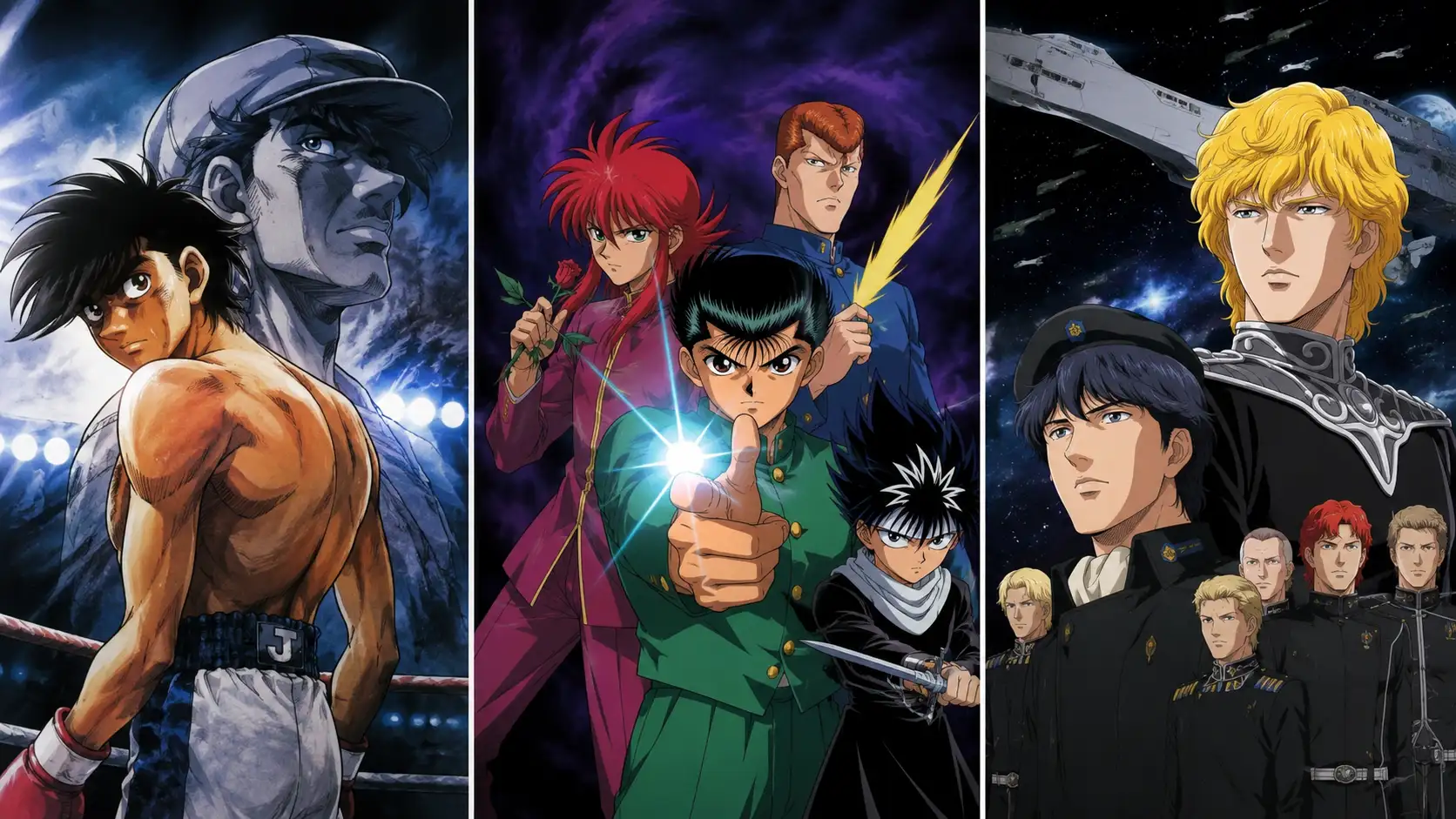
Spanning epic wars, inspiring sports journeys, heartfelt coming-of-age stories, and unforgettable adventures, some anime showcase remarkable consistency throughout their runs. Outstanding writing, immersive world-building, and carefully crafted character arcs ensure every episode feels worthwhile, and allow the series to captivate fans around the world.
Each new arc forces Joe to reconstruct his relationship with the sport instead of simply escalating his skill level. Joe’s final fight against Jose Mendoza carries the compounded physical cost of every previous match the audience sat through, and his motionless posture in the final frame reads as the logical endpoint of this story.
The Dark Tournament arc alone benefits enormously from the show’s runtime, staging dozens of individual matches that build a coherent picture of every team’s internal dynamics before the climactic bouts arrive. Chapter Black then recontextualizes everything by introducing Sensui, a villain whose seven personalities and coherent ideological grievance require accumulated trust in the show’s storytelling to land.
Kircheis’ death reshapes Reinhard across sixty episodes, and Yang’s assassination lands with the weight of someone the audience has followed through intellectual and personal development. Supporting figures like Oberstein, Bucock, and Merkatz accumulate enough screen time to become fully realized positions in an ongoing argument about loyalty, pragmatism, and principle, rather than just stock characters.
Spanning epic wars, inspiring sports journeys, heartfelt coming-of-age stories, and unforgettable adventures, some anime showcase remarkable consistency throughout their runs. Outstanding writing, immersive world-building, and carefully crafted character arcs ensure every episode feels worthwhile, and allow the series to captivate fans around the world.
Ashita no Joe
Ashita no Joe uses its full runtime to trace boxing’s toll across an entire career, and that distinction defines the series. Joe Yabuki’s rise from the Doya slums doesn’t resolve after one dramatic victory, and Ikki Kajiwara keeps complicating his trajectory with prison time, weight cuts, injuries, and the specific psychological wreckage of watching Rikiishi die in the ring against him.You may also like
- Bigg Boss 20 first promo: Salman Khan hints at SRK's entry
- Chinese man reveals the 8 pm ritual that helps them 'live to 99'
- Springsteen announces wife Scialfa in remission, thanks Dana-Farber Cancer Institute
- Aishwarya Rai Bachchan dazzles in 7,000-pearl custom couture gown in UNSEEN and VIRAL Cannes 2026 pictures
- Malaika Arora Criticised For Wearing Footwear & Deep Neckline Outfit While Performing Puja For New Car - VIDEO
Each new arc forces Joe to reconstruct his relationship with the sport instead of simply escalating his skill level. Joe’s final fight against Jose Mendoza carries the compounded physical cost of every previous match the audience sat through, and his motionless posture in the final frame reads as the logical endpoint of this story.
Yu Yu Hakusho
Yu Yu Hakusho’s length lets Yoshihiro Togashi treat character philosophy as something built cumulatively across arcs instead of declared once and repeated. Yusuke’s fighting style evolves meaningfully from the Rekai Tantei arc through the Dark Tournament and into Chapter Black, and Kurama, Hiei, and Kuwabara each get enough sustained screen time to represent distinct approaches to combat and morality.The Dark Tournament arc alone benefits enormously from the show’s runtime, staging dozens of individual matches that build a coherent picture of every team’s internal dynamics before the climactic bouts arrive. Chapter Black then recontextualizes everything by introducing Sensui, a villain whose seven personalities and coherent ideological grievance require accumulated trust in the show’s storytelling to land.
Legend of the Galactic Heroes
Few anime justify a 110-episode runtime as completely as Legend of the Galactic Heroes, since the series requires that length to demonstrate its central argument. Yoshiki Tanaka’s story needs decades of in-universe time to show how democratic institutions corrode gradually, how autocratic competence creates dependency, and how exceptional individuals shape history without ever fully controlling it.Kircheis’ death reshapes Reinhard across sixty episodes, and Yang’s assassination lands with the weight of someone the audience has followed through intellectual and personal development. Supporting figures like Oberstein, Bucock, and Merkatz accumulate enough screen time to become fully realized positions in an ongoing argument about loyalty, pragmatism, and principle, rather than just stock characters.






Loving Newspoint? Download the app now
