
3 Best-Written Anime Villains Who Set the Gold Standard for Antagonists

The depiction of villainy has always been one of anime’s strongest suits. A strong protagonist truly stands out only when faced with a formidable villain who tests their beliefs and ideas as much as their strength, simultaneously prompting viewers to deeper reflection. On top of their power, they radiate such captivating charm that easily lends itself to public support.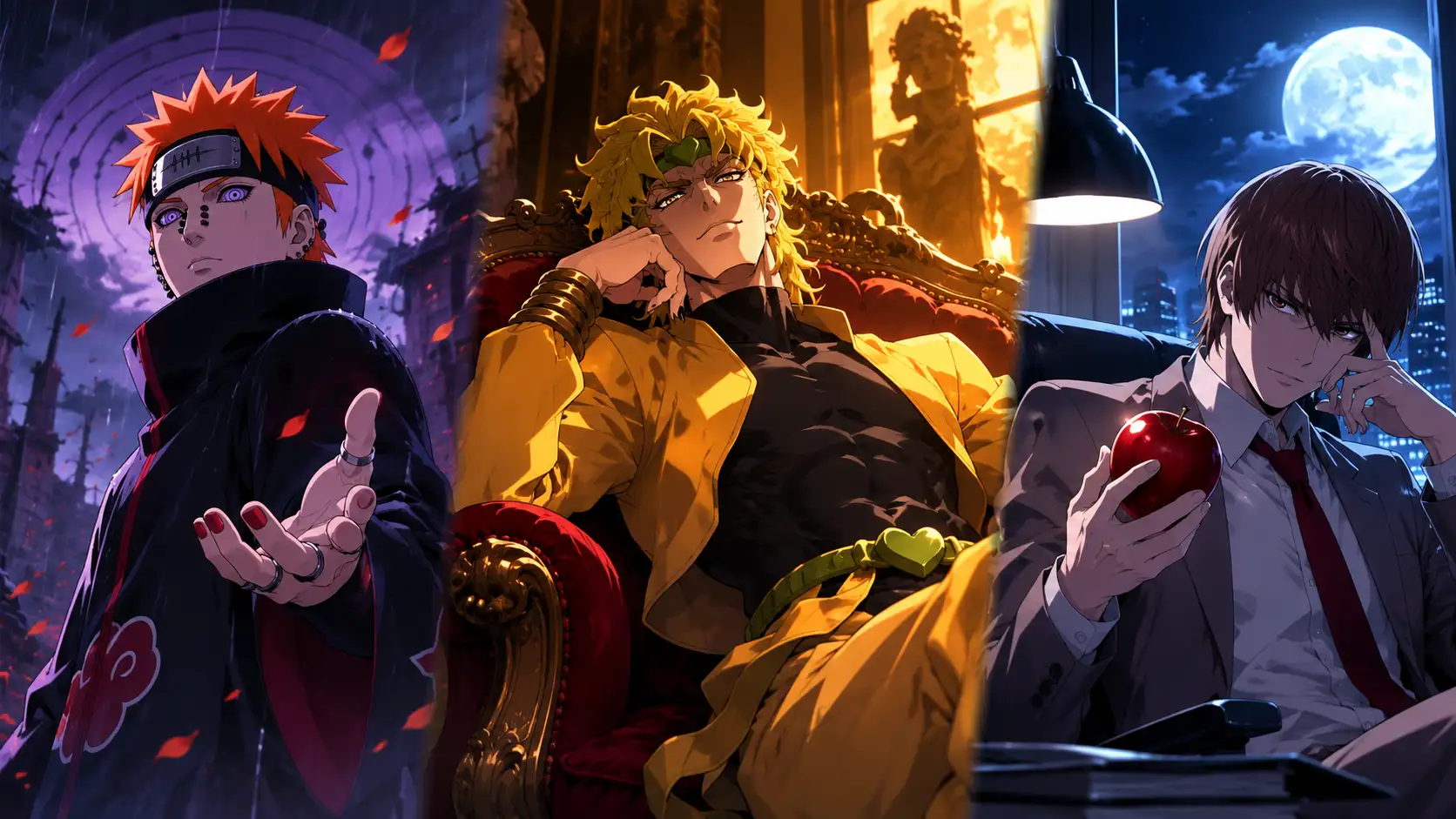
Nonetheless, the cornerstone of any compelling villain is depth of writing. The best villains, particularly, capture either the hearts or the disdain of readers because they are written to narrative perfection. They have well-defined goals and ideologies, magnetic personalities, and ingenious plots that make them the absolute gold standard for good character writing.
What defines these elite antagonists is their ability to serve as a dark mirror to the protagonist, raising questions about right and wrong. This list highlights the 3 best-written anime villains who set the gold standard for the medium; their presence commands the screen and shifts the narrative’s gravity, whether driven by a warped sense of justice or pure evil.
Nagato adopts the moniker of deity to force a fractured world into a state of artificial harmony, driven by an unshakeable belief that humanity can only understand peace through shared suffering. What elevates Pain to the gold standard for villains is the philosophy behind his actions, the terrifyingly logical method he seeks to use to achieve global stability.
Thematically, Pain serves as the ultimate ideological foil to Naruto Uzumaki, fundamentally undermining the protagonist’s optimistic worldview. During their legendary confrontation, Nagato corners Naruto both physically and psychologically, seeking a way to end the cycle of hatred. He ultimately chooses to believe Naruto, sacrificing his life force to resurrect the dead and cementing his status as a truly empathetic villain.
Furthermore, Dio does not seek to save or cure the world through a twisted moral lens; he pursues absolute domination in a villainous, theatrical manner. After casting aside his humanity to become a vampire, he completely revels in his destructive worldview, positioning himself as an apex predator meant to rule over humanity.
What defines Dio as a masterpiece of a character is his presence, which anchors and drives the entire century-spanning narrative across generations. He is deceptively cunning, able to exploit others’ weaknesses, and armed with The World, a stand that allows him to freeze time itself. Dio is a megalomaniac villain who revels in evil and wields far-reaching influence.
Death Note’s character writing truly shines in the psychological chess matches between Light and L, the detective hired to capture him. Their interactions are a stroke of literary ingenuity, introducing a cat-and-mouse dynamic that highlights the intelligence of both characters. Light systematically manipulates the legal system and his family, and sacrifices innocent people who threaten to expose his identity.
Light’s character is an exploration of how absolute power corrupts absolutely. Light could have had a relatively normal life had the Death Note not come into his possession. His character arc is a spectacular descent that shows how a crusade for justice can instantly devolve into a desperate, paranoid tyranny when faced with the threat of being caught.
Nonetheless, the cornerstone of any compelling villain is depth of writing. The best villains, particularly, capture either the hearts or the disdain of readers because they are written to narrative perfection. They have well-defined goals and ideologies, magnetic personalities, and ingenious plots that make them the absolute gold standard for good character writing.
What defines these elite antagonists is their ability to serve as a dark mirror to the protagonist, raising questions about right and wrong. This list highlights the 3 best-written anime villains who set the gold standard for the medium; their presence commands the screen and shifts the narrative’s gravity, whether driven by a warped sense of justice or pure evil.
Pain
Pain (Nagato) in Sasuke set the gold standard for morally complex villains in anime. Originally an orphaned victim of the brutal proxy wars waged by larger ninja nations in his homeland, Nagato descends into villainy after losing faith in the possibility of peaceful coexistence amid immense suffering. Nagato’s tipping point was the loss of Yahiko, his childhood friend.Nagato adopts the moniker of deity to force a fractured world into a state of artificial harmony, driven by an unshakeable belief that humanity can only understand peace through shared suffering. What elevates Pain to the gold standard for villains is the philosophy behind his actions, the terrifyingly logical method he seeks to use to achieve global stability.
You may also like
- Music composer-producer Abhijit Vaghani: I'm a Bollywood boy
- Varavu Box Office Collection Day 4: Joju George's Film Recovers 40% Of Its Budget In The Opening Weekend
- Anupama Parameswaran returns to Instagram with cryptic posts amid Dhruv Vikram breakup speculation
- Balan: The Boy Worldwide Box Office Day 31: Successfully Completes A Month, To End Its Theatrical Run Below 35 Crore
- Moana Worldwide Box Office: Dwayne Johnson's Live-Action Film Crosses $150 Million Despite A Harsh Second-Weekend Domestic Drop
Thematically, Pain serves as the ultimate ideological foil to Naruto Uzumaki, fundamentally undermining the protagonist’s optimistic worldview. During their legendary confrontation, Nagato corners Naruto both physically and psychologically, seeking a way to end the cycle of hatred. He ultimately chooses to believe Naruto, sacrificing his life force to resurrect the dead and cementing his status as a truly empathetic villain.
Dio Brando
Dio Brando from JoJo’s Bizarre Adventure sets himself apart from other villains by eschewing complex ideological nuance in favor of a vital alternative villain archetype, the purely charismatic, unrepentant force of nature. Born into poverty in the slums of Victorian London, Dio was frequently abused by his father, fuelling his deep-seated hatred for humanity.Furthermore, Dio does not seek to save or cure the world through a twisted moral lens; he pursues absolute domination in a villainous, theatrical manner. After casting aside his humanity to become a vampire, he completely revels in his destructive worldview, positioning himself as an apex predator meant to rule over humanity.
What defines Dio as a masterpiece of a character is his presence, which anchors and drives the entire century-spanning narrative across generations. He is deceptively cunning, able to exploit others’ weaknesses, and armed with The World, a stand that allows him to freeze time itself. Dio is a megalomaniac villain who revels in evil and wields far-reaching influence.
Light Yagami
When a cynical high school prodigy discovers a book capable of killing anyone whose name is written in it, he immediately weaponizes it. Light does not begin the story with evil intentions, but eventually develops a God complex that becomes his undoing. Initially setting out to purge the world of criminals under the name ‘Kira’, he gradually loses his humanity.Death Note’s character writing truly shines in the psychological chess matches between Light and L, the detective hired to capture him. Their interactions are a stroke of literary ingenuity, introducing a cat-and-mouse dynamic that highlights the intelligence of both characters. Light systematically manipulates the legal system and his family, and sacrifices innocent people who threaten to expose his identity.
Light’s character is an exploration of how absolute power corrupts absolutely. Light could have had a relatively normal life had the Death Note not come into his possession. His character arc is a spectacular descent that shows how a crusade for justice can instantly devolve into a desperate, paranoid tyranny when faced with the threat of being caught.






Loving Newspoint? Download the app now
