
Why the Big 3 Still Outshine the Dark Shonen Trio

The Big 3, consisting of Naruto , One Piece , and Bleach, is a term coined by Western anime fans to refer to the three most dominant, popular, and influential shonen titles of the 2000s. In the 2020s, however, as the shonen demographic was undergoing notable changes and its audience’s tastes shifted towards more mature, bleaker topics, a new supreme triad emerged called the Dark Shonen Trio .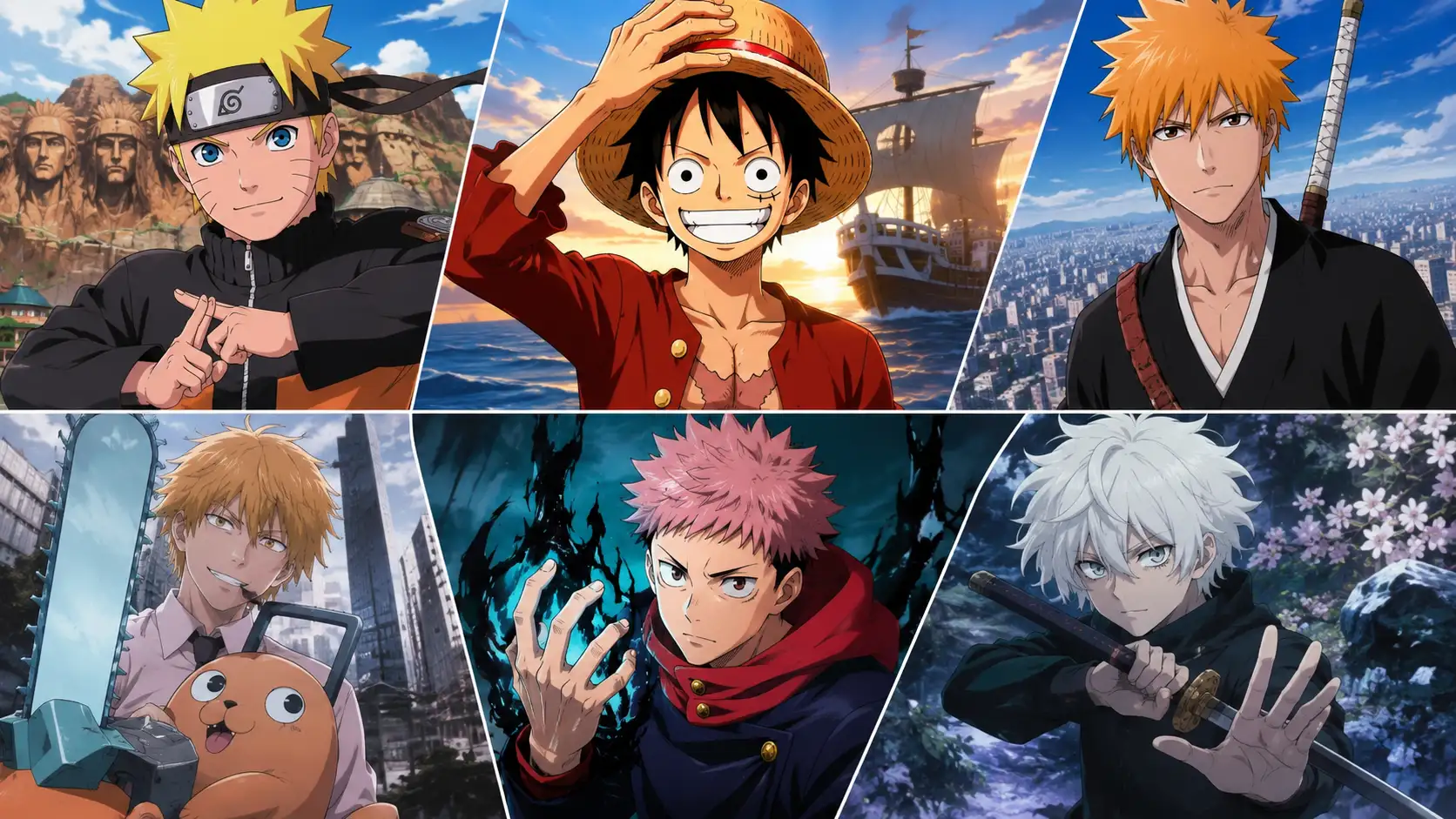
Chainsaw Man, Jujutsu Kaisen, and Hell’s Paradise: Jigokurarku that make up the new-gen Dark Trio are undeniably excellent shows that reflect the modern sensibilities of shonen well. Yet, despite their novelty and the standout quality of each of these trailblazing titles, they haven’t managed to beat the iconic Big 3 and are still lacking in comparison.
All Big 3 titles take place in vastly different worlds, with Bleach’s setting being the most grounded, while Naruto and especially One Piece construct entire fantastical universes far removed from reality. Unlike their Dark Trio counterparts, the Big 3 anime don’t use their worlds as merely backgrounds to set the plot against.
Each show has the time and space to go deep into the culture, politics, and history of its respective setting, which makes their universes feel far more lived-in, nuanced, and immersive. One Piece in particular is an unrivaled masterclass of expansive worldbuilding, with Eiichiro Oda crafting a one-of-a-kind seafaring planet where every island feels distinct yet flawlessly integrated into the larger world and story.
One Piece’s setting expands organically as the story evolves, and at no point does it feel like the world is shallow or simply revolves around the protagonists. Creating a riveting world fans want to adventure through plays an enormous part in making a shonen narrative engrossing, and the Big 3 understood the importance of making their worlds stand out.
Speaking of what even prompted fans to create the concept of the Dark Shonen Trio, the major thing Jujutsu Kaisen, Chainsaw Man, and Hell’s Paradise share, of course, lies in the name. Modern shonen is no longer optimistic and jolly. It's a generation that is all about lethal stakes, dark worlds, and mature themes. Of course, just like the Big 3 didn’t pioneer most of its defining traits, the Dark Trio series weren’t the first shonen titles to go dark.
Before them, there were Attack on Titan, Demon Slayer, and even older examples like Death Note and Claymore. However, shonen’s noticeable switch to grimmer, more hopeless narratives, while welcomed by many, makes some fans raise a reasonable question: are classic happy-go-lucky shonen series truly going out of style?
While shonen has always been a diverse demographic, most fans associate it with inspiring stories that promote ideals of friendship, hard work, camaraderie, and chasing one’s dreams, which are all universal virtues modern shonen series seem to lack (or at least de-prioritise). One Piece, Bleach, and Naruto might be a tad idealistic, yet the stories of their heroes undeniably inspired fans to be more compassionate, persevere through hardship, and value their community and bonds.
There is a reason why these values are considered universal, and making them the core of a shonen series doesn’t make the narrative boring or unrealistic. It just makes the story feel more sincere.
Chainsaw Man, Jujutsu Kaisen, and Hell’s Paradise: Jigokurarku that make up the new-gen Dark Trio are undeniably excellent shows that reflect the modern sensibilities of shonen well. Yet, despite their novelty and the standout quality of each of these trailblazing titles, they haven’t managed to beat the iconic Big 3 and are still lacking in comparison.
The Big 3’s Magnificent Worldbuilding
The Dark Trio series undeniably have compelling settings: an urban fantasy world where curses lurk out of common people’s sight, a horrifying dystopia plagued by fears manifested as bloodthirsty monsters, and a supernatural version of Edo-period Japan. However, when it comes to creating complex and original fantasy worlds, the new generation of shonen anime is obviously lacking compared to its predecessors, which largely enticed fans thanks to the strength of their worldbuilding.All Big 3 titles take place in vastly different worlds, with Bleach’s setting being the most grounded, while Naruto and especially One Piece construct entire fantastical universes far removed from reality. Unlike their Dark Trio counterparts, the Big 3 anime don’t use their worlds as merely backgrounds to set the plot against.
Each show has the time and space to go deep into the culture, politics, and history of its respective setting, which makes their universes feel far more lived-in, nuanced, and immersive. One Piece in particular is an unrivaled masterclass of expansive worldbuilding, with Eiichiro Oda crafting a one-of-a-kind seafaring planet where every island feels distinct yet flawlessly integrated into the larger world and story.
You may also like
- Meet the 95 year old Nonno, who follows a secret band exercise routine to stay put and keep going at nearly a century
- 'Jana Nayagan' advance booking: Canada gives VIP members priority as Vijay starrer sees strong overseas response
- 'Bigg Boss' alum Kashish Kapoor to enter 'Alliance' as wildcard
- Lord of the Rings new movie Hunt for Gollum first look teaser footage
- Priyanka Chopra And Nick Jonas Reveal The Sweet Story Behind Their First DM
One Piece’s setting expands organically as the story evolves, and at no point does it feel like the world is shallow or simply revolves around the protagonists. Creating a riveting world fans want to adventure through plays an enormous part in making a shonen narrative engrossing, and the Big 3 understood the importance of making their worlds stand out.
Speaking of what even prompted fans to create the concept of the Dark Shonen Trio, the major thing Jujutsu Kaisen, Chainsaw Man, and Hell’s Paradise share, of course, lies in the name. Modern shonen is no longer optimistic and jolly. It's a generation that is all about lethal stakes, dark worlds, and mature themes. Of course, just like the Big 3 didn’t pioneer most of its defining traits, the Dark Trio series weren’t the first shonen titles to go dark.
Big 3 had inspiring themes that resonated with viewers
Speaking of what even prompted fans to create the concept of the Dark Shonen Trio, the major thing Jujutsu Kaisen, Chainsaw Man, and Hell’s Paradise share, of course, lies in the name. Modern shonen is no longer optimistic and jolly. It's a generation that is all about lethal stakes, dark worlds, and mature themes. Of course, just like the Big 3 didn’t pioneer most of its defining traits, the Dark Trio series weren’t the first shonen titles to go dark.Before them, there were Attack on Titan, Demon Slayer, and even older examples like Death Note and Claymore. However, shonen’s noticeable switch to grimmer, more hopeless narratives, while welcomed by many, makes some fans raise a reasonable question: are classic happy-go-lucky shonen series truly going out of style?
While shonen has always been a diverse demographic, most fans associate it with inspiring stories that promote ideals of friendship, hard work, camaraderie, and chasing one’s dreams, which are all universal virtues modern shonen series seem to lack (or at least de-prioritise). One Piece, Bleach, and Naruto might be a tad idealistic, yet the stories of their heroes undeniably inspired fans to be more compassionate, persevere through hardship, and value their community and bonds.
There is a reason why these values are considered universal, and making them the core of a shonen series doesn’t make the narrative boring or unrealistic. It just makes the story feel more sincere.






Loving Newspoint? Download the app now
