
The Odyssey: Christopher Nolan Explains Travis Scott’s Role as Bard and Its Link to Ancient Poetry

Christopher Nolan’s explanation of Travis Scott's casting as a bard in The Odyssey has provided fans with a deeper look into the creative philosophy behind his next blockbuster. Following the massive success of Oppenheimer, Nolan’s transition into ancient Greek mythology has been met with high scrutiny, particularly after early trailer footage showed the American rapper in a brief but significant role. In a series of interviews with Time Magazine, Nolan stood by his decision, framing the casting not as a gimmick, but as a symbolic nod to the history of the source material.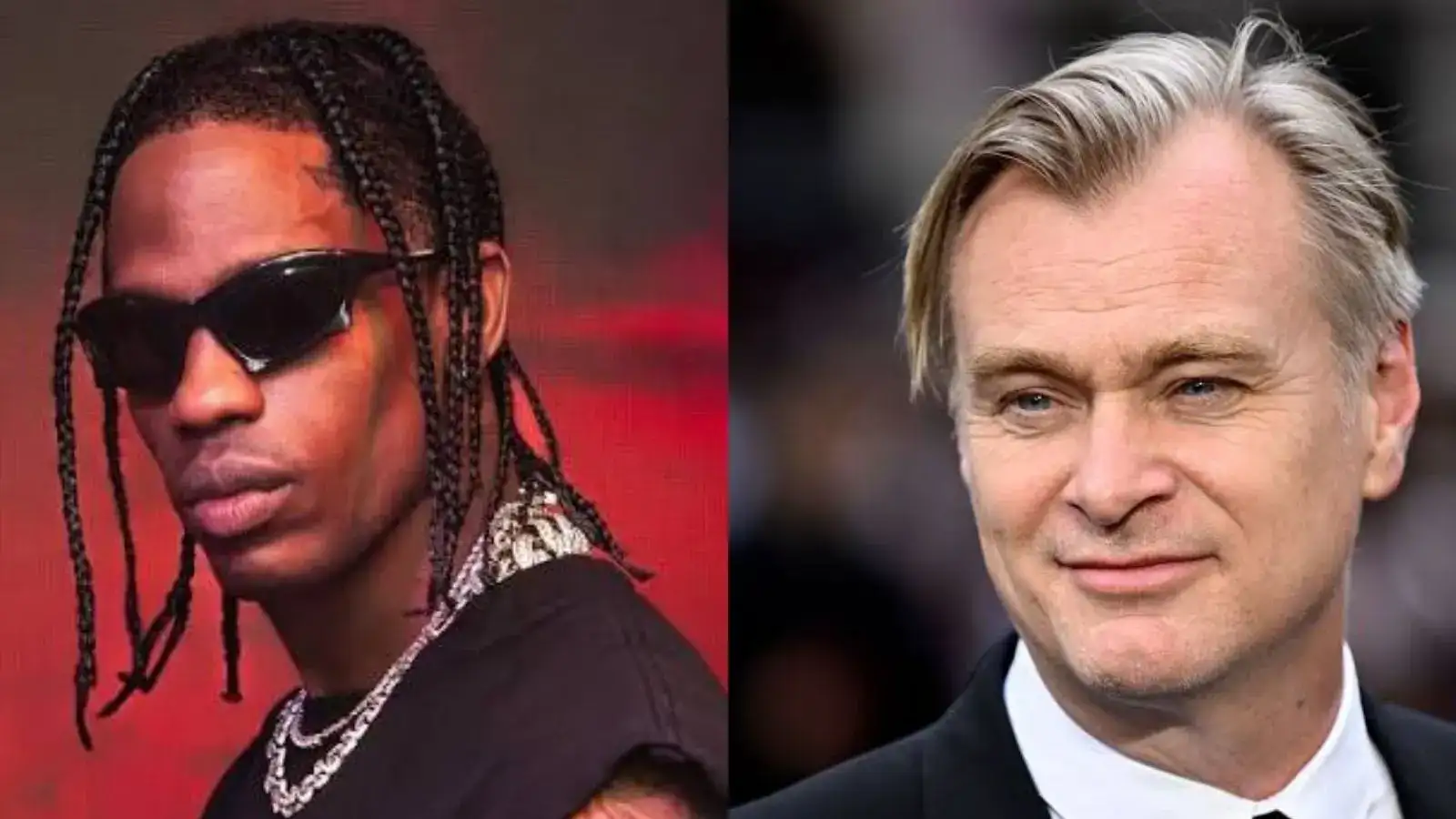
Nolan explained that the core of The Odyssey is its history as oral poetry—stories that were performed and handed down through speech and rhythm before they were ever written down. “I cast him [Travis Scott] because I wanted to nod towards the idea that this story has been handed down as oral poetry, which is analogous to rap,” Nolan stated. By casting a global rap icon as a bard, the director intends to bridge the gap between ancient performance art and contemporary lyrical storytelling, emphasizing that Homer’s work was the "popular music" of its era.
Beyond the casting, Nolan addressed backlash regarding the warriors' armour. Some online critics suggested the gear looked too much like the "Batsuit" from The Dark Knight trilogy, arguing it lacked historical accuracy. However, Nolan rejected the idea that the production ignored research. He and costume designer Ellen Mirojnick utilized archaeological theories regarding Mycenaean civilizations, specifically the use of blackened bronze. Nolan noted that by adding gold, silver, and sulfur to bronze, ancient smiths could achieve a darkened, prestigious look - specifically for high-ranking figures like Agamemnon to communicate their elevated status.
Nolan compared his approach to The Odyssey with his work on the sci-fi epic Interstellar. He argued that while Interstellar asked, "What is the best speculation of the future?", The Odyssey asks, "What is the best speculation of the past?" The goal was not to create a dry historical reenactment but to build a cinematic world that feels "elevated" and grounded in a "speculative reality." This methodology extends to every facet of the film, from the blackened daggers to the casting of modern cultural figures to represent ancient archetypes.
As the release date of July 17, 2026, approaches, The Odyssey is shaping up to be one of Nolan’s most experimental works. The film reportedly reunites him with Inception star Elliot Page and continues his partnership with visual effects giant DNEG. By blending archaeological theory with modern musical influences, Nolan appears to be attempting a "cultural translation" of Homer's epic, ensuring that the ancient themes of homecoming and heroism resonate with a 21st-century audience.
The Bard and the Rapper
Nolan explained that the core of The Odyssey is its history as oral poetry—stories that were performed and handed down through speech and rhythm before they were ever written down. “I cast him [Travis Scott] because I wanted to nod towards the idea that this story has been handed down as oral poetry, which is analogous to rap,” Nolan stated. By casting a global rap icon as a bard, the director intends to bridge the gap between ancient performance art and contemporary lyrical storytelling, emphasizing that Homer’s work was the "popular music" of its era.
Archaeology vs. Aesthetics: The Armour Debate
Beyond the casting, Nolan addressed backlash regarding the warriors' armour. Some online critics suggested the gear looked too much like the "Batsuit" from The Dark Knight trilogy, arguing it lacked historical accuracy. However, Nolan rejected the idea that the production ignored research. He and costume designer Ellen Mirojnick utilized archaeological theories regarding Mycenaean civilizations, specifically the use of blackened bronze. Nolan noted that by adding gold, silver, and sulfur to bronze, ancient smiths could achieve a darkened, prestigious look - specifically for high-ranking figures like Agamemnon to communicate their elevated status.
You may also like
- A newly discovered asteroid will pass within about 56,000 miles of Earth on Monday
- Quote of the day by James McAvoy: 'I learned from a string of failed relationships; learned to stop jumping in at first sign of attraction'
- Rashmika Mandanna faces her fear of heights during her Kochi stay
- Eminem net worth 2026: How the rap icon Marshall Mathers built a USD 300 million fortune
- Nimeshika Radhakrishnan and Karthick Vasudevan starrer Punitha to go off-air after 469 episodes
A "Speculative" Ancient World
Nolan compared his approach to The Odyssey with his work on the sci-fi epic Interstellar. He argued that while Interstellar asked, "What is the best speculation of the future?", The Odyssey asks, "What is the best speculation of the past?" The goal was not to create a dry historical reenactment but to build a cinematic world that feels "elevated" and grounded in a "speculative reality." This methodology extends to every facet of the film, from the blackened daggers to the casting of modern cultural figures to represent ancient archetypes.
Anticipation for July 2026
As the release date of July 17, 2026, approaches, The Odyssey is shaping up to be one of Nolan’s most experimental works. The film reportedly reunites him with Inception star Elliot Page and continues his partnership with visual effects giant DNEG. By blending archaeological theory with modern musical influences, Nolan appears to be attempting a "cultural translation" of Homer's epic, ensuring that the ancient themes of homecoming and heroism resonate with a 21st-century audience.






More from our partners


Loving Newspoint? Download the app now
