
Why Christopher Nolan Shoots Films So Quickly: The Production Difference Behind Oppenheimer and Alpha

Christopher Nolan has become one of the few filmmakers whose production schedules are discussed almost as much as his films themselves. Whether it is Inception, Interstellar or the Oscar-winning Oppenheimer, one fact often surprises movie lovers: despite their massive scale, Nolan's films are usually completed within a surprisingly short shooting schedule.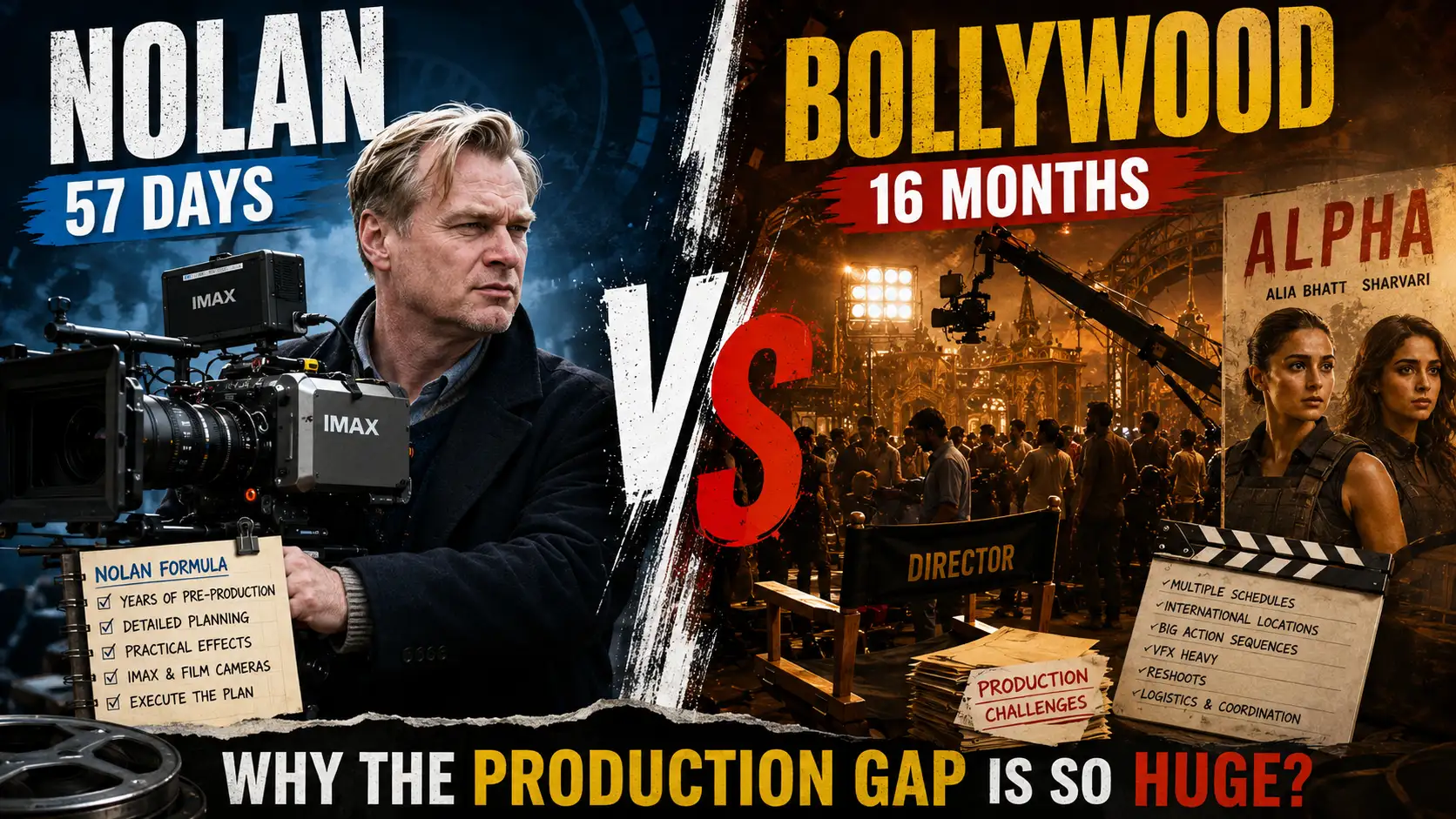
This conversation has picked up again after reports suggested that Yash Raj Films' upcoming spy thriller Alpha was reportedly in production for nearly 15 to 16 months. At first glance, the comparison seems surprising. How can one director complete a film featuring practical explosions, IMAX cameras and international locations within fewer than 100 shooting days, while another high-budget production extends well beyond a year? The answer is not as simple as "Hollywood is faster". Instead, it comes down to meticulous planning, detailed pre-production and the different filmmaking approaches adopted long before the cameras start rolling.
When people hear that Oppenheimer was filmed in just 57 shooting days, it is easy to assume that Christopher Nolan simply works at an impossible pace. The reality is far less dramatic and, arguably, even more impressive.
Nolan is known for spending years developing his scripts before production begins. By the time filming starts, major creative decisions have largely been made. Locations have been locked, sequences carefully planned and departments know exactly what they're expected to deliver. Instead of discovering the film during production, his teams arrive on set with a clear roadmap. That level of preparation allows filming to move quickly without necessarily feeling rushed.
Christopher Nolan is also known for preferring practical effects wherever possible. Many of his biggest moments are created in-camera, with everything from building massive physical sets to staging real explosions and deploying custom-designed IMAX and large-format film cameras, rather than relying entirely on computer-generated imagery. It's a common misconception that Nolan avoids CGI entirely. Visual effects still play an important role in his movies, but they are often used to enhance practical footage rather than replace it.
Working with film cameras also demands precision. Unlike digital filmmaking, every take comes with additional cost, encouraging detailed preparation before the cameras begin rolling.
Comparing Alpha directly with Nolan's productions isn't entirely fair because the two projects operate under different production realities. According to entertainment reports, Alpha involved international locations, large-scale action sequences, extensive stunt work, VFX-heavy scenes and multiple shooting schedules. Coordinating actors, action units, overseas shoots and visual effects across different phases naturally increases the overall production timeline.
A film taking over a year to make does not automatically mean poor planning. Major franchise projects often shoot in blocks, pausing between shooting schedules and returning to shoot additional sequences as required by creative and logistical needs. That makes production timelines far more complex than a simple count of shooting days.
Even with those differences in mind, the numbers remain fascinating. One filmmaker consistently completes principal photography for some of Hollywood's most ambitious films in under 100 days, while another major production reportedly spends well over a year in production.
The comparison does not demonstrate one method being superior to the other, but rather it shows two completely different philosophies of filmmaking. Nolan likes to do everything in preparation before he starts shooting, whereas big franchise movies often have to deal with shifting schedules, multiple units of production and long post-production needs. Perhaps that's why his timelines continue to surprise audiences, even after decades in the industry.
For aspiring filmmakers, the biggest lesson may not be how quickly Christopher Nolan shoots. It may be how much work happens before anyone hears the words, "Action!"
This conversation has picked up again after reports suggested that Yash Raj Films' upcoming spy thriller Alpha was reportedly in production for nearly 15 to 16 months. At first glance, the comparison seems surprising. How can one director complete a film featuring practical explosions, IMAX cameras and international locations within fewer than 100 shooting days, while another high-budget production extends well beyond a year? The answer is not as simple as "Hollywood is faster". Instead, it comes down to meticulous planning, detailed pre-production and the different filmmaking approaches adopted long before the cameras start rolling.
Christopher Nolan's Real Superpower Begins Before Day One
When people hear that Oppenheimer was filmed in just 57 shooting days, it is easy to assume that Christopher Nolan simply works at an impossible pace. The reality is far less dramatic and, arguably, even more impressive.
Nolan is known for spending years developing his scripts before production begins. By the time filming starts, major creative decisions have largely been made. Locations have been locked, sequences carefully planned and departments know exactly what they're expected to deliver. Instead of discovering the film during production, his teams arrive on set with a clear roadmap. That level of preparation allows filming to move quickly without necessarily feeling rushed.
Why Practical Filmmaking Doesn't Slow Him Down
Christopher Nolan is also known for preferring practical effects wherever possible. Many of his biggest moments are created in-camera, with everything from building massive physical sets to staging real explosions and deploying custom-designed IMAX and large-format film cameras, rather than relying entirely on computer-generated imagery. It's a common misconception that Nolan avoids CGI entirely. Visual effects still play an important role in his movies, but they are often used to enhance practical footage rather than replace it.
You may also like
- Kushal Tandon speaks about Zaid Darbar's wife Gauahar Khan to Sohail Khan: Once I was in love with some girl…
- Kavita Krishnamurthy mourns demise of music composer Pyarelal Ramprasad Sharma's wife
- The Odyssey Worldwide Box Office: Can It Beat Dune 2's $700M+ To Set A New Benchmark For Zendaya?
- Mumbai: St. Xavier's College Students Organise Charity Run To Support Cancer Patients Ahead Of Malhar 2026
- Tom Holland says Norwegian footballer Erling Haaland ignored his text message
Working with film cameras also demands precision. Unlike digital filmmaking, every take comes with additional cost, encouraging detailed preparation before the cameras begin rolling.
Why Alpha Followed a Very Different Timeline
Comparing Alpha directly with Nolan's productions isn't entirely fair because the two projects operate under different production realities. According to entertainment reports, Alpha involved international locations, large-scale action sequences, extensive stunt work, VFX-heavy scenes and multiple shooting schedules. Coordinating actors, action units, overseas shoots and visual effects across different phases naturally increases the overall production timeline.
A film taking over a year to make does not automatically mean poor planning. Major franchise projects often shoot in blocks, pausing between shooting schedules and returning to shoot additional sequences as required by creative and logistical needs. That makes production timelines far more complex than a simple count of shooting days.
The Comparison That Has Everyone Talking
Even with those differences in mind, the numbers remain fascinating. One filmmaker consistently completes principal photography for some of Hollywood's most ambitious films in under 100 days, while another major production reportedly spends well over a year in production.
The comparison does not demonstrate one method being superior to the other, but rather it shows two completely different philosophies of filmmaking. Nolan likes to do everything in preparation before he starts shooting, whereas big franchise movies often have to deal with shifting schedules, multiple units of production and long post-production needs. Perhaps that's why his timelines continue to surprise audiences, even after decades in the industry.
For aspiring filmmakers, the biggest lesson may not be how quickly Christopher Nolan shoots. It may be how much work happens before anyone hears the words, "Action!"






Loving Newspoint? Download the app now
