
The Long Journey of Satluj: How Diljit Dosanjh's Most Important Film Became One of Indian Cinema's Biggest Controversies

For most films, controversy begins after release. For Satluj, controversy became part of its identity long before audiences ever got the chance to watch it. The film, directed by Honey Trehan and starring Diljit Dosanjh, tells the story of Jaswant Singh Khalra, the Punjabi human rights activist who exposed thousands of alleged illegal cremations during the insurgency years in Punjab in the 1980s and 1990s. It was never designed to be an easy watch. But few could have predicted that the film itself would become a story about censorship, politics, and the limits of artistic expression in India.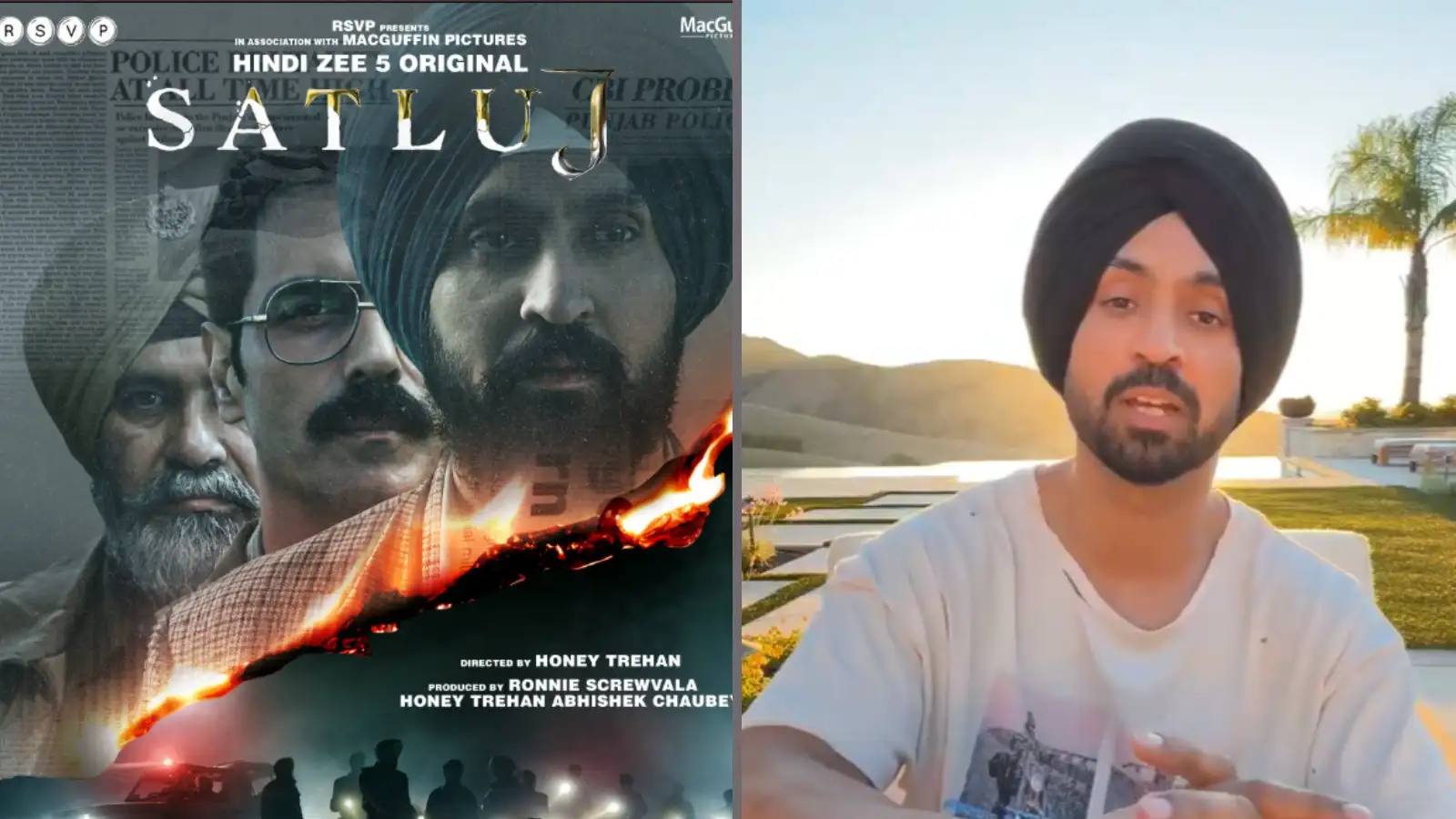
The project was originally announced under the title Ghallughara before later becoming Punjab '95. Eventually, it was released under the title Satluj. The repeated changes were not creative decisions but part of a long struggle to secure approval for release.
For nearly three years, the film remained stuck in certification disputes. Reports suggested that the Central Board of Film Certification (CBFC) had sought numerous cuts and modifications due to the sensitive political and historical subject matter portrayed in the film. As a result, the film's theatrical release went through repeated delays and uncertainty.
Why Is Satluj So Sensitive?
At the center of the film is Jaswant Singh Khalra, a real-life human rights activist who investigated and documented allegations of secret cremations and enforced disappearances in Punjab during the militancy era.
His work remains one of the most painful and politically sensitive chapters in modern Indian history. Any attempt to bring those events to the screen is bound to enter a realm where history, politics, memory, and emotion collide. Supporters of the film argue that difficult histories deserve to be documented and discussed. Critics have questioned aspects of its portrayal and broader political implications.
The OTT Release That Lasted Only Days
After years of uncertainty, audiences finally believed the film had found a home through streaming. However, the celebration was short-lived.
Satluj was suddenly yanked from ZEE5 in India just days after its release. The move brought instant outrage and confusion from viewers, filmmakers, and free speech advocates. While detailed explanations were scant, the removal reignited discussions about whether controversial stories can really survive in today’s entertainment ecosystem.
Diljit Dosanjh later stated during a live interaction that he had been "absolutely certain" the film could eventually face removal. He encouraged audiences who had already accessed the film to continue sharing its story and discussing its themes.
The Shadow of the Sardaar Ji 3 Controversy
The timing of the Satluj controversy has become even more complicated because it comes shortly after Diljit Dosanjh faced criticism over Sardaar Ji 3, which featured Pakistani actor Hania Aamir.
The casting of a Pakistani actor, amid heightened India-Pakistan tensions following the Pahalgam terror attack, sparked a political backlash that prevented the film from being released in Indian theaters and was only released overseas. While Satluj and Sardaar Ji 3 are unrelated films, the two controversies have somewhat been connected in public conversations surrounding Diljit Dosanjh’s career.
More Than Just a Film
Whether one agrees with its politics or not, Satluj has become larger than cinema itself. It has reopened old wounds, raised difficult questions, and exposed the complex relationship between art, state institutions, historical memory, and public sentiment.
For Diljit Dosanjh, who has spent years balancing mainstream entertainment with culturally significant projects, Satluj may ultimately be remembered not for how many people watched it but for how many conversations it forced the country to have.
A Film That Changed Names Multiple Times
The project was originally announced under the title Ghallughara before later becoming Punjab '95. Eventually, it was released under the title Satluj. The repeated changes were not creative decisions but part of a long struggle to secure approval for release.
For nearly three years, the film remained stuck in certification disputes. Reports suggested that the Central Board of Film Certification (CBFC) had sought numerous cuts and modifications due to the sensitive political and historical subject matter portrayed in the film. As a result, the film's theatrical release went through repeated delays and uncertainty.
Why Is Satluj So Sensitive?
At the center of the film is Jaswant Singh Khalra, a real-life human rights activist who investigated and documented allegations of secret cremations and enforced disappearances in Punjab during the militancy era.
His work remains one of the most painful and politically sensitive chapters in modern Indian history. Any attempt to bring those events to the screen is bound to enter a realm where history, politics, memory, and emotion collide. Supporters of the film argue that difficult histories deserve to be documented and discussed. Critics have questioned aspects of its portrayal and broader political implications.
You may also like
- Intrusive thoughts at bedtime? The one psychology trick that helps you sleep like a baby
- Lock Upp: Sach Ya Sazaa- Shilpa Shinde to make a dramatic wild card entry; says 'I have a feeling I'll really bond with Sunita ji'
- Rajkummar Rao starrer 'Dada – The Sourav Ganguly Story' to unveil its first look and release date on Sourav Ganguly's birthday on July 8
- For Millie Bobby Brown, 'everything' is about her daughter while choosing roles
- Rakul Preet Singh talks about her non-negotiable ritual during an outdoor shoot
The OTT Release That Lasted Only Days
After years of uncertainty, audiences finally believed the film had found a home through streaming. However, the celebration was short-lived.
Satluj was suddenly yanked from ZEE5 in India just days after its release. The move brought instant outrage and confusion from viewers, filmmakers, and free speech advocates. While detailed explanations were scant, the removal reignited discussions about whether controversial stories can really survive in today’s entertainment ecosystem.
Diljit Dosanjh later stated during a live interaction that he had been "absolutely certain" the film could eventually face removal. He encouraged audiences who had already accessed the film to continue sharing its story and discussing its themes.
The Shadow of the Sardaar Ji 3 Controversy
The timing of the Satluj controversy has become even more complicated because it comes shortly after Diljit Dosanjh faced criticism over Sardaar Ji 3, which featured Pakistani actor Hania Aamir.
The casting of a Pakistani actor, amid heightened India-Pakistan tensions following the Pahalgam terror attack, sparked a political backlash that prevented the film from being released in Indian theaters and was only released overseas. While Satluj and Sardaar Ji 3 are unrelated films, the two controversies have somewhat been connected in public conversations surrounding Diljit Dosanjh’s career.
More Than Just a Film
Whether one agrees with its politics or not, Satluj has become larger than cinema itself. It has reopened old wounds, raised difficult questions, and exposed the complex relationship between art, state institutions, historical memory, and public sentiment.
For Diljit Dosanjh, who has spent years balancing mainstream entertainment with culturally significant projects, Satluj may ultimately be remembered not for how many people watched it but for how many conversations it forced the country to have.






Loving Newspoint? Download the app now
