
Why India Celebrates Independence Day on August 15: The Story Behind the Date

Every year on 15 August, millions of Indian citizens gather across schools, public grounds, and residential societies to hoist the national flag and celebrate freedom. The air is filled with patriotic melodies, inspiring speeches, and community gatherings. While every schoolchild knows that this date marks the official end of nearly two centuries of British colonial rule in 1947, very few people stop to question why this exact calendar day was selected. Was it chosen after decades of careful deliberation by Indian freedom fighters, or was it a sudden decision made by British administrators?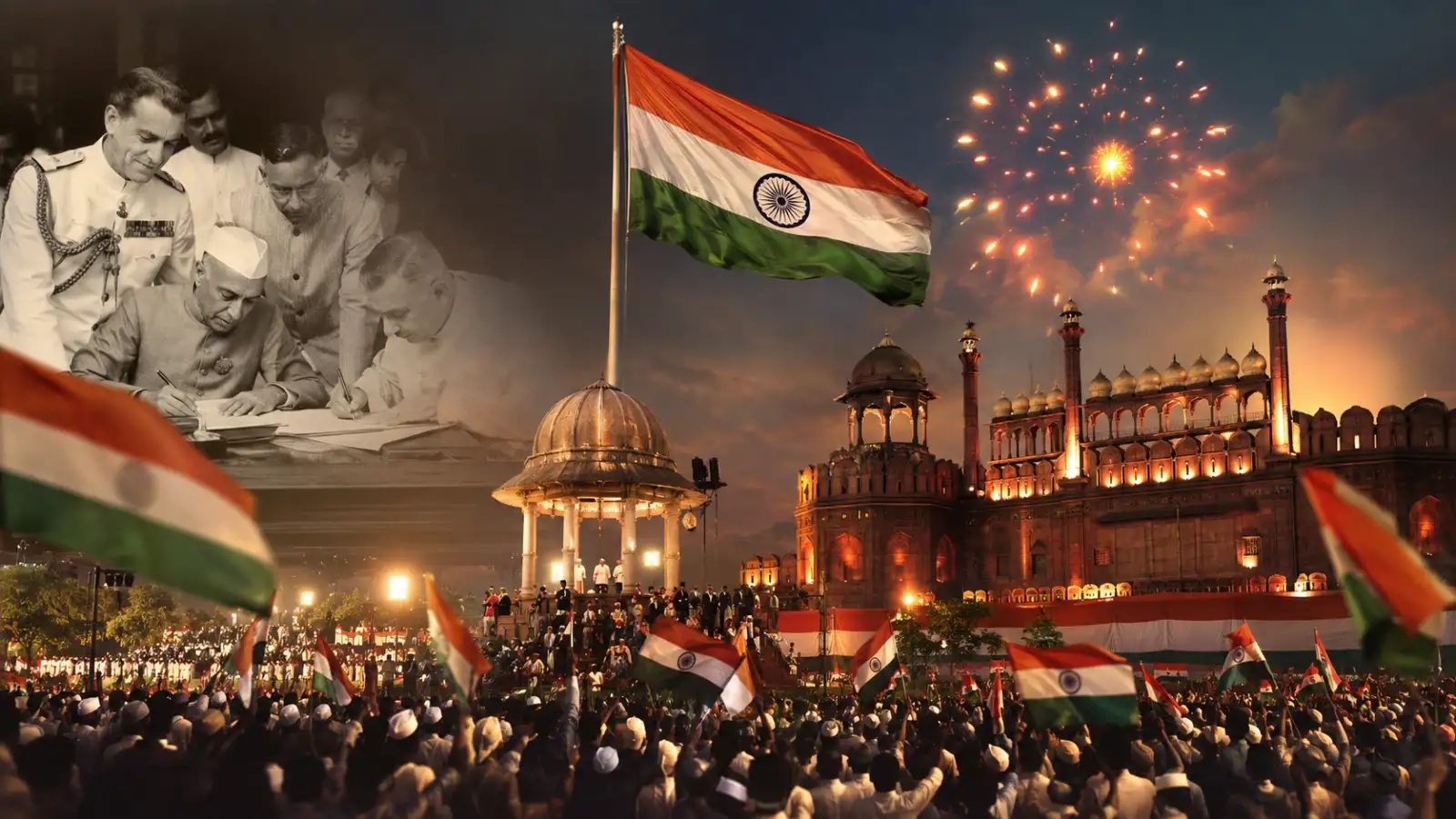
Uncovering why India celebrates Independence Day on August 15 reveals a fascinating story involving wartime victories, political urgency, and a unique midnight compromise.
Uncovering why India celebrates Independence Day on August 15 reveals a fascinating story involving wartime victories, political urgency, and a unique midnight compromise.
Bringing forward the British departure deadline
When the British government decided to exit the Indian subcontinent, the original plan was vastly different from what actually occurred. British Prime Minister Clement Attlee originally announced that power would be transferred to Indian hands by June 1948. To oversee this massive transition, Admiral Lord Louis Mountbatten was sent as the final Viceroy of British India in early 1947. However, upon arriving on the ground, Mountbatten quickly concluded that waiting another year was impossible. Widespread political unrest, intense administrative friction, and escalating communal violence were threatening to tear the region apart. Believing that delay would cause complete collapse, Mountbatten made a drastic choice to accelerate the exit timeline by ten months.A personal wartime memory that shaped a national milestone
Having decided to advance the transfer of power to August 1947, Mountbatten needed to lock in a specific date. During a major press conference in New Delhi, journalists pressed him to name the precise day Britain would hand over governance. Mountbatten later admitted that he selected the date almost on impulse to show complete authority over the process. He picked 15 August specifically because it held immense personal military significance. Exactly two years earlier, on 15 August 1945, Imperial Japan had surrendered to the Allied forces, bringing the Second World War to an end. As the former Supreme Allied Commander in South East Asia, Mountbatten considered that wartime victory the proudest moment of his military career. He chose to fold his own victory anniversary into the historic birth of independent India.The astrological crisis and the midnight compromise
Although Mountbatten fixed the date, his choice caused immediate concern among Indian leaders and traditional astrologers. According to the Hindu calendar, 15 August 1947 was declared inauspicious for major state inaugurations. Astrologers urged political leaders to alter the schedule, warning that starting a nation's journey on an unfavorable date could lead to future instability. To resolve this impasse without changing the official legal date set by the British Parliament, a clever compromise was devised. According to Western tradition, a new calendar day begins at midnight. However, according to Hindu tradition, a new day begins at sunrise. Indian leaders decided to convene the Constituent Assembly on the night of 14 August. Just as the clock struck midnight, marking the start of 15 August on the official calendar, India's first Prime Minister, Jawaharlal Nehru, delivered his historic speech.A date forever etched in global freedom history
While the selection of 15 August was shaped by British military history and political haste, the date quickly transcended its origins. For the people of India, 15 August ceased to be about World War II or royal decrees. Instead, it became an enduring symbol of immense sacrifice, democratic resilience, and national pride. Understanding why India celebrates Independence Day on August 15 reminds us that while the date was chosen by fate and politics, the freedom it represents was earned through the courage of millions.





Loving Newspoint? Download the app now
