
Allow Me to Leave Hospital': Sonam Wangchuk Moves Delhi HC to Join Parliament March

Climate activist and education reformer Sonam Wangchuk has approached the Delhi High Court with an emotional plea, requesting permission to leave the hospital so that he can participate in the proposed Parliament march linked to the ongoing protests for Ladakh's constitutional safeguards.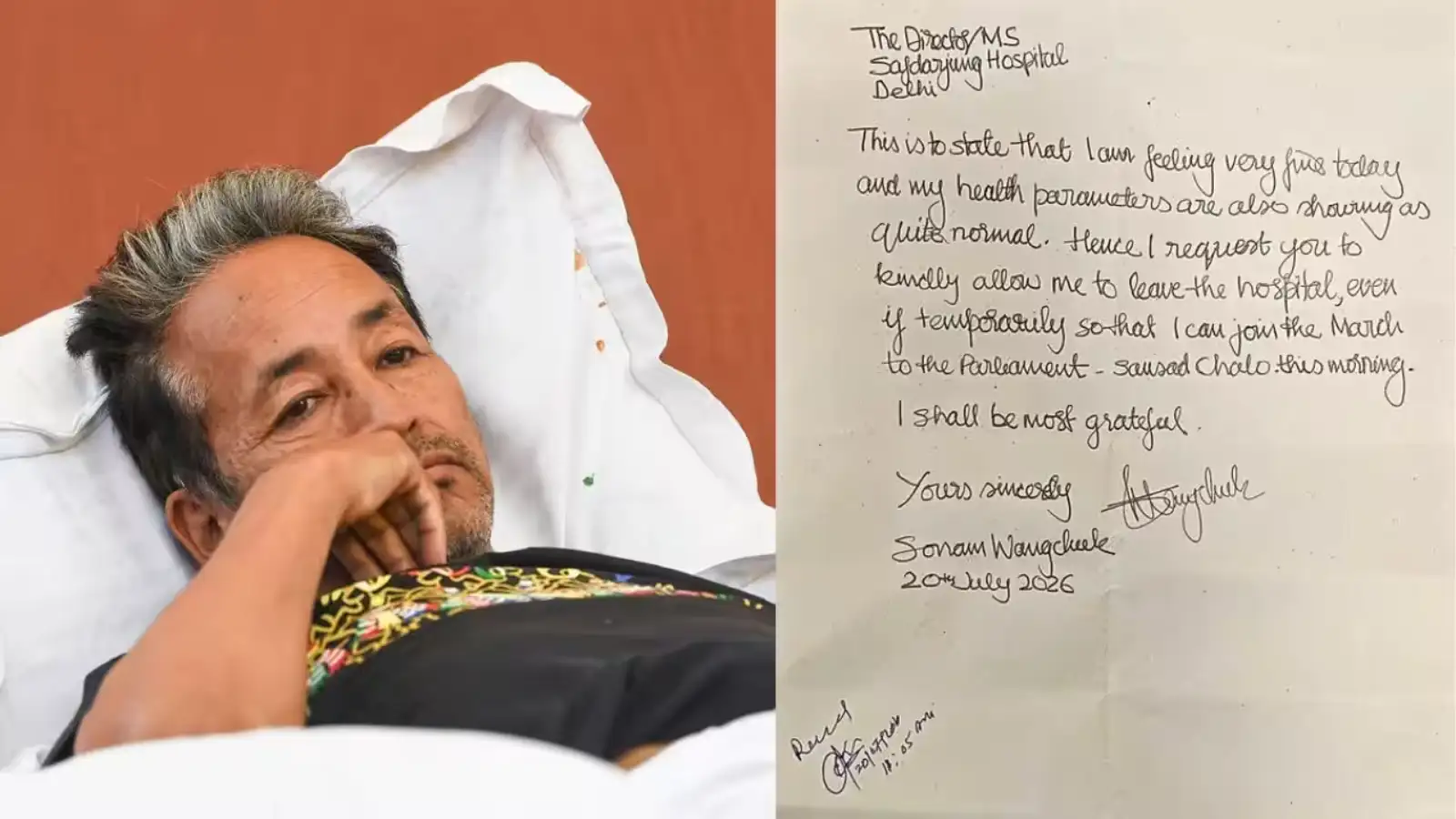
In his submission before the court, Wangchuk said, "Allow me to leave the hospital, I have to join the Parliament march," underscoring his determination to continue the movement despite concerns over his health.
The latest development comes amid growing national attention on Wangchuk's indefinite hunger strike and the broader campaign demanding greater constitutional protection for Ladakh, particularly the inclusion of the Union Territory under the Sixth Schedule of the Constitution.
Background of the Protest
Sonam Wangchuk has been at the forefront of the movement seeking constitutional safeguards for Ladakh after it became a Union Territory in 2019. Protesters argue that the region needs stronger legal protections to preserve its fragile Himalayan ecology, cultural identity and employment opportunities for local residents.
The movement has consistently demanded Sixth Schedule status, statehood for Ladakh, dedicated public service recruitment and parliamentary representation. Wangchuk has maintained that these demands are essential to protect the interests of the people and the environment.
His hunger strike has drawn support from political leaders, environmentalists, civil society groups and citizens across the country.
Health Concerns Remain
Wangchuk was admitted to the hospital after concerns were raised over his deteriorating health during the prolonged fast. Medical experts reportedly advised continued observation and treatment, prompting authorities to keep him under medical supervision.
However, through his legal plea, Wangchuk has made it clear that he wishes to rejoin fellow protesters and participate in the Parliament march, describing it as a crucial part of the democratic movement for Ladakh's future.
The Delhi High Court heard submissions from both sides while considering the balance between Wangchuk's health and his right to participate in a peaceful democratic protest.
Parliament March Gains Momentum
The proposed Parliament march has become the next major phase of the Ladakh movement, with supporters planning to draw national attention to the region's long-standing demands.
Organisers believe the march will help amplify calls for constitutional protections and encourage the Centre to resume meaningful dialogue with representatives from Ladakh.
The protest has gained momentum in recent weeks, with several opposition leaders, activists and public figures expressing solidarity with Wangchuk and urging the government to engage with the protesters through dialogue rather than confrontation.
Government Yet to Respond
The Central government has not issued a detailed response to Wangchuk's latest plea. Earlier, officials had stated that discussions on Ladakh's administrative and developmental concerns remain open, though no formal commitment has been made regarding the Sixth Schedule demand.
Meanwhile, legal proceedings continue as the High Court considers the activist's request to leave the hospital and participate in the march.
What Lies Ahead?
Sonam Wangchuk's appeal has added another significant chapter to the ongoing Ladakh movement. While the court's decision will determine whether he can immediately join the Parliament march, the larger debate over Ladakh's constitutional future remains unresolved.
As supporters continue to rally behind the activist, the coming days are expected to be crucial for both the legal proceedings and the broader campaign seeking stronger constitutional safeguards for the Himalayan region. Wangchuk's determination, despite health challenges, has once again brought national focus to the issues facing Ladakh and the demands of its people
In his submission before the court, Wangchuk said, "Allow me to leave the hospital, I have to join the Parliament march," underscoring his determination to continue the movement despite concerns over his health.
The latest development comes amid growing national attention on Wangchuk's indefinite hunger strike and the broader campaign demanding greater constitutional protection for Ladakh, particularly the inclusion of the Union Territory under the Sixth Schedule of the Constitution.
Background of the Protest
Sonam Wangchuk has been at the forefront of the movement seeking constitutional safeguards for Ladakh after it became a Union Territory in 2019. Protesters argue that the region needs stronger legal protections to preserve its fragile Himalayan ecology, cultural identity and employment opportunities for local residents.
The movement has consistently demanded Sixth Schedule status, statehood for Ladakh, dedicated public service recruitment and parliamentary representation. Wangchuk has maintained that these demands are essential to protect the interests of the people and the environment.
His hunger strike has drawn support from political leaders, environmentalists, civil society groups and citizens across the country.
Health Concerns Remain
Wangchuk was admitted to the hospital after concerns were raised over his deteriorating health during the prolonged fast. Medical experts reportedly advised continued observation and treatment, prompting authorities to keep him under medical supervision.
However, through his legal plea, Wangchuk has made it clear that he wishes to rejoin fellow protesters and participate in the Parliament march, describing it as a crucial part of the democratic movement for Ladakh's future.
The Delhi High Court heard submissions from both sides while considering the balance between Wangchuk's health and his right to participate in a peaceful democratic protest.
Parliament March Gains Momentum
The proposed Parliament march has become the next major phase of the Ladakh movement, with supporters planning to draw national attention to the region's long-standing demands.
Organisers believe the march will help amplify calls for constitutional protections and encourage the Centre to resume meaningful dialogue with representatives from Ladakh.
You may also like
- Tear gas fired, protesters lathicharged: Videos capture chaotic scenes from CJP's 'sansad chalo' march
- Ram temple donation 'theft' row: Simple case of crime, don't politicise it, says SC
- Amarnath, Vaishnodevi, yatras suspended for 2nd day due to rain
- 'These are our children': Priyanka Gandhi slams Centre over police action at CJP protest
- IMD predicts active monsoon spell in Delhi, NCR till Wednesday
The protest has gained momentum in recent weeks, with several opposition leaders, activists and public figures expressing solidarity with Wangchuk and urging the government to engage with the protesters through dialogue rather than confrontation.
Government Yet to Respond
The Central government has not issued a detailed response to Wangchuk's latest plea. Earlier, officials had stated that discussions on Ladakh's administrative and developmental concerns remain open, though no formal commitment has been made regarding the Sixth Schedule demand.
Meanwhile, legal proceedings continue as the High Court considers the activist's request to leave the hospital and participate in the march.
What Lies Ahead?
Sonam Wangchuk's appeal has added another significant chapter to the ongoing Ladakh movement. While the court's decision will determine whether he can immediately join the Parliament march, the larger debate over Ladakh's constitutional future remains unresolved.
As supporters continue to rally behind the activist, the coming days are expected to be crucial for both the legal proceedings and the broader campaign seeking stronger constitutional safeguards for the Himalayan region. Wangchuk's determination, despite health challenges, has once again brought national focus to the issues facing Ladakh and the demands of its people






Loving Newspoint? Download the app now
