
EC to take call on whether TMC split makes for symbol dispute case


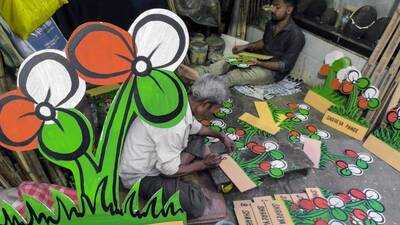
NEW DELHI: With the rival factions of Trinamool Congress (TMC) having approached EC to stake claim to the party name and symbol, it is now for the poll panel to formally acknowledge the split in the party, warranting proceedings under Para 15 of the Symbols Order to determine the ‘real' TMC.
For this purpose, EC will examine the resolutions adopted by each faction electing their respective leader as “party chief” along with details of the expulsions and counter-expulsions. It may also examine the original party constitution — including Article 20 that required the party to elect a national working committee (NWC) every three years — alongside the fact that the last such election was held over four years ago in Feb 2022. The faction led by Ritabrata Banerjee has already claimed that the last-elected NWC had become defunct as its term expired in Feb 2025. A source told TOI that the same reasoning may be applied by EC to question validity of the amended TMC party constitution — shared with EC in March this year — requiring NWC elections only after five years.
The poll body may, as the next logical step, write to the two factions recognising the split and seeking additional documentation, including affidavits from supporting MPs and MLAs, to initiate quasi-judicial proceedings to assess which faction gets to retain the party name and its reserved symbol. The date of first hearing may be appointed, and the evidence of support submitted by each faction, shared with the other to help them frame their arguments.
The three-test formula for deciding symbol dispute, as laid down in the Supreme Court’s 1971 judgment in the Sadiq Ali case, includes the test of adherence to the party’s aims and objects, test of party constitution and the test of majority based on each faction’s organisational and legislative strength.
While proceedings in symbol disputes may span for weeks or months, EC may, where a poll or bypoll is imminent, freeze the party’s reserved symbol and ask the rival factions to choose a separate party name and symbol until final settlement of the row. However, there is no such urgency as regards the TMC row, since no poll or by-poll is immediately due.
Under the test of aims and objects of the party, the EC determines if either of the split groups deviated from the ‘aims and objects’ of the party. Test of party constitution requires the EC to confirm if the affairs of the party were being conducted as per the party constitution and reflect inner party democracy. The third and last test – test of majority – involves gauging the numerical strength of the faction in the legislative and organisational setup of the party.
For this purpose, EC will examine the resolutions adopted by each faction electing their respective leader as “party chief” along with details of the expulsions and counter-expulsions. It may also examine the original party constitution — including Article 20 that required the party to elect a national working committee (NWC) every three years — alongside the fact that the last such election was held over four years ago in Feb 2022. The faction led by Ritabrata Banerjee has already claimed that the last-elected NWC had become defunct as its term expired in Feb 2025. A source told TOI that the same reasoning may be applied by EC to question validity of the amended TMC party constitution — shared with EC in March this year — requiring NWC elections only after five years.
The poll body may, as the next logical step, write to the two factions recognising the split and seeking additional documentation, including affidavits from supporting MPs and MLAs, to initiate quasi-judicial proceedings to assess which faction gets to retain the party name and its reserved symbol. The date of first hearing may be appointed, and the evidence of support submitted by each faction, shared with the other to help them frame their arguments.
The three-test formula for deciding symbol dispute, as laid down in the Supreme Court’s 1971 judgment in the Sadiq Ali case, includes the test of adherence to the party’s aims and objects, test of party constitution and the test of majority based on each faction’s organisational and legislative strength.
While proceedings in symbol disputes may span for weeks or months, EC may, where a poll or bypoll is imminent, freeze the party’s reserved symbol and ask the rival factions to choose a separate party name and symbol until final settlement of the row. However, there is no such urgency as regards the TMC row, since no poll or by-poll is immediately due.
Under the test of aims and objects of the party, the EC determines if either of the split groups deviated from the ‘aims and objects’ of the party. Test of party constitution requires the EC to confirm if the affairs of the party were being conducted as per the party constitution and reflect inner party democracy. The third and last test – test of majority – involves gauging the numerical strength of the faction in the legislative and organisational setup of the party.
Next Story