Explore India’s State-Wise Dance Traditions: From Kuchipudi to Kathak

India’s cultural tapestry is beautifully woven with diverse dance traditions that reflect the unique history, beliefs, and artistry of each region. Every state in India boasts distinct dance forms, ranging from deeply spiritual classical styles to lively folk performances, each with its characteristic costume and story. These dances not only entertain but also preserve centuries-old customs and narratives. Let’s explore India’s rich dance landscape, highlighting key forms state-wise, their unique costumes, and what makes them special.
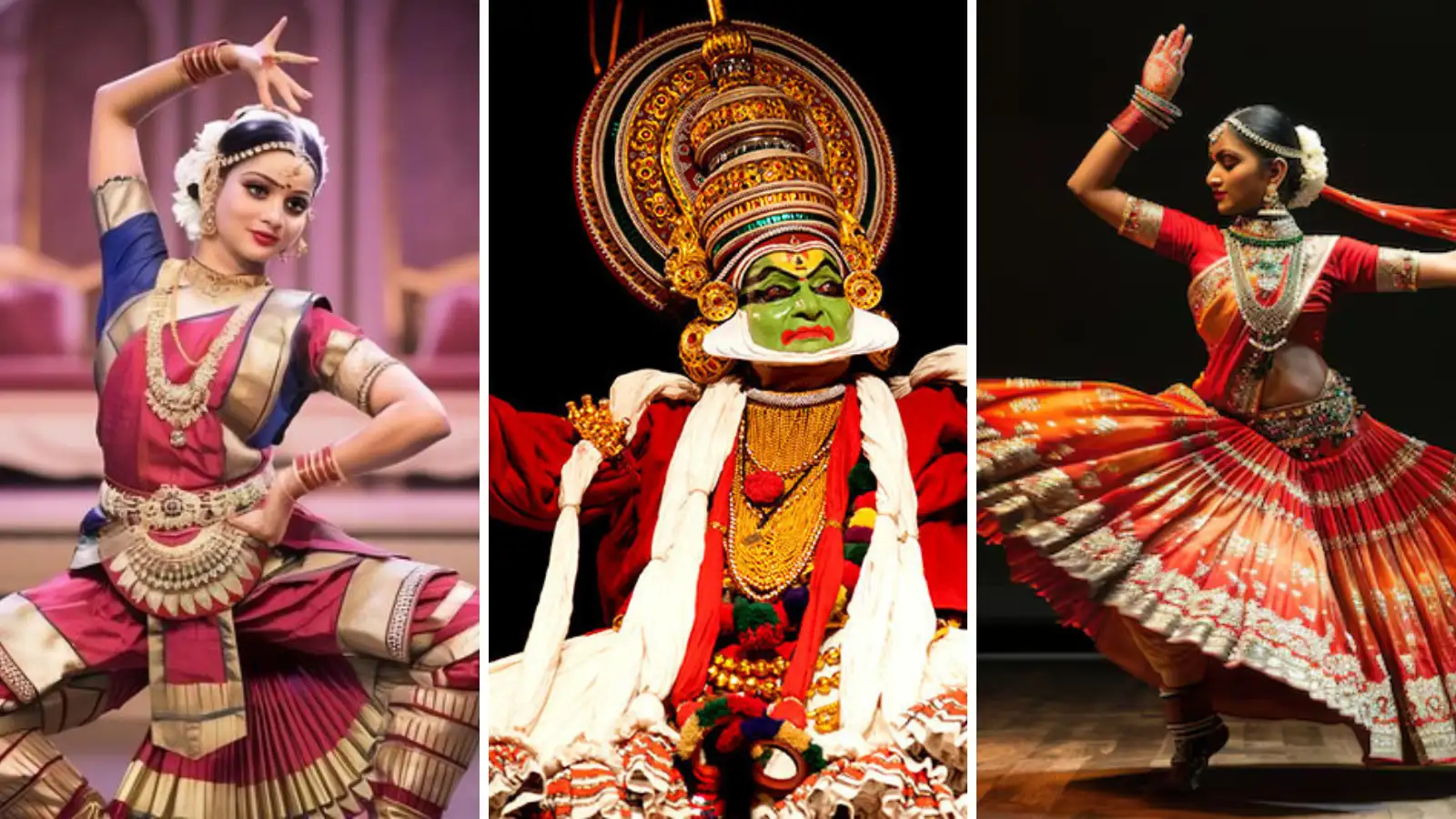
Hero Image


Dance Forms Across India: A Cultural Kaleidoscope
India’s dance traditions can be broadly divided into classical and folk genres. Classical dances like Bharatanatyam and Kathak are steeped in ritualistic storytelling and precise technique. Folk dances such as Rajasthan’s Ghoomar or Punjab’s Bhangra are energetic expressions rooted in local festivals and daily life. Each dance brings its own flavour, shaped by the state’s climate, history, and culture.

State-Wise Dance Forms and Their Costumes


  • Andhra Pradesh:
Kuchipudi dominates here with its elegant sarees featuring pleats for women and dhotis for men, adorned with temple jewellery and flowers. Folk forms like Lambadi bring colourful skirts and mirror work.


  • Assam:
Sattriya is a sacred dance with men wearing pat silk dhotis and women in kanchi saris, both complemented by Assamese jewellery. Bihu, a folk dance, bursts with vibrant traditional attire.

  • Kerala:
Kathakali stuns with its heavy, colourful costumes, elaborate makeup, and striking headgear. Mohiniyattam contrasts with its graceful white saree bordered in gold, symbolising feminine elegance.


  • Rajasthan:
The swirling Ghoomar features mirror-studded ghagras and odhnis, richly decorated with jewellery. Kalbeliya dancers wear black flowing skirts and embroidered blouses, embodying the spirit of their community.

  • Punjab:
High-energy Bhangra showcases colourful kurtas, lungis, and turbans, while the graceful Giddha involves vibrant salwar-kameez with jewellery and dupattas.

  • Odisha:
Odissi dancers wear silk sarees with elegant pleats and silver filigree jewellery, embodying lyrical grace. Chhau combines martial art movements with vivid masks and costumes.

  • Manipur:
Manipuri dance is known for smooth, flowing motions with translucent veils and cylindrical skirts called Kumil, narrating stories of Krishna and Radha.


This pattern continues across other states, each preserving and celebrating their unique identity through dance costumes and forms - from the woollen shawls of Himachal Pradesh’s folk dances to the vibrant tribal regalia of Nagaland.

Popular Classical Dance Forms of India


  • Bharatanatyam (Tamil Nadu):
Known for its poised body postures, intricate footwork, and expressive gestures, Bharatanatyam often portrays tales of devotion and love.

  • Kathak (Uttar Pradesh):
This dance dazzles with fast spins, rhythmic footwork, and storytelling through facial expressions.

  • Kuchipudi (Andhra Pradesh):
A dance-drama rich in narrative, combining swift rhythms with smooth movements and theatrical elements.

  • Odissi (Odisha):
Celebrated for its independent head, chest, and torso movements, it presents lyrical and graceful poses inspired by temple sculptures.