
After 30 Years, 'Green Boots' of Everest Finally Has an Identity

Far before social media turned Mount Everest into the ultimate adventure tourism destination, climbers were talking about a figure they called simply “Green Boots.” The nickname came from a pair of bright green climbing boots worn by a frozen body lying near the Northeast Ridge route of Everest, at an altitude of around 8,500 metres. For years, the body rested inside a small rocky alcove in what climbers call the "Death Zone," an area so high that the human body slowly begins to shut down due to the lack of oxygen.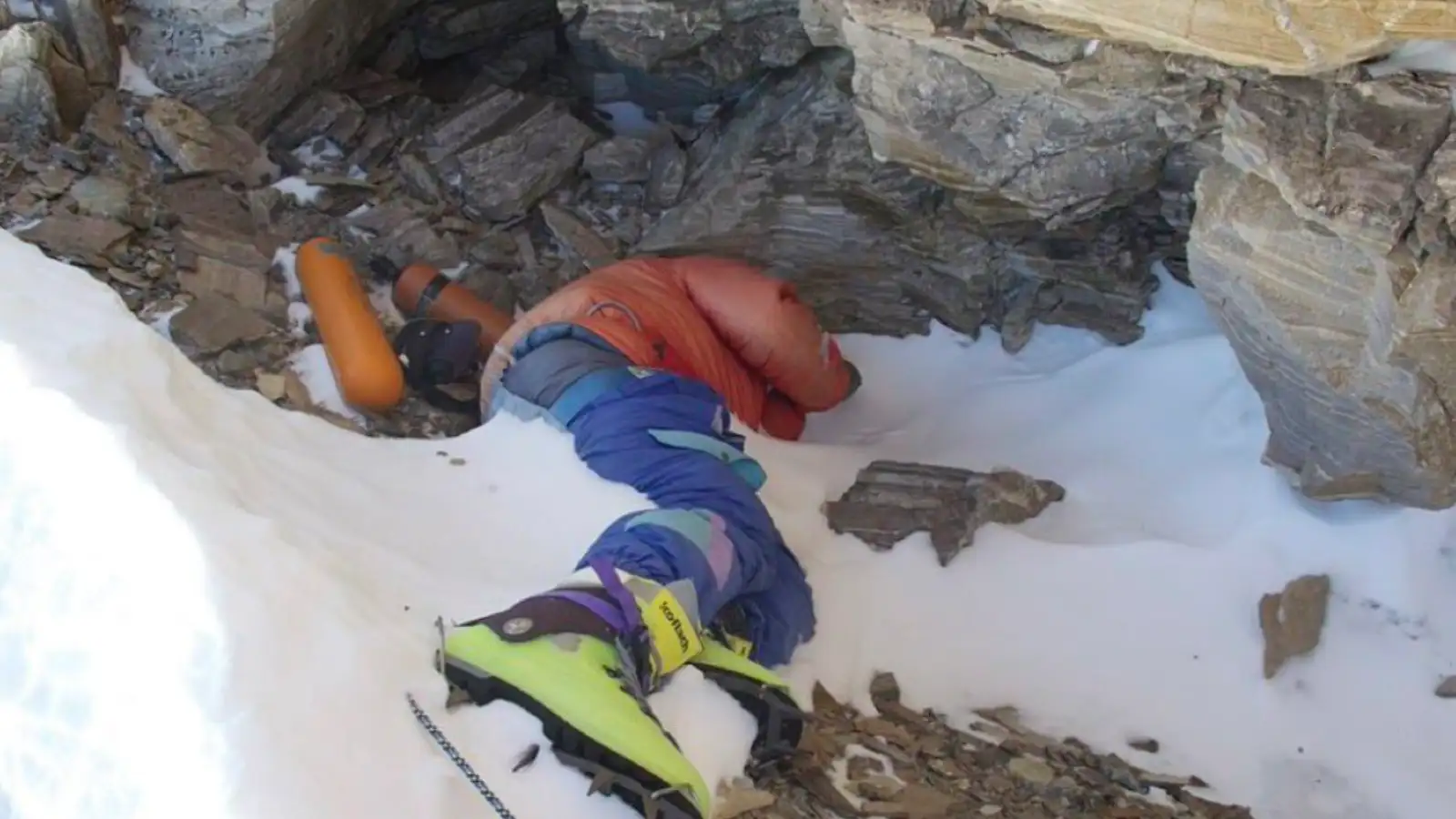
The Body Everyone Knew, But Nobody Identified
Over time, Green Boots became more than a tragic sight. The body became a reference point. Climbers ascending and descending the world's tallest mountain would often mention passing "Green Boots Cave." For many, it was a reminder of Everest's dangers. For others, it became one of the mountain's most haunting mysteries.
Over the years, the body thought to be that of Green Boots became widely believed to be that of Head Constable Tsewang Paljor. This identification was widely accepted in books, documentaries, and online discussions. However, questions about the identification never really disappeared.
A Mystery of Three Decades
For nearly 30 years, no one knew who Green Boots was. Mountaineers, journalists, and historians debated whether the body was that of Tsewang Paljor or another member of the same expedition, Lance Naik Dorje Morup. The extreme conditions on Everest meant that a definitive identification was almost impossible. There are more ways than one in which time stops on the mountain.
But now, recent reports and official verification efforts have established, through DNA analysis, that the climber known as Green Boots was Lance Naik Dorje Morup. The discovery closes one of Everest's longest-running mysteries and restores the identity of a man who had become known only by a nickname.
Why Wasn't He Brought Home?
Everest's infamous Death Zone holds the answer. Above 8,000 meters, the oxygen is so thin that even experienced climbers have a hard time surviving. Recovering bodies from such altitudes is extremely dangerous and can put rescuers' lives at risk. Consequently, it is believed that more than 200 bodies still remain on Mount Everest today, many of which serve as silent reminders of the mountain’s unforgiving nature. Recent reports suggest that Indian authorities are exploring a mission to recover Dorje Morup's remains and bring them back home with full military honors, a task that would have been considered nearly impossible for decades.
More Than ‘Green Boots’
For years, the world knew him only by a pair of green boots. People wrote about him, photographed him, and used his location to navigate one of the most dangerous mountains on Earth. Yet somewhere beneath the layers of ice, altitude, and mythology was a man with a family, a profession, and a name.
Nearly 30 years later, one of Mount Everest's most famous mysteries has finally been solved. Perhaps the most important part of that discovery is this: the world no longer has to remember him as "Green Boots." It can finally remember him as Lance Naik Dorje Morup.
The Body Everyone Knew, But Nobody Identified
Over time, Green Boots became more than a tragic sight. The body became a reference point. Climbers ascending and descending the world's tallest mountain would often mention passing "Green Boots Cave." For many, it was a reminder of Everest's dangers. For others, it became one of the mountain's most haunting mysteries. The Disaster That Changed Everything
It started in May 1996, during one of the deadliest seasons in Everest’s history. An expedition team from the Indo-Tibetan Border Police (ITBP) was on a summit push when bad weather turned catastrophic. Three members of the team, Subedar Tsewang Smanla, Head Constable Tsewang Paljor, and Lance Naik Dorje Morup , never returned from the mountain. Eight climbers died in the disaster, which went on to become one of the most documented tragedies in mountaineering history.Over the years, the body thought to be that of Green Boots became widely believed to be that of Head Constable Tsewang Paljor. This identification was widely accepted in books, documentaries, and online discussions. However, questions about the identification never really disappeared.
You may also like
- Eurasian lynx photographed for the first time in Sikkim, Representing only 2nd photographic record of species in the eastern Himalayan region
- Maharashtra graphic designer 'forced' into cyber fraud operations in Myanmar, 'hundreds' of other Indians also trapped: Police
- Global AMR Fund picks 12 Indian innovations to tackle antibiotic resistance in environment
- Ritabrata Banerjee-led TMC rebels to meet EC, stake claim on party symbol and funds
- Evening news wrap: FIR against five caregivers in Bengaluru daycare abuse case; Russia imports Indian gasoline as Ukraine strikes cause fuel shortages & more
A Mystery of Three Decades
For nearly 30 years, no one knew who Green Boots was. Mountaineers, journalists, and historians debated whether the body was that of Tsewang Paljor or another member of the same expedition, Lance Naik Dorje Morup. The extreme conditions on Everest meant that a definitive identification was almost impossible. There are more ways than one in which time stops on the mountain. But now, recent reports and official verification efforts have established, through DNA analysis, that the climber known as Green Boots was Lance Naik Dorje Morup. The discovery closes one of Everest's longest-running mysteries and restores the identity of a man who had become known only by a nickname.
Why Wasn't He Brought Home?
Everest's infamous Death Zone holds the answer. Above 8,000 meters, the oxygen is so thin that even experienced climbers have a hard time surviving. Recovering bodies from such altitudes is extremely dangerous and can put rescuers' lives at risk. Consequently, it is believed that more than 200 bodies still remain on Mount Everest today, many of which serve as silent reminders of the mountain’s unforgiving nature. Recent reports suggest that Indian authorities are exploring a mission to recover Dorje Morup's remains and bring them back home with full military honors, a task that would have been considered nearly impossible for decades.More Than ‘Green Boots’
For years, the world knew him only by a pair of green boots. People wrote about him, photographed him, and used his location to navigate one of the most dangerous mountains on Earth. Yet somewhere beneath the layers of ice, altitude, and mythology was a man with a family, a profession, and a name. Nearly 30 years later, one of Mount Everest's most famous mysteries has finally been solved. Perhaps the most important part of that discovery is this: the world no longer has to remember him as "Green Boots." It can finally remember him as Lance Naik Dorje Morup.






More from our partners


Loving Newspoint? Download the app now
