
India’s Forgotten Ports That Once Connected the Country to the World

India's relationship with the sea is much older than its modern ports and container terminals suggest. For thousands of years, merchants sailed from the country's coastline carrying spices, textiles, beads, precious stones and other goods to markets across the Arabian Sea, Persian Gulf, Red Sea and Southeast Asia. Ports rose around natural harbours, river mouths and sheltered coastlines, sometimes becoming extraordinarily wealthy before declining as rivers changed course, political powers shifted or new trading centres emerged. Some have almost disappeared from public memory, while others survive as archaeological sites or ordinary coastal towns. Their stories reveal a fascinating maritime India that was deeply connected to the wider world long before modern globalisation.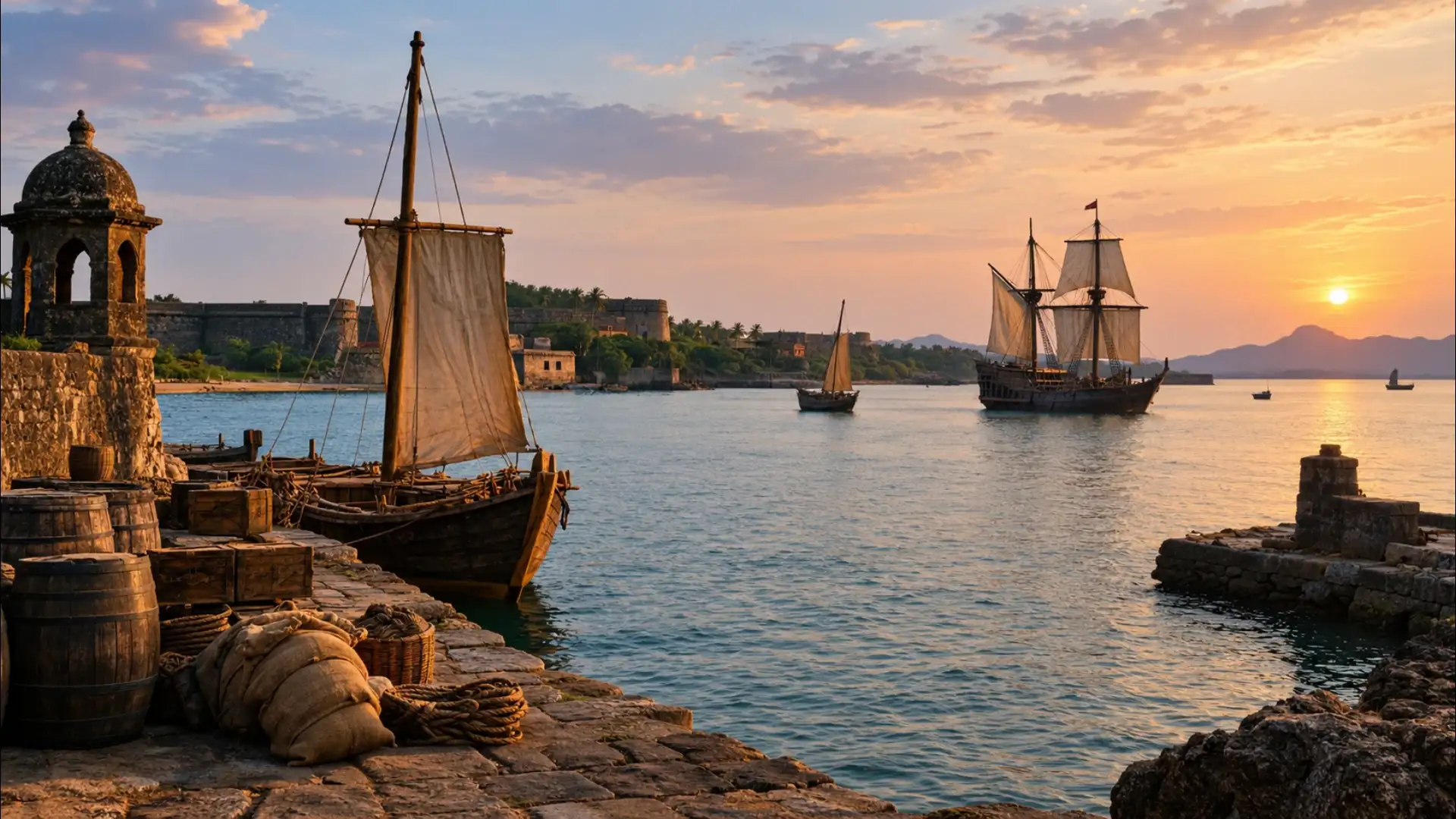
Dating to the Indus Valley Civilisation, Lothal flourished roughly 4,000 years ago. Archaeological discoveries at the site include a large basin traditionally interpreted as a dockyard, along with evidence of craft production and long-distance trade.
The city's location near the Gulf of Khambhat gave it access to maritime networks. Archaeological evidence suggests connections between the Indus civilisation and regions beyond the Indian subcontinent.
Beads, pottery and other manufactured goods demonstrate that Lothal was not simply a settlement near water. It was part of a sophisticated commercial system.
Its remains provide some of the earliest evidence of organised maritime trade in the Indian subcontinent.
The exact location of ancient Muziris remains debated, but archaeological discoveries around the Kodungallur region have revealed evidence of extensive international trade.
Roman coins, ceramics and other artefacts indicate strong commercial connections between the Malabar Coast and the Roman world.
Pepper was particularly important. Roman demand for Indian spices helped make the Malabar Coast a valuable destination for overseas merchants.
Ships crossing the Arabian Sea brought gold, silver and manufactured goods, while Indian products travelled in the opposite direction.
Archaeological excavations have uncovered Roman amphorae, beads, pottery and other material associated with long-distance trade.
The settlement appears to have participated in an international trading network involving the Indian subcontinent and the Mediterranean.
Arikamedu's history challenges the idea that global trade is a modern phenomenon. Merchants were already moving goods across enormous distances nearly two thousand years ago.
Historical and literary sources describe it as a significant centre for maritime travel and trade.
Its location near the Ganges delta gave merchants access to inland routes as well as the Bay of Bengal.
Ships travelling from eastern India could connect with Sri Lanka and Southeast Asia, helping goods and ideas move across the region.
Over time, changes in river systems and the coastline contributed to the decline of several ancient ports in the Bengal delta.
Known historically as Shurparaka, it appears in early Indian sources and became associated with maritime trade.
Its location along the western coast gave merchants access to the Arabian Sea and wider Indian Ocean networks.
Archaeological evidence, including Buddhist remains, highlights the cultural as well as commercial importance of the settlement.
Ports were places where different communities met, making them important centres for the exchange of ideas as well as commodities.
Its position allowed goods from India's interior to reach maritime traders.
The port appears in Greco-Roman accounts describing trade with the Indian subcontinent. Goods including textiles, spices and other commodities moved through the region.
The example of Bharuch demonstrates why river systems were so important to ancient trade. A port did not need to be directly beside the open ocean to become commercially powerful. Inland waterways could bring products from distant production centres to the coast.
River mouths can silt up. Coastlines can shift. Channels can become too shallow for large ships. Political instability can redirect trade, while new ports may offer better facilities or safer routes.
This helps explain why some once-famous ports are now archaeological sites or relatively quiet towns.
Their disappearance is not necessarily evidence that trade stopped. Often, commercial activity simply moved elsewhere.
Indian merchants interacted with traders from the Roman world, Arabia, Persia, Sri Lanka and Southeast Asia. Alongside commodities, these networks carried languages, religious ideas, technologies and artistic influences.
The Indian Ocean was therefore not an empty space separating civilisations. It was a busy commercial highway.
Modern India is investing heavily in ports, coastal infrastructure and maritime trade. Looking back at ancient port cities shows how strongly economic development has always depended on geography and access to waterways.
It also highlights the importance of preserving archaeological sites before coastal development, erosion and environmental changes damage them.
Lothal: A Harbourside City of the Indus Civilisation
Among India's oldest known maritime trading sites is Lothal in Gujarat.Dating to the Indus Valley Civilisation, Lothal flourished roughly 4,000 years ago. Archaeological discoveries at the site include a large basin traditionally interpreted as a dockyard, along with evidence of craft production and long-distance trade.
The city's location near the Gulf of Khambhat gave it access to maritime networks. Archaeological evidence suggests connections between the Indus civilisation and regions beyond the Indian subcontinent.
Beads, pottery and other manufactured goods demonstrate that Lothal was not simply a settlement near water. It was part of a sophisticated commercial system.
Its remains provide some of the earliest evidence of organised maritime trade in the Indian subcontinent.
Muziris: The Port That Linked India With Rome
On the Malabar Coast of present-day Kerala, Muziris became one of the most famous ports of the ancient Indian Ocean.The exact location of ancient Muziris remains debated, but archaeological discoveries around the Kodungallur region have revealed evidence of extensive international trade.
Roman coins, ceramics and other artefacts indicate strong commercial connections between the Malabar Coast and the Roman world.
Pepper was particularly important. Roman demand for Indian spices helped make the Malabar Coast a valuable destination for overseas merchants.
Ships crossing the Arabian Sea brought gold, silver and manufactured goods, while Indian products travelled in the opposite direction.
Arikamedu and India’s Ancient Links With Southeast Asia
Near present-day Puducherry, Arikamedu provides another remarkable window into India's maritime connections.Archaeological excavations have uncovered Roman amphorae, beads, pottery and other material associated with long-distance trade.
The settlement appears to have participated in an international trading network involving the Indian subcontinent and the Mediterranean.
Arikamedu's history challenges the idea that global trade is a modern phenomenon. Merchants were already moving goods across enormous distances nearly two thousand years ago.
Tamralipta: The Gateway of Eastern India
On the eastern side of the subcontinent, Tamralipta was an important ancient port associated with present-day Tamluk in West Bengal.Historical and literary sources describe it as a significant centre for maritime travel and trade.
Its location near the Ganges delta gave merchants access to inland routes as well as the Bay of Bengal.
Ships travelling from eastern India could connect with Sri Lanka and Southeast Asia, helping goods and ideas move across the region.
Over time, changes in river systems and the coastline contributed to the decline of several ancient ports in the Bengal delta.
Sopara: A Port With Centuries of Connections
Near present-day Mumbai, Sopara was another important ancient coastal settlement.Known historically as Shurparaka, it appears in early Indian sources and became associated with maritime trade.
Its location along the western coast gave merchants access to the Arabian Sea and wider Indian Ocean networks.
Archaeological evidence, including Buddhist remains, highlights the cultural as well as commercial importance of the settlement.
Ports were places where different communities met, making them important centres for the exchange of ideas as well as commodities.
Barygaza and the Trade of Western India
Ancient Barygaza, generally identified with Bharuch in Gujarat, became an important commercial centre on the Narmada River.Its position allowed goods from India's interior to reach maritime traders.
The port appears in Greco-Roman accounts describing trade with the Indian subcontinent. Goods including textiles, spices and other commodities moved through the region.
The example of Bharuch demonstrates why river systems were so important to ancient trade. A port did not need to be directly beside the open ocean to become commercially powerful. Inland waterways could bring products from distant production centres to the coast.
You may also like
- Murder accused who beheaded wife dies after jumping from police vehicle!
- Disha Salian death case: CBI registers FIR, takes over probe from Mumbai Police
- Delhi building collapse: HC refuses urgent listing of plea over demolition of adjoining structure
- Man tied up, brutally assaulted during robbery in Keralam
- Video: TN CM Vijay-themed Ganesha idols installed in Chennai
Why Ancient Ports Eventually Disappeared
Ports can appear permanent, but they depend heavily on geography.River mouths can silt up. Coastlines can shift. Channels can become too shallow for large ships. Political instability can redirect trade, while new ports may offer better facilities or safer routes.
This helps explain why some once-famous ports are now archaeological sites or relatively quiet towns.
Their disappearance is not necessarily evidence that trade stopped. Often, commercial activity simply moved elsewhere.
The Global India Behind the Archaeological Ruins
These forgotten ports reveal that ancient India was deeply integrated into international commerce.Indian merchants interacted with traders from the Roman world, Arabia, Persia, Sri Lanka and Southeast Asia. Alongside commodities, these networks carried languages, religious ideas, technologies and artistic influences.
The Indian Ocean was therefore not an empty space separating civilisations. It was a busy commercial highway.
Why These Ports Matter Today
Understanding India's maritime history has contemporary relevance.Modern India is investing heavily in ports, coastal infrastructure and maritime trade. Looking back at ancient port cities shows how strongly economic development has always depended on geography and access to waterways.
It also highlights the importance of preserving archaeological sites before coastal development, erosion and environmental changes damage them.






Loving Newspoint? Download the app now
