
Is BJP Winning or Losing? Election Predictions Decode India's Political Puzzle

With the Indian democratic spectacle nearing its conclusion, anticipation brews over the outcomes slated for June 4. Beyond the headline race, various nuances pepper the electoral discourse. Will the touted "400-paar" mandate materialize, or is it mere rhetoric? Could India pivot towards a new political trajectory, defying predictions?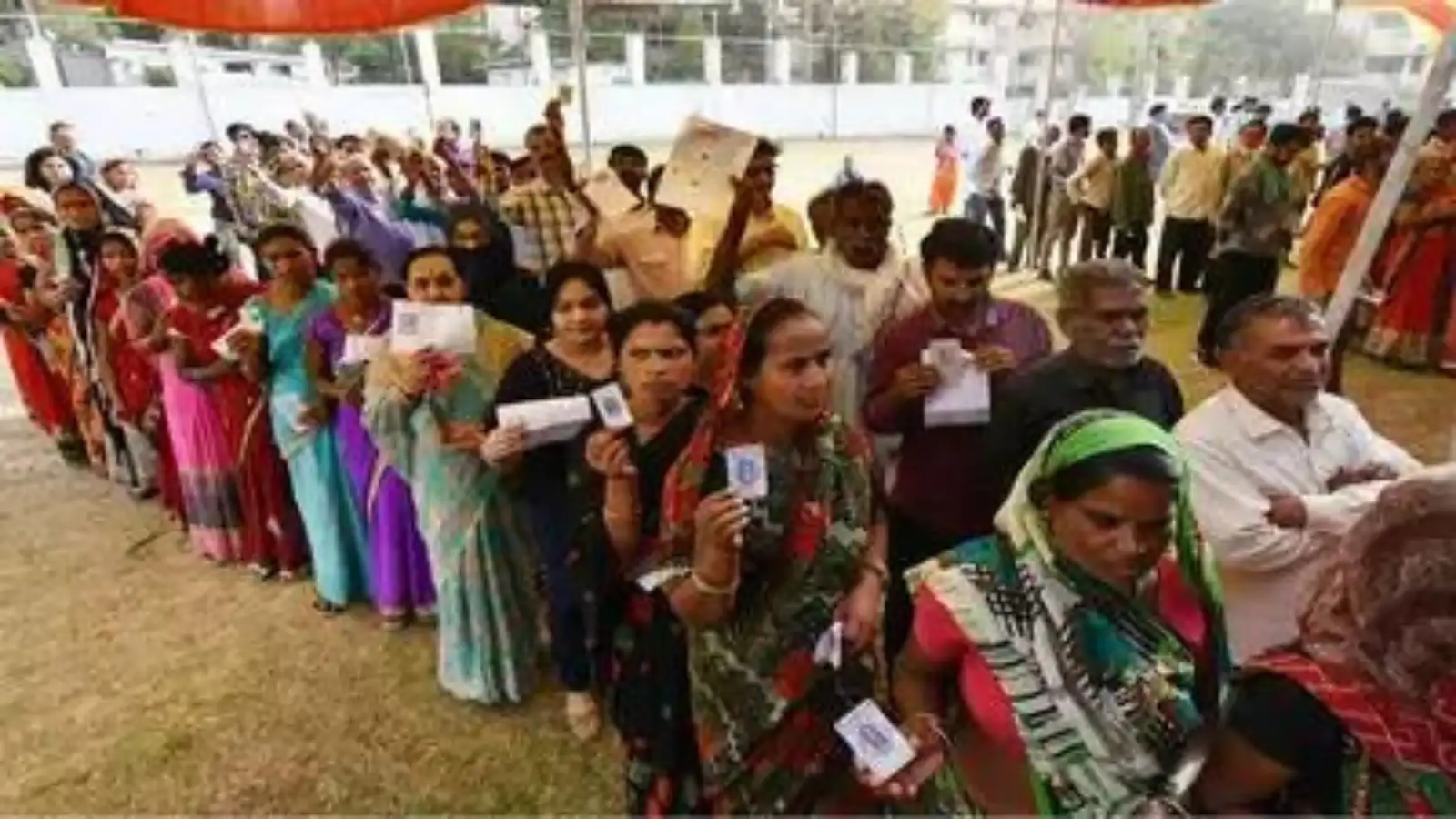
Central to this conjecture is the unity of the INDIA bloc, poised as a credible alternative. Will ideological differences splinter its cohesion if victorious? Moreover, if the BJP secures another term, can PM Modi deliver on his promises? Speculation also abounds regarding his potential successor, adding layers to this electoral saga.
In the realm of predictive augury, Rajasthan's famed Phalodi Satta Bazaar assumes prominence. Renowned for astute prognostication across domains, it offers insights into electoral dynamics. Latest assessments foresee a robust BJP showing, with projections hovering around 300 seats, a stark contrast to Congress's modest estimation of 40-42 seats.
Despite muted voter turnout in Uttar Pradesh, BJP's dominance remains unscathed, with predictions of 62-65 seats out of 80. Nationally, the BJP's anticipated tally oscillates between 280 to 290 seats, contrasting with Congress's expected 70 to 85 seats. Buoyed by ambitions to sweep UP entirely, BJP aims for a grand total of 335 to 340 seats, bolstered further by potential upticks in later phases.
Prior conjectures, citing BJP's claims of 400 seats, have yielded to more tempered projections, aligning closely with Phalodi Satta Bazaar's estimations. This bastion of predictive accuracy remains a bellwether, with its assessments serving as early indicators of potential electoral outcomes.
Amidst the flux of electoral fervor, Phalodi's betting rates reflect evolving sentiments. Factors such as candidate popularity, campaign fervor, and party dynamics shape these oscillations. The current rates, reflecting post-five-phase assessments, offer a glimpse into the shifting electoral landscape, poised to transform further as the race progresses.
In this intricate tapestry of Indian democracy, the Phalodi Satta Bazaar stands as a testament to predictive acumen, offering a lens into the nation's electoral pulse. As the nation braces for June 4, these forecasts illuminate the path ahead, shaping narratives and anticipation alike.
Central to this conjecture is the unity of the INDIA bloc, poised as a credible alternative. Will ideological differences splinter its cohesion if victorious? Moreover, if the BJP secures another term, can PM Modi deliver on his promises? Speculation also abounds regarding his potential successor, adding layers to this electoral saga.
In the realm of predictive augury, Rajasthan's famed Phalodi Satta Bazaar assumes prominence. Renowned for astute prognostication across domains, it offers insights into electoral dynamics. Latest assessments foresee a robust BJP showing, with projections hovering around 300 seats, a stark contrast to Congress's modest estimation of 40-42 seats.
You may also like
- Sarnath joins Unesco World Heritage list
- IFF says govt order to GitHub on BitChat unconstitutional, demands its withdrawal
- Govt had to bow before collective struggle of youth, says opposition
- Left scores win, despite its shrunken presence, through its student organs
- PM Modi is India's past, protesting youth the country's future, says Rahul
Despite muted voter turnout in Uttar Pradesh, BJP's dominance remains unscathed, with predictions of 62-65 seats out of 80. Nationally, the BJP's anticipated tally oscillates between 280 to 290 seats, contrasting with Congress's expected 70 to 85 seats. Buoyed by ambitions to sweep UP entirely, BJP aims for a grand total of 335 to 340 seats, bolstered further by potential upticks in later phases.
Prior conjectures, citing BJP's claims of 400 seats, have yielded to more tempered projections, aligning closely with Phalodi Satta Bazaar's estimations. This bastion of predictive accuracy remains a bellwether, with its assessments serving as early indicators of potential electoral outcomes.
Amidst the flux of electoral fervor, Phalodi's betting rates reflect evolving sentiments. Factors such as candidate popularity, campaign fervor, and party dynamics shape these oscillations. The current rates, reflecting post-five-phase assessments, offer a glimpse into the shifting electoral landscape, poised to transform further as the race progresses.
In this intricate tapestry of Indian democracy, the Phalodi Satta Bazaar stands as a testament to predictive acumen, offering a lens into the nation's electoral pulse. As the nation braces for June 4, these forecasts illuminate the path ahead, shaping narratives and anticipation alike.






Loving Newspoint? Download the app now
