
5 Mysterious Facts About Jagannath Temple That Still Amaze the World

The Shree Jagannath Temple , Puri is a sacred 12th-century Char Dham pilgrimage site in Odisha, India, dedicated to Lord Jagannath (Vishnu), his brother Balabhadra, and sister Subhadra. It is famous for its rath yatra chariot festival, it enforces strict rules. It is famous for its intricate Kalinga architecture , the annual Rath Yatra and its massive community kitchen.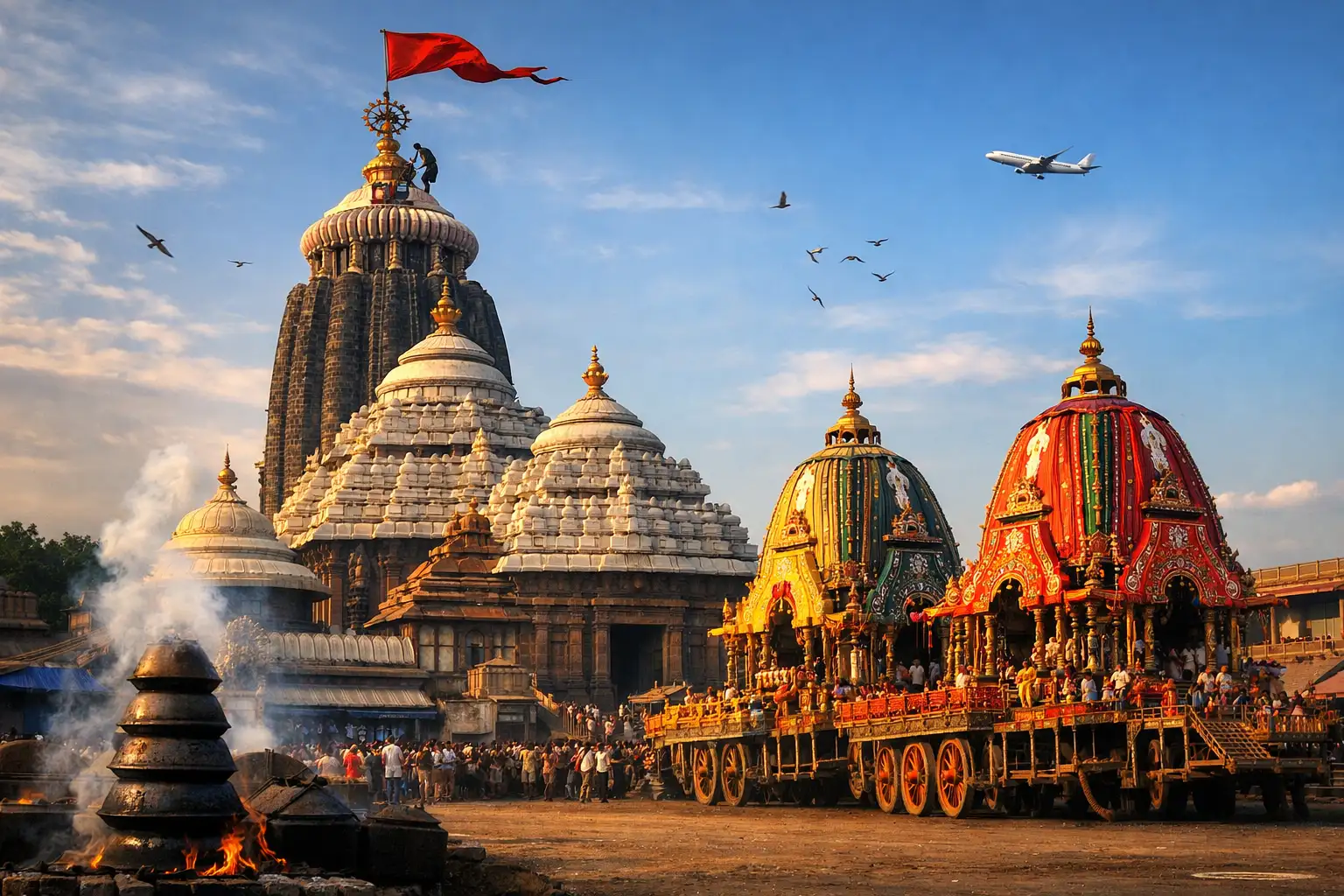
Also the reason this place is most talked about is the insane facts and some people call it the miracles of the jagannath temple .
Here are some interesting facts about the Jagannath Temple
But what if i tell you that jagannath temple has no shadow? It’s true.This jagannath temple in puri is famous for never casting a shadow, regardless of the sun's position. Again the devotees attribute it as the divine intervention, while the architectural experts suggest that this as the curvilinear kalinga design which defuses light and traps the shadow within the temples own spawning structure.
Also the reason this place is most talked about is the insane facts and some people call it the miracles of the jagannath temple .
Here are some interesting facts about the Jagannath Temple
The Jagannath Flag
A trained priest climbs a 45 story building barefoot without any modern safety equipment, every afternoon to replace the flag. According to the temple lore, if the ritual is missed for a single day the temple must remain closed for 18 years. Also the wind phenomena is associated with it, the flag appears to flutter in the exact opposite direction of the local breeze flowing. While the devotees see this as a divine miracle the experts explain this as the dome’s unique architecture.Shadowless temple
We are all aware of the shadows, right?But what if i tell you that jagannath temple has no shadow? It’s true.This jagannath temple in puri is famous for never casting a shadow, regardless of the sun's position. Again the devotees attribute it as the divine intervention, while the architectural experts suggest that this as the curvilinear kalinga design which defuses light and traps the shadow within the temples own spawning structure.
Next Story