
Modi Government Approves New Names For Tibetan Sites Amid Border Tensions

The newly elected NDA government, led by Prime Minister Narendra Modi, has sanctioned the renaming of 30 locations in Tibet. This decision represents a robust counter to China ’s recent efforts to rename areas in the Indian state of Arunachal Pradesh .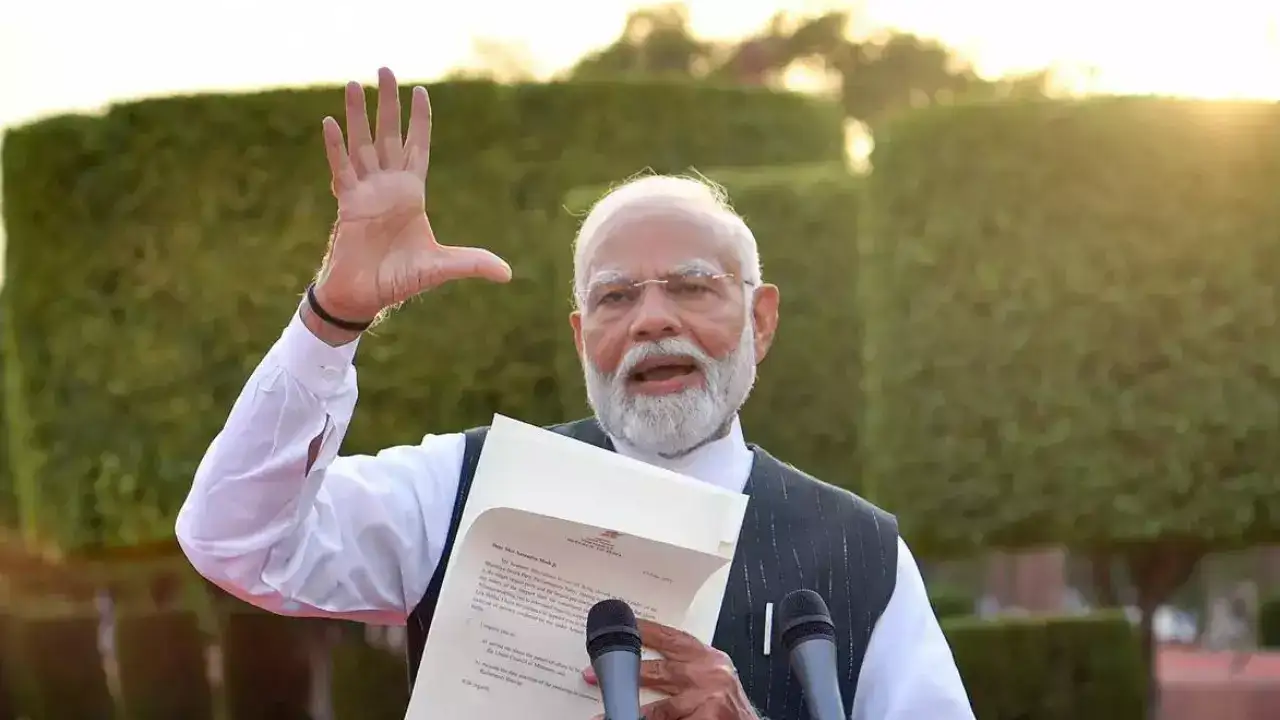
The newly approved names, derived from historical research and their connection to the Tibet region, will be disseminated by the Indian army and reflected on their maps along the Line of Actual Control (LAC).
Relations between India and China have deteriorated significantly, apart from trade, since the border standoff in eastern Ladakh began on May 5, 2020, following a violent encounter in the Pangong Tso area. Both nations have engaged in 21 rounds of military talks to seek resolution of the standoff.
India's move is in direct response to China’s renaming of 30 places in Arunachal Pradesh earlier in April, which India strongly objected to. Under Modi 3.0, India is reinforcing its territorial claims by assigning its own names to locations within occupied Tibet.
The renamed locations include 11 residential areas, 12 mountains, four rivers, one lake, one mountain pass, and one piece of land, with names presented in Chinese characters, Tibetan, and pinyin. Since 2017, China has issued lists of standardized names for places in Arunachal Pradesh, with the latest list nearly equalling the combined total of the previous three lists.
India has consistently asserted that Arunachal Pradesh is an integral and inalienable part of its territory, despite China’s ongoing claims. The Ministry of External Affairs has reiterated that assigning “invented” names does not change this fact. India’s strong response aligns with global disapproval of China’s expansionist policies in areas such as the South China Sea.
Assuming office as Minister of External Affairs for the second time, Minister S. Jaishankar today reinforced India’s firm stance on issues related to China and Pakistan. He stated that both border issues and cross-border terrorism will be addressed by India.
“As far as Pakistan and China are concerned, the relations with those countries are different, and the problems there are also different. Our focus with regard to China will be on finding a solution for the border issues and with Pakistan, we would want to find a solution to the issue of years-old cross-border terrorism,” Jaishankar said after assuming office.
The newly approved names, derived from historical research and their connection to the Tibet region, will be disseminated by the Indian army and reflected on their maps along the Line of Actual Control (LAC).
Relations between India and China have deteriorated significantly, apart from trade, since the border standoff in eastern Ladakh began on May 5, 2020, following a violent encounter in the Pangong Tso area. Both nations have engaged in 21 rounds of military talks to seek resolution of the standoff.
You may also like
- Lieutenant Governor lays foundation for Delhi's 1st dedicated dog shelter
- Suvendu Adhikari announces 4 medical colleges, North Bengal AIIMS
- 'Every possible measure must be taken': Shipping minister Sarbananda Sonowal says no Indian seafarer should be caught in crossfire
- 'I regret it': Mehbooba Mufti claims Jantar Mantar remark a slip of tongue, apologises
- Jammu and Kashmir: Army duo hurt in Uri accidental blast
India's move is in direct response to China’s renaming of 30 places in Arunachal Pradesh earlier in April, which India strongly objected to. Under Modi 3.0, India is reinforcing its territorial claims by assigning its own names to locations within occupied Tibet.
The renamed locations include 11 residential areas, 12 mountains, four rivers, one lake, one mountain pass, and one piece of land, with names presented in Chinese characters, Tibetan, and pinyin. Since 2017, China has issued lists of standardized names for places in Arunachal Pradesh, with the latest list nearly equalling the combined total of the previous three lists.
India has consistently asserted that Arunachal Pradesh is an integral and inalienable part of its territory, despite China’s ongoing claims. The Ministry of External Affairs has reiterated that assigning “invented” names does not change this fact. India’s strong response aligns with global disapproval of China’s expansionist policies in areas such as the South China Sea.
Assuming office as Minister of External Affairs for the second time, Minister S. Jaishankar today reinforced India’s firm stance on issues related to China and Pakistan. He stated that both border issues and cross-border terrorism will be addressed by India.
“As far as Pakistan and China are concerned, the relations with those countries are different, and the problems there are also different. Our focus with regard to China will be on finding a solution for the border issues and with Pakistan, we would want to find a solution to the issue of years-old cross-border terrorism,” Jaishankar said after assuming office.






Loving Newspoint? Download the app now
