
'No Guarantee I Would Do Well Again,' NEET Aspirant Dies By Suicide Before Re-Exam

The death of an 18-year-old NEET aspirant has left a family devastated and renewed concerns about the emotional pressures faced by students preparing for highly competitive examinations.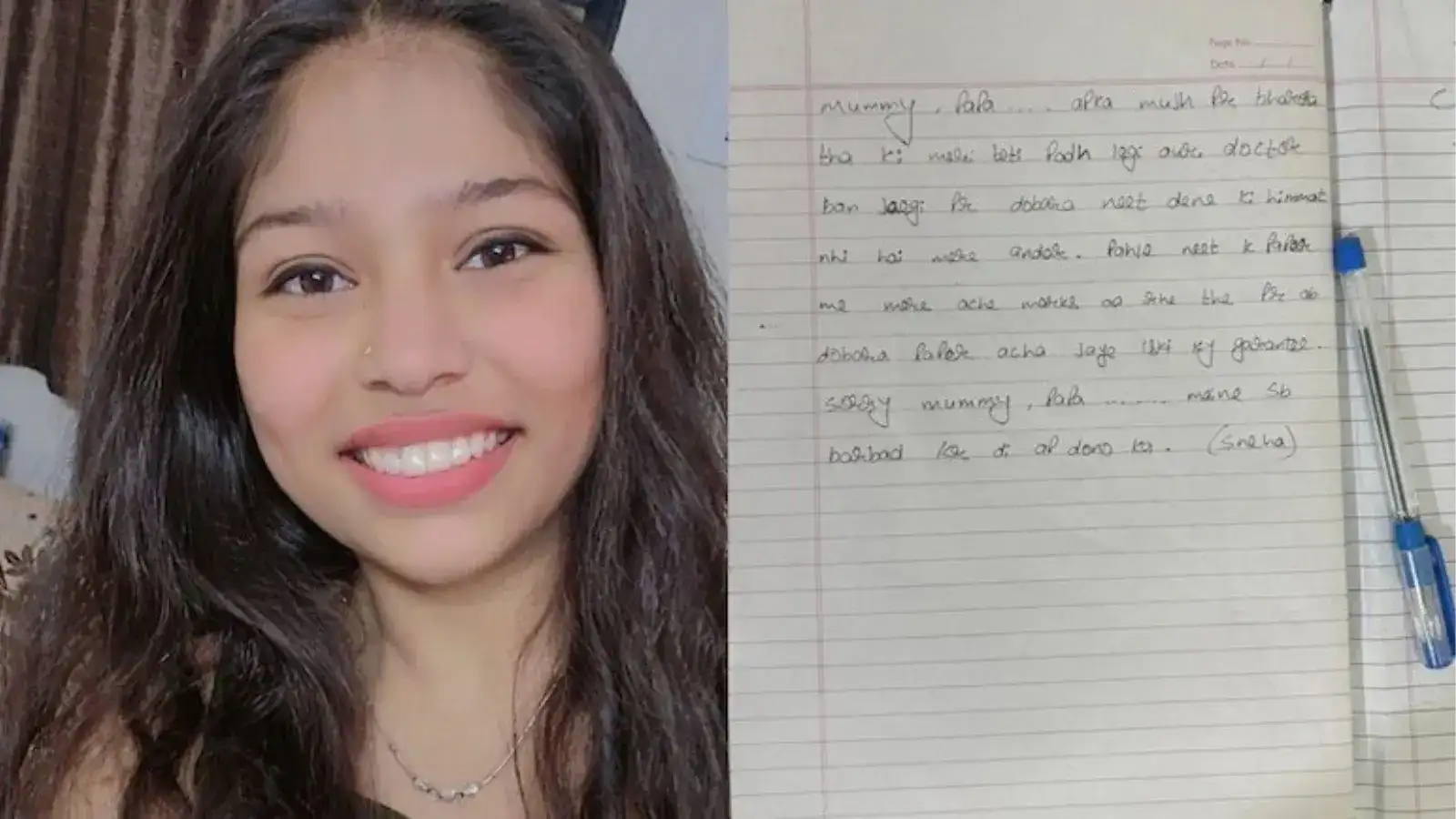
The student, a resident of Madhya Pradesh’s Mauganj district, allegedly died by suicide in Nagpur on May 20. She had been preparing for the National Eligibility cum Entrance Test (NEET) through a coaching institute in the city.
Days after her death, a handwritten note recovered by the family revealed her fears about appearing for the examination again and her worries about disappointing her parents.
According to relatives, her father, a small farmer, made considerable efforts to support her education. Alongside cultivating farmland, he also worked as a cook in Nagpur to help meet household expenses and coaching costs.
Family members said they arranged funds for her studies through loans and financial assistance from relatives. Nearly Rs 3 lakh was reportedly borrowed through a Kisan Credit Card loan to support her preparation.
For the family, her success in the medical entrance exam represented hope for a better future.
Family members said she believed she would score more than 650 marks and appeared happy with how the exam had gone.
However, relatives claim her mood changed after reports regarding alleged irregularities and a possible paper leak linked to the examination began circulating. They said she became increasingly disturbed and spent much of her time worrying about the situation.
Her uncle recalled that the family never expected the circumstances to take such a tragic turn.
Addressing her parents, she wrote that they had believed she would work hard and become a doctor. She also expressed fear about taking the examination again and uncertainty about whether she would be able to perform as well in another attempt.
The letter ended with an apology to her parents, suggesting she felt she had let down the expectations placed upon her.
The contents of the note have resonated with many students and parents who understand the immense pressure associated with competitive examinations.
Every year, thousands of aspirants spend months and often years preparing for competitive exams that can shape their academic and professional futures. The process can involve significant emotional, financial and personal investment from both students and their families.
While discussions continue around examination systems and student welfare, the tragedy has highlighted the importance of emotional support and mental wellbeing among young aspirants.
For her family, however, the loss remains deeply personal. In their village home, the books and notes she once studied from now stand as reminders of a dream that inspired an entire household but remained unfulfilled.
The student, a resident of Madhya Pradesh’s Mauganj district, allegedly died by suicide in Nagpur on May 20. She had been preparing for the National Eligibility cum Entrance Test (NEET) through a coaching institute in the city.
Days after her death, a handwritten note recovered by the family revealed her fears about appearing for the examination again and her worries about disappointing her parents.
A Family’s Dream Built Through Sacrifice
The young aspirant came from Maganiya village in Mauganj district. Her dream of becoming a doctor had become a shared goal for her entire family.According to relatives, her father, a small farmer, made considerable efforts to support her education. Alongside cultivating farmland, he also worked as a cook in Nagpur to help meet household expenses and coaching costs.
Family members said they arranged funds for her studies through loans and financial assistance from relatives. Nearly Rs 3 lakh was reportedly borrowed through a Kisan Credit Card loan to support her preparation.
For the family, her success in the medical entrance exam represented hope for a better future.
Confidence Turned Into Concern
According to her uncle, the student returned home after the examination feeling optimistic about her performance.Family members said she believed she would score more than 650 marks and appeared happy with how the exam had gone.
You may also like
- 'Not suicide': Rahul Gandhi blames 'broken system' after NEET aspirant's death; targets PM Modi
- Army police CRPF launch Operation Sheruwali in Gambhir Mughlan forest
- Major Abhilasha Barak wins 2025 UN Military Gender Advocate award
- Allegations that NEET 2026 exam papers sold on Telegram emerge
- Missing girl found safe after police scan footage from 948 CCTV cameras
However, relatives claim her mood changed after reports regarding alleged irregularities and a possible paper leak linked to the examination began circulating. They said she became increasingly disturbed and spent much of her time worrying about the situation.
Her uncle recalled that the family never expected the circumstances to take such a tragic turn.
A Note Filled With Apology And Fear
The note recovered after her death reflected her concerns about the future.Addressing her parents, she wrote that they had believed she would work hard and become a doctor. She also expressed fear about taking the examination again and uncertainty about whether she would be able to perform as well in another attempt.
The letter ended with an apology to her parents, suggesting she felt she had let down the expectations placed upon her.
The contents of the note have resonated with many students and parents who understand the immense pressure associated with competitive examinations.
Renewed Focus On Student Wellbeing
The incident has sparked emotional reactions in her village and neighbouring areas. It has also renewed discussions about the psychological impact that uncertainty and controversy surrounding major examinations may have on students.Every year, thousands of aspirants spend months and often years preparing for competitive exams that can shape their academic and professional futures. The process can involve significant emotional, financial and personal investment from both students and their families.
While discussions continue around examination systems and student welfare, the tragedy has highlighted the importance of emotional support and mental wellbeing among young aspirants.
For her family, however, the loss remains deeply personal. In their village home, the books and notes she once studied from now stand as reminders of a dream that inspired an entire household but remained unfulfilled.






More from our partners


Loving Newspoint? Download the app now
