
323-Year-Old Jagannath Temple Gets New Chariot for Rath Yatra

The historic town of Purunagar in Deogarh, situated in the western region of Odisha, is celebrating a monumental milestone during this year’s Rath Yatra festival. The highly revered 323-year old Jagannath Temple has introduced a brand-new chariot for the annual journey of the holy Trinity-Lord Jagannath, Lord Balabhadra, and Goddess Subhadra. This historic transition marks a major chapter in the shrine's long and illustrious heritage, infusing fresh enthusiasm into the local community.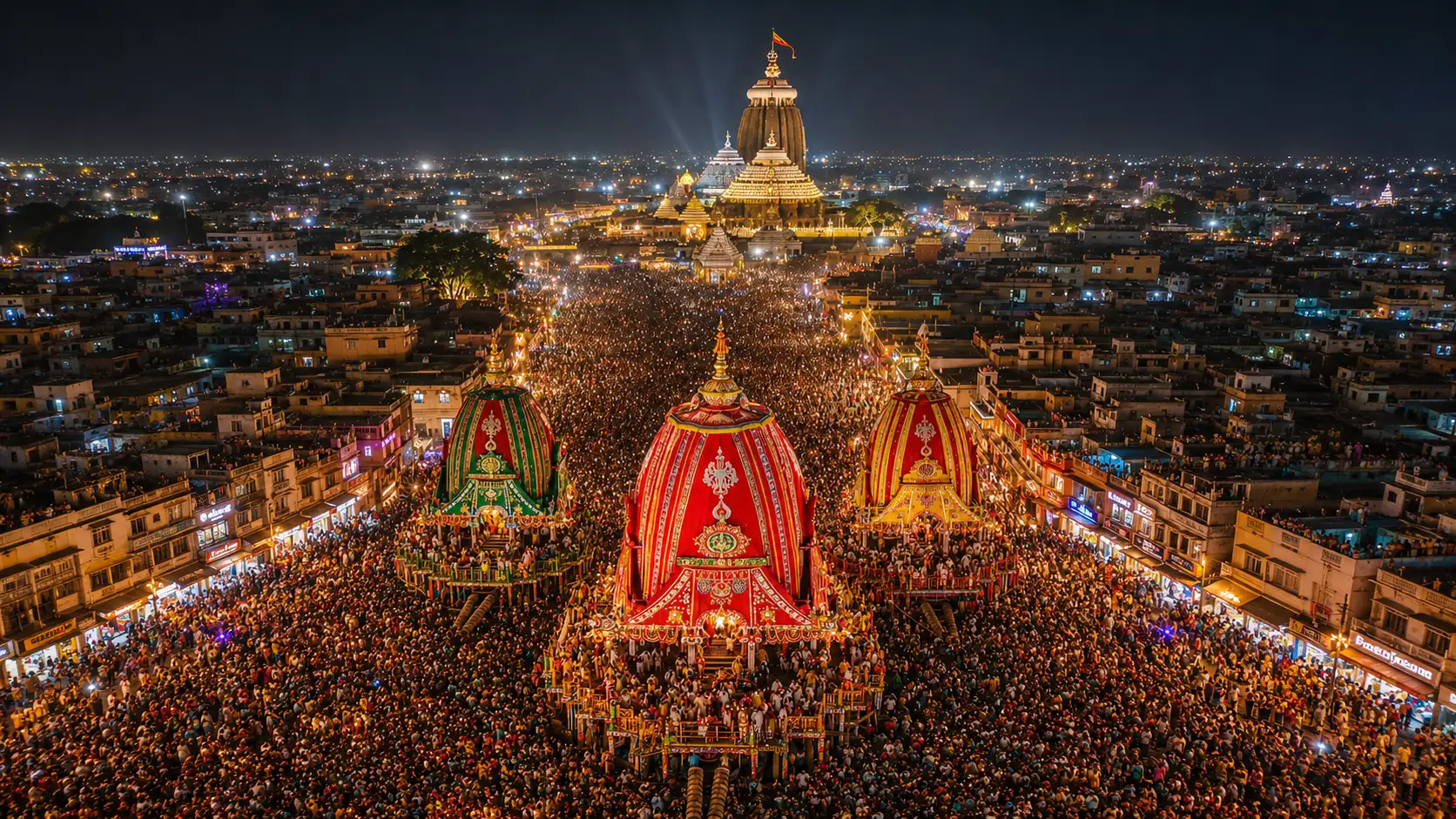
However, time eventually took its toll, and the structure became weak. Prioritising the safety of the thousands of devotees who gather each year, the district administration stepped in to oversee the construction of a brand-new chariot. The grand project was made possible through the generous contributions and active support of local donors, reflecting a deep-rooted spirit of communal collaboration.
The celebrations begin with the ceremonial Pahandi ritual, during which priests rhythmically sway and carry the deities from the inner sanctum to the newly built chariot. Interestingly, the actual chariot procession does not begin immediately. Instead, the chariot is pulled starting the following day, and the journey takes two full days before the deities finally reach the Gundicha Temple. The Bahuda Yatra, which is the return journey of the deities, follows the same timeline, taking two days to complete after the idols are placed back on the chariot.
The visionary king intentionally designed the delayed schedule for a very thoughtful reason: he wanted the residents of his kingdom to have the opportunity to travel to Puri first to witness the grand celebrations there. Once the devotees returned home to western Odisha, they could then participate fully in their own local chariot festival without missing either event.
As the heavy ropes are pulled and the new chariot rolls forward for the first time, the atmosphere in Deogarh is filled with a beautiful blend of ancient tradition and contemporary celebration, ensuring that this historic legacy remains vibrant and secure for generations to come.
A Historic Shift for Public Safety
For generations, the previous chariot carried immense emotional, cultural, and historical value for the people of Deogarh. Local priests note that there are no surviving historical records to confirm exactly when the older chariot was originally built. Over the decades, the wooden structure had undergone countless repairs to preserve it for as long as possible.However, time eventually took its toll, and the structure became weak. Prioritising the safety of the thousands of devotees who gather each year, the district administration stepped in to oversee the construction of a brand-new chariot. The grand project was made possible through the generous contributions and active support of local donors, reflecting a deep-rooted spirit of communal collaboration.
You may also like
- Sonam Wangchuk hunger strike over NEET-UG leak and CBSE marking
- Early Thursday truck tire burst on Varanasi-Shaktinagar highway kills 3
- India exits measles top 10 after 0-dose fall to 679,000
- Sonam Wangchuk hits day 19 hunger strike over NEET irregularities
- VHP, Bajrang Dal activists vandalized Jabalpur Catholic school during protest
Understanding the Unique Three-Day Tradition
While the world-famous Rath Yatra in Puri draws global attention with its single-day chariot procession, the Purunagar shrine follows a distinct and fascinating tradition. Here, the festival is observed over three days.The celebrations begin with the ceremonial Pahandi ritual, during which priests rhythmically sway and carry the deities from the inner sanctum to the newly built chariot. Interestingly, the actual chariot procession does not begin immediately. Instead, the chariot is pulled starting the following day, and the journey takes two full days before the deities finally reach the Gundicha Temple. The Bahuda Yatra, which is the return journey of the deities, follows the same timeline, taking two days to complete after the idols are placed back on the chariot.
Echoes from the Past: The Legacy of Bamanda
The roots of this unusual schedule lie deep in the history of the region. The Jagannath temple in Purunagar was established in the year 1703 by Raja Pratap Rudra Dev, the ruler of the erstwhile princely state of Bamanda.The visionary king intentionally designed the delayed schedule for a very thoughtful reason: he wanted the residents of his kingdom to have the opportunity to travel to Puri first to witness the grand celebrations there. Once the devotees returned home to western Odisha, they could then participate fully in their own local chariot festival without missing either event.
The Sacred Inverted Banyan Tree
Beyond the unique festival timeline, the Purunagar temple grounds are home to another extraordinary marvel known as the Olata Bara, or the inverted banyan tree. Local lore states that this sacred tree was brought directly from the holy town of Puri centuries ago with the formal permission of the Gajapati Maharaja. The tree remains a focal point of deep spiritual reverence, drawing pilgrims who marvel at its unusual growth pattern and historic connection to Puri.As the heavy ropes are pulled and the new chariot rolls forward for the first time, the atmosphere in Deogarh is filled with a beautiful blend of ancient tradition and contemporary celebration, ensuring that this historic legacy remains vibrant and secure for generations to come.






Loving Newspoint? Download the app now
