
NPS Vs EPF Vs PPF: Which Retirement Investment Yields The Largest Corpus With ₹1.5 Lakh Annual Investment?

When it comes to building a substantial retirement corpus, choosing the right investment scheme plays a critical role. Among the most popular options in India are the National Pension System (NPS), Employees' Provident Fund (EPF), and Public Provident Fund (PPF). Each of these schemes offers unique benefits, distinct tax advantages, and varying returns. This article delves into the comparative analysis of NPS, EPF, and PPF for those investing ₹1.5 lakh annually, examining which scheme can yield a larger retirement corpus.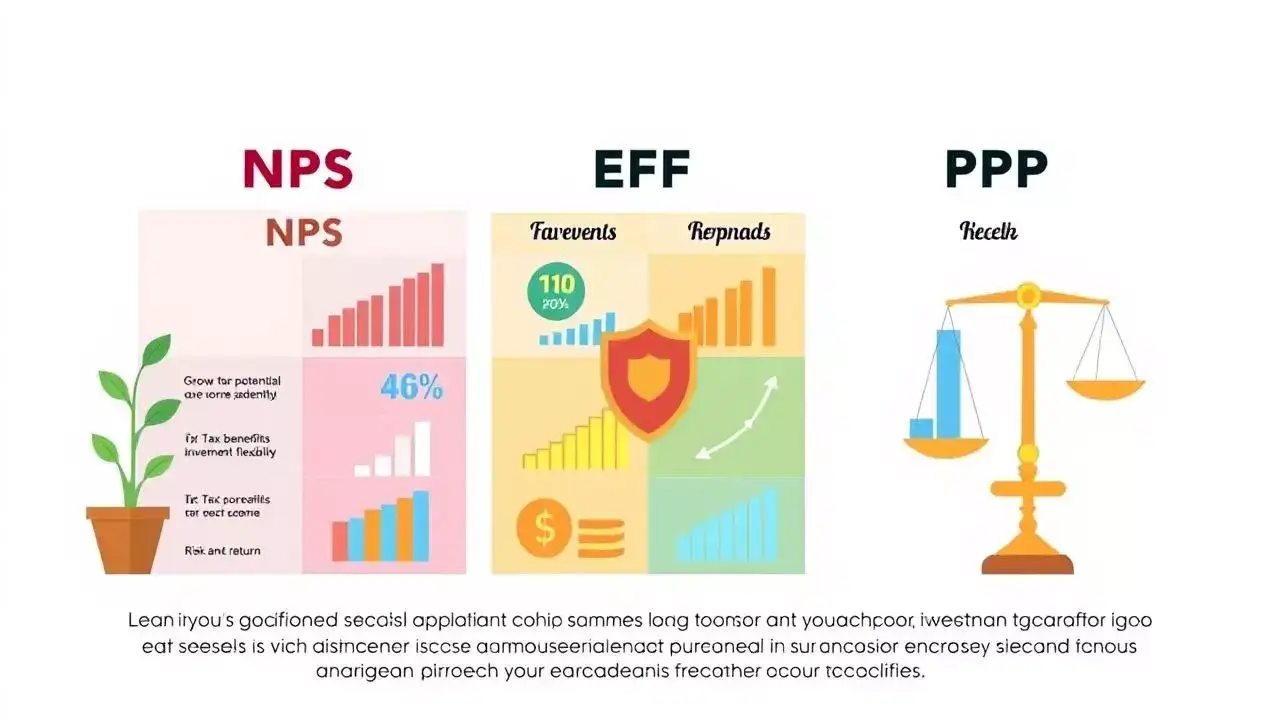
The Employees' Provident Fund (EPF) is primarily designed for salaried employees, with both the employee and employer contributing a percentage of the salary each month. The accumulated fund earns interest at a rate determined annually by the government.
The Public Provident Fund (PPF) is a long-term savings scheme supported by the government. It comes with a fixed interest rate and a lock-in period of 15 years, making it a preferred option for risk-averse investors.
EPF contributions also qualify for tax deductions under Section 80C, and the interest earned, along with the maturity amount, is tax-free after five years of continuous service.
PPF investments are eligible for deductions under Section 80C, and both the interest earned and the maturity amount are tax-free, providing an Exempt-Exempt-Exempt (EEE) benefit.
EPF, with its fixed interest rate of around 8.25%, provides moderate returns with low risk, ideal for those seeking security over high returns.
PPF guarantees a fixed annual interest rate of 7.1%, compounded annually. Its risk-free nature makes it a safe option for conservative investors.
EPF supports partial withdrawals for purposes such as education, marriage, or medical emergencies. Full withdrawal is allowed upon retirement or after two months of unemployment.
PPF permits partial withdrawals from the seventh financial year onwards, and loans can be taken against the balance after three years.
Disclaimer: This article is for informational purposes only and does not constitute financial advice. It is recommended to consult with a certified financial advisor before making investment decisions.
Understanding the Three Schemes
The National Pension System (NPS) is a government-backed pension programme that allows individuals to invest in a diversified portfolio of equities, corporate bonds, and government securities. It is regulated by the Pension Fund Regulatory and Development Authority (PFRDA), offering flexibility in asset allocation.The Employees' Provident Fund (EPF) is primarily designed for salaried employees, with both the employee and employer contributing a percentage of the salary each month. The accumulated fund earns interest at a rate determined annually by the government.
The Public Provident Fund (PPF) is a long-term savings scheme supported by the government. It comes with a fixed interest rate and a lock-in period of 15 years, making it a preferred option for risk-averse investors.
Tax Benefits of Each Scheme
NPS allows for tax deductions of up to ₹1.5 lakh under Section 80C, with an additional deduction of ₹50,000 under Section 80CCD(1B). At maturity, 60% of the corpus is tax-free, while the remaining 40% is used to purchase an annuity, which is taxable.EPF contributions also qualify for tax deductions under Section 80C, and the interest earned, along with the maturity amount, is tax-free after five years of continuous service.
PPF investments are eligible for deductions under Section 80C, and both the interest earned and the maturity amount are tax-free, providing an Exempt-Exempt-Exempt (EEE) benefit.
Returns and Risk Factors
NPS, being market-linked, typically offers returns ranging from 9% to 12%, depending on asset allocation and market conditions. This makes it potentially more rewarding but also subject to market risks.EPF, with its fixed interest rate of around 8.25%, provides moderate returns with low risk, ideal for those seeking security over high returns.
PPF guarantees a fixed annual interest rate of 7.1%, compounded annually. Its risk-free nature makes it a safe option for conservative investors.
Withdrawal Rules and Liquidity
NPS allows partial withdrawals of up to 25% of contributions after three years for specific needs. Full withdrawal is permitted upon reaching 60 years of age, with 60% of the corpus available tax-free.EPF supports partial withdrawals for purposes such as education, marriage, or medical emergencies. Full withdrawal is allowed upon retirement or after two months of unemployment.
PPF permits partial withdrawals from the seventh financial year onwards, and loans can be taken against the balance after three years.
Comparative Analysis: Corpus Accumulation
For an annual investment of ₹1.5 lakh over 35 years:- NPS: With an average return of 10%, the corpus may grow to approximately ₹4.47 crore.
- EPF: At an 8.25% return rate, the corpus would be around ₹3.06 crore.
- PPF: With a 7.1% interest rate, the total corpus could be about ₹2.79 crore.
Expert Opinions
According to experts, NPS holds the potential for greater returns due to its exposure to equity markets, though it carries higher risks. On the other hand, EPF and PPF are better suited for risk-averse investors, providing steady and predictable growth. Financial advisors often recommend diversifying investments across these schemes to balance risk and returns effectively.Disclaimer: This article is for informational purposes only and does not constitute financial advice. It is recommended to consult with a certified financial advisor before making investment decisions.






Loving Newspoint? Download the app now
