
Pulwama Attack’s Mastermind Hamza Burhan Killed: 10 Key Facts About One of India’s Deadliest Terror Strikes

The 2019 Pulwama terror attack on the Indian armed forces remains one of the deadliest terror attacks in recent history. This incident not only shocked the nation but also signalled tougher security in the Jammu and Kashmir area. Here we look at ten important facts about the Pulwama attack :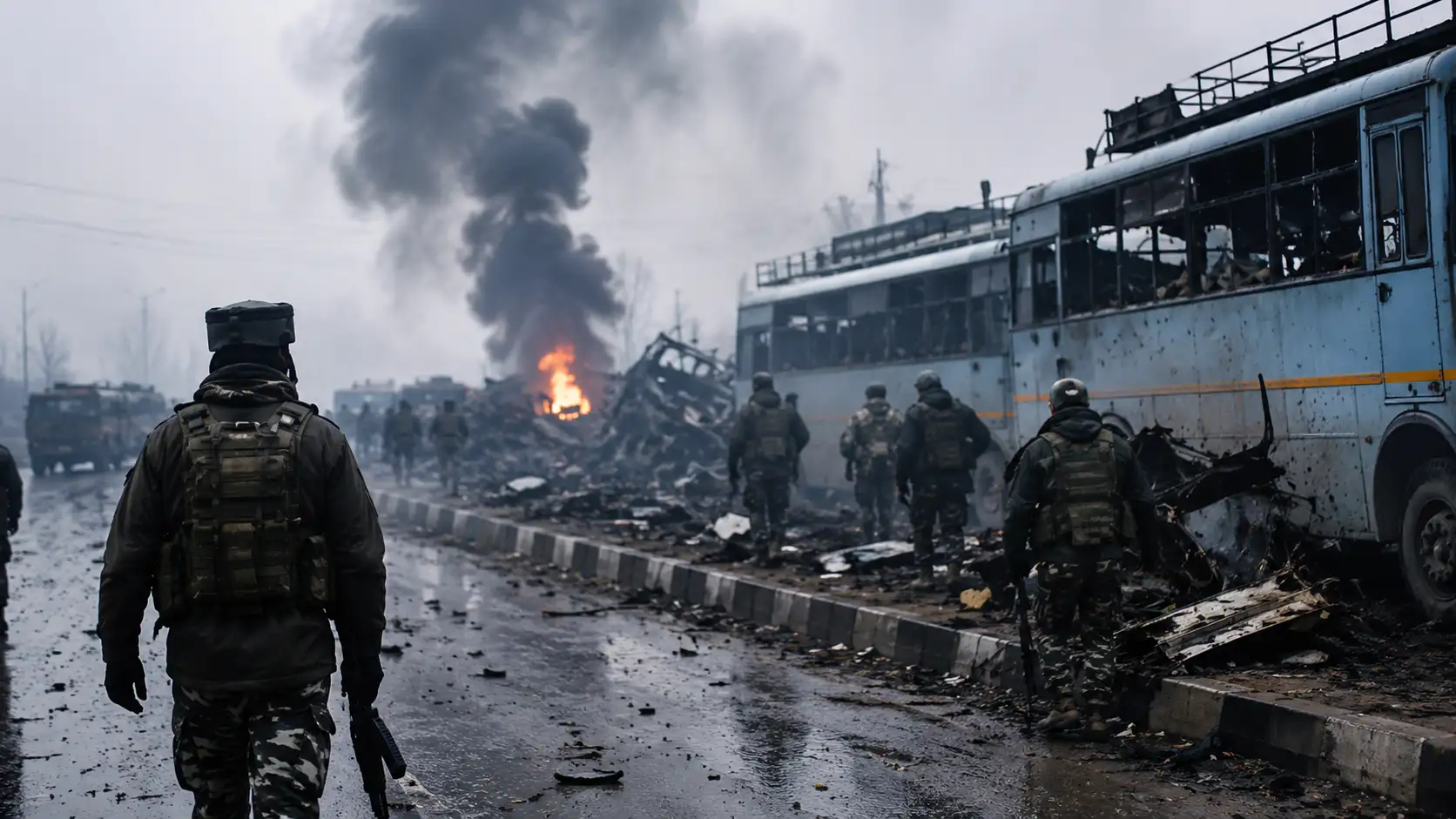
The Pulwama attack remains a significant event in India’s modern security history. It highlighted the ongoing threat of terrorism in the region and had long-lasting political, diplomatic, and military consequences for South Asia.
1. Date and Location of the Attack
The Pulwama attack took place on 14 February 2019 in the Lethapora area of the Pulwama district and the attack took place on the Jammu- Srinagar national highway which is one of the key routes used by the security force in India.2. Target Was a CRPF Convoy
A large group of the Central Reserve Police Force (CRPF) were travelling from Jammu to Srinagar at the time of the attack. The convoy included several buses and carried hundreds of personnel.3. Suicide Bombing Method
The attack was carried out with the use of a suicide car bomb. The attackers rammed an explosives laden vehicle into one of the CRPF buses which caused a massive explosion.4. Heavy Casualties
The explosion killed around 40 CRPF personnel and went down in history as one of the deadliest terrorist attacks in India .5. Identity of the Attacker
The suicide bomber was identified as Adil Ahmad Dar who was a resident of the Pulwama district. He had reportedly joined the militant group months before the attack.6. Jaish-e-Mohammed Claimed Responsibility
The responsibility of these attacks were claimed by Pakistan based militant group Jaish-e-Mohammed (JeM). The group had previously been involved in several attacks targeting Indian armed forces.7. Use of Powerful Explosives
Investigators stated that the vehicle used in the attack had been carrying a large amount of explosives including RDX. The intensity of the blast caused severe destruction and spread debris over a large area.8. India’s Diplomatic and Military Response
After the attack, the Indian government strongly condemned Pakistan for allegedly supporting terror groups operating across the border. On 26 February, 2019, the Indian Air Force conducted airstrikes in Balakot targeting alleged JeM training camps.9. Rise in India-Pakistan Tensions
The Pulwama attack increased the tensions between India and Pakistan to another level. The situation escalated further after the airstrikes in Balakot.10. National Mourning and Security Changes
The attack led to nationwide mourning and tributes for the soldiers who were killed in the attack. It also prompted major security reviews in Jammu and Kashmir, including strictThe Pulwama attack remains a significant event in India’s modern security history. It highlighted the ongoing threat of terrorism in the region and had long-lasting political, diplomatic, and military consequences for South Asia.
Next Story