
Supreme Court’s Strong Rebuke to Samay Raina: Why India’s Got Latent Comedians Face Fresh Trouble

For months, India's Got Latent has remained at the centre of multiple controversies. From social media backlash to legal complaints, the show has consistently made headlines. Now, the story has taken another unexpected turn.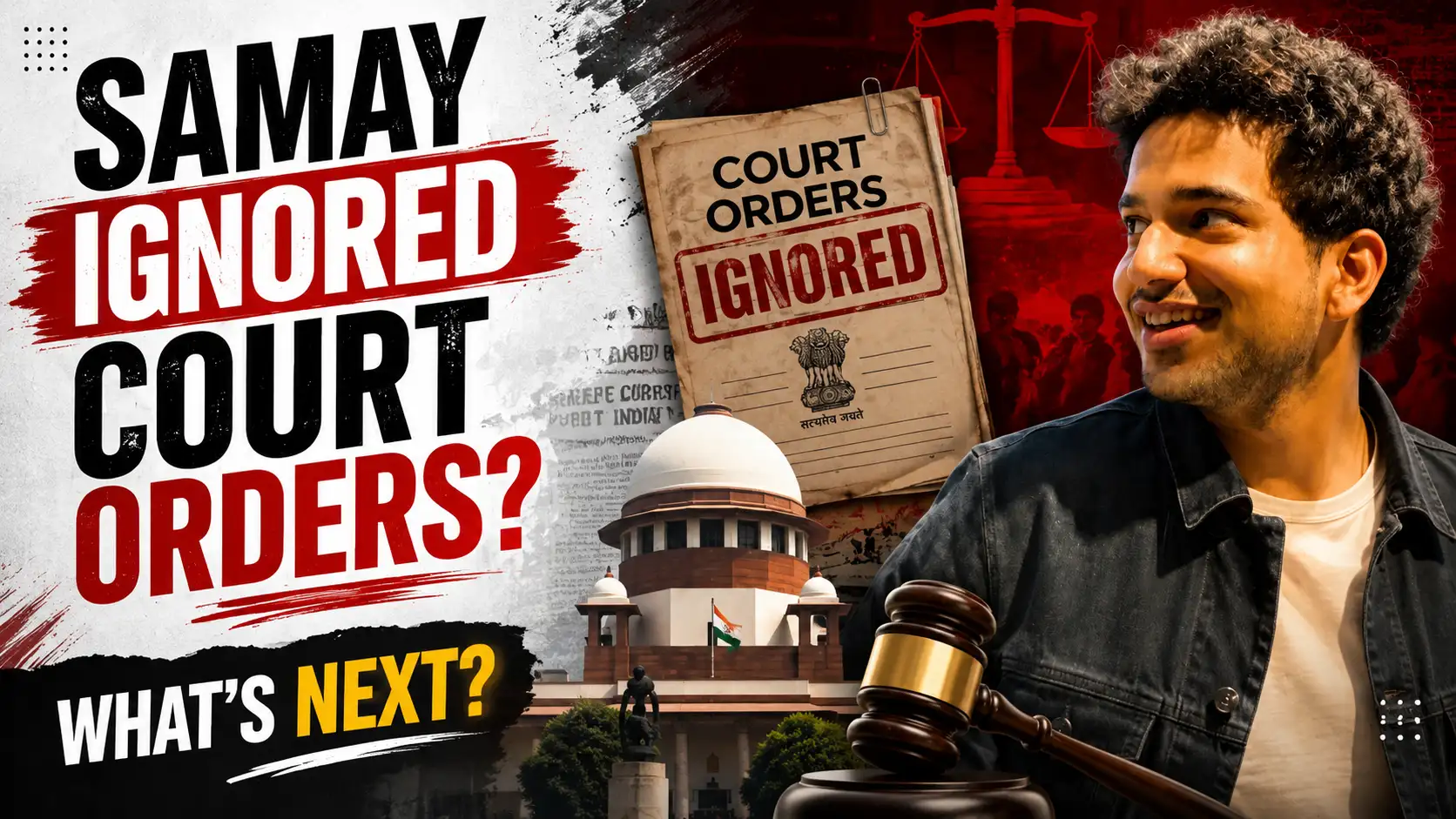
Samay Raina Is Trending Again, But This Time, It's Not About a Joke
During a recent hearing, the Supreme Court came down heavily on comedian Samay Raina, along with fellow comedians Vipul Goyal , Balraj Ghai and Sonali Thakkar. The bench made a strong observation, stating that the comedians had "taken the court for a ride" by failing to follow its earlier directions.
The court initially imposed a ₹10 lakh cost on each of them. However, the amount was later reduced to ₹3 lakh each after their lawyers sought one final opportunity for them to comply with the court's instructions. So, what exactly happened, and why did the Supreme Court take such a strict view?
It All Started With a Different Petition
Many people are linking this development directly to the Ranveer Allahbadia controversy. While both are connected to India's Got Latent, this particular case is different. The matter reached the Supreme Court after the Cure SMA Foundation of India raised concerns over jokes allegedly made about spinal muscular atrophy (SMA) and people living with disabilities.
Such humour was not only insensitive but could also hurt awareness campaigns and fundraising efforts for SMA, a rare genetic disorder where treatment often costs crores of rupees, forcing many families to depend on public donations, the organisation said. Their concern wasn't just about a comedy show. It was about how influential creators shape public perception of people already facing enormous challenges.
The Supreme Court Chose Awareness Over Punishment
Instead of asking for a simple apology or immediately imposing a penalty, the Supreme Court tried a different approach. It directed Samay Raina, Vipul Goyal, Balraj Ghai and Sonali Thakkar to use their popularity for a positive purpose.
The comedians were requested to partner with the Cure SMA Foundation of India, showcase disabled achievers on their platforms and support awareness campaigns on rare diseases and inclusion of disability. The Court's message was clear: if content can influence millions, it can also be used to raise awareness.
So Why Did the Court Get Angry?
During the latest hearing, the Supreme Court said those directions had not been properly followed. According to the bench, the assurances given about complying with the court's orders did not match what had actually happened. That is what prompted the judges to make the now-viral remark: "You have taken the court for a ride." The court viewed the matter seriously because the issue was no longer about comedy; it had become about compliance with judicial directions.
As a result, the bench imposed a ₹10 lakh cost on each of the four comedians. But the court agreed to reduce the amount to ₹3 lakh each after their lawyers pleaded for one more chance but made it clear that this was the last one. It also warned that further non-compliance with its directions “may invite graver action”.
Why This Hearing Matters
The latest hearing marks a significant shift in the controversy. The debate is no longer centred on whether a joke crossed the line. Instead, the focus is now on whether the Court's directions were followed after the controversy erupted. For legal experts, the case is also a reminder that once a court records an assurance, it expects that assurance to be honoured. Failing to do so can attract consequences that go beyond the original dispute.
The Bigger Conversation
The case has once again sparked a familiar debate. Should comedians and digital creators enjoy complete creative freedom? Or do they also carry a responsibility when their content reaches millions of viewers? There are no quick fixes. Comedy has always pushed the envelope, but in our digital age, one joke can spark conversations that go well beyond the stage.
Samay Raina and other comedians are not just affected by the Supreme Court’s recent comments; they are also part of a larger discussion about accountability in an era of viral content. For now, the Court has offered one final opportunity. Whether this closes the chapter or opens a new one will depend on what happens next.
Samay Raina Is Trending Again, But This Time, It's Not About a Joke
During a recent hearing, the Supreme Court came down heavily on comedian Samay Raina, along with fellow comedians Vipul Goyal , Balraj Ghai and Sonali Thakkar. The bench made a strong observation, stating that the comedians had "taken the court for a ride" by failing to follow its earlier directions.
The court initially imposed a ₹10 lakh cost on each of them. However, the amount was later reduced to ₹3 lakh each after their lawyers sought one final opportunity for them to comply with the court's instructions. So, what exactly happened, and why did the Supreme Court take such a strict view?
It All Started With a Different Petition
Many people are linking this development directly to the Ranveer Allahbadia controversy. While both are connected to India's Got Latent, this particular case is different. The matter reached the Supreme Court after the Cure SMA Foundation of India raised concerns over jokes allegedly made about spinal muscular atrophy (SMA) and people living with disabilities.
Such humour was not only insensitive but could also hurt awareness campaigns and fundraising efforts for SMA, a rare genetic disorder where treatment often costs crores of rupees, forcing many families to depend on public donations, the organisation said. Their concern wasn't just about a comedy show. It was about how influential creators shape public perception of people already facing enormous challenges.
You may also like
- Vietnam boat tragedy: Phu Quoc chief rejects allegations of delayed rescue
- OBC status of 77 castes: Suvendu government withdraws Mamata-era SC challenge to HC verdict
- Only 45 pc Bengaluru property owners pay tax, says minister
- Ram Temple 'theft' was planned, govt placed its chosen people at Trust: Avimukteshwaranand
- Wangchuk's health worsens as politicians, citizens appeal to end fast, slam 'heartless' government
The Supreme Court Chose Awareness Over Punishment
Instead of asking for a simple apology or immediately imposing a penalty, the Supreme Court tried a different approach. It directed Samay Raina, Vipul Goyal, Balraj Ghai and Sonali Thakkar to use their popularity for a positive purpose.
The comedians were requested to partner with the Cure SMA Foundation of India, showcase disabled achievers on their platforms and support awareness campaigns on rare diseases and inclusion of disability. The Court's message was clear: if content can influence millions, it can also be used to raise awareness.
So Why Did the Court Get Angry?
During the latest hearing, the Supreme Court said those directions had not been properly followed. According to the bench, the assurances given about complying with the court's orders did not match what had actually happened. That is what prompted the judges to make the now-viral remark: "You have taken the court for a ride." The court viewed the matter seriously because the issue was no longer about comedy; it had become about compliance with judicial directions.
As a result, the bench imposed a ₹10 lakh cost on each of the four comedians. But the court agreed to reduce the amount to ₹3 lakh each after their lawyers pleaded for one more chance but made it clear that this was the last one. It also warned that further non-compliance with its directions “may invite graver action”.
Why This Hearing Matters
The latest hearing marks a significant shift in the controversy. The debate is no longer centred on whether a joke crossed the line. Instead, the focus is now on whether the Court's directions were followed after the controversy erupted. For legal experts, the case is also a reminder that once a court records an assurance, it expects that assurance to be honoured. Failing to do so can attract consequences that go beyond the original dispute.
The Bigger Conversation
The case has once again sparked a familiar debate. Should comedians and digital creators enjoy complete creative freedom? Or do they also carry a responsibility when their content reaches millions of viewers? There are no quick fixes. Comedy has always pushed the envelope, but in our digital age, one joke can spark conversations that go well beyond the stage.
Samay Raina and other comedians are not just affected by the Supreme Court’s recent comments; they are also part of a larger discussion about accountability in an era of viral content. For now, the Court has offered one final opportunity. Whether this closes the chapter or opens a new one will depend on what happens next.






Loving Newspoint? Download the app now
