
Women activists: Govt must implement 33% women's quota at current strength of Parliament


NEW DELHI: Ahead of the monsoon session scheduled to start from July 20, a group of women organisations and activists under the banner of ‘ National Coalition for Women’s Reservation ’ have demanded “unconditional and immediate” implementation of 33% women’s reservation in the Parliament and state legislatures at the existing strength from the next round of elections.
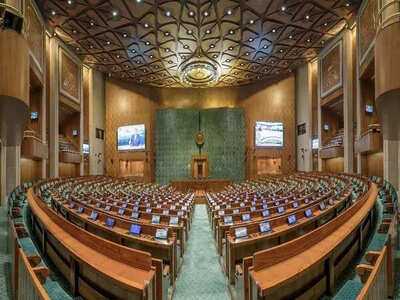
They have called upon the govt to bring a Constitutional Amendment Bill in the upcoming session to delink women’s reservation from census and delimitation. They have also sought that the opposition parties should support their demand and take up the issue in Parliament.
The Coalition members are reaching out to all MPs in their constituencies to seek their support for their demands. They will be holding joint dharnas (demonstration) across the country on July 20-21 and have announced that they will hold daily dharnas from Monday to Friday throughout the monsoon session of Parliament in the Capital. The sit-in to be held at Jantar Mantar. A national conference with women MPs is also planned by the Coalition.
Some of the organisations that are part of the coalition include All India Democratic Women’s Association, National Federation of Indian Women - the women’s wing of Communist Party of India, YWCA, Indian Christian Women’s Movement, All India Progressive Women’s Association, Unity In Compassion, ANHAD and activists associated with various campaigns including Anjali Bharadwaj from Satark Nagrik Sangathan.
Meanwhile a statement floated by the Coalition has so far been endorsed by over 1500 signatories including activists, lawyers, academics, students, former civil servants and concerned citizens from diverse walks of life.
At a press conference in Delhi on Friday, Annie Raja from NFIW and other speakers asserted that women’s right to political representation cannot be indefinitely postponed by linking it to "unrelated and politically contentious" processes like delimitation or increasing the number of seats in the Lok Sabha.
"We want the opposition to putforth this demand of the women forcefully in Parliament and demand that the govt bring a Bill to delink women’s reservation from census and delimitation. Women organisations have been meeting the MPs in their constituencies including those from the BJP to emphasise the need to implement women's reservation at the current strength and without any further delay," she said.
Transparency activist Anjali Bharadwaj emphasised the need for transparency and demanded that if the govt was trying to
The Coalition recounted the decades long national women’s movement demanding 33% reservation in Parliament and Assemblies. The first ever bill was introduced in 1996- 30 years ago. Finally when the Women’s Reservation Act was passed in 2023, it linked the issue of reservation with census and delimitation.
Representatives of various organisations condemned the govt accusing it of using women’s reservation as a front for its political agenda of delimitation. "It is a matter of shame that less than 14% MPs are women and the figure across state assemblies is even more abysmal- 10%," the Coalition said in its statement.
"In 2023, when the Women’s Reservation Act [formally the Constitution (One Hundred and Sixth Amendment) Act, 2023] was passed, it deferred the implementation of women reservation till a census and delimitation were conducted. Many Members of Parliament and women’s collectives had questioned this conditional reservation. Had this condition not been imposed, 33% of MPs in
the current Lok Sabha would have been women," the Coalition states.
"It is clear that the government is using women’s reservation as a front to push its political agenda of delimitation and increasing the number of seats in the Lok Sabha. This was reconfirmed in 2026, when the government suddenly called a special session of Parliament to ostensibly pave the way for 33% reservation for women in the Lok Sabha and state assemblies from 2029, but did not delink women’s reservation from the politically contentious issue of delimitation," they added.
They have called upon the govt to bring a Constitutional Amendment Bill in the upcoming session to delink women’s reservation from census and delimitation. They have also sought that the opposition parties should support their demand and take up the issue in Parliament.
The Coalition members are reaching out to all MPs in their constituencies to seek their support for their demands. They will be holding joint dharnas (demonstration) across the country on July 20-21 and have announced that they will hold daily dharnas from Monday to Friday throughout the monsoon session of Parliament in the Capital. The sit-in to be held at Jantar Mantar. A national conference with women MPs is also planned by the Coalition.
Some of the organisations that are part of the coalition include All India Democratic Women’s Association, National Federation of Indian Women - the women’s wing of Communist Party of India, YWCA, Indian Christian Women’s Movement, All India Progressive Women’s Association, Unity In Compassion, ANHAD and activists associated with various campaigns including Anjali Bharadwaj from Satark Nagrik Sangathan.
Meanwhile a statement floated by the Coalition has so far been endorsed by over 1500 signatories including activists, lawyers, academics, students, former civil servants and concerned citizens from diverse walks of life.
At a press conference in Delhi on Friday, Annie Raja from NFIW and other speakers asserted that women’s right to political representation cannot be indefinitely postponed by linking it to "unrelated and politically contentious" processes like delimitation or increasing the number of seats in the Lok Sabha.
"We want the opposition to putforth this demand of the women forcefully in Parliament and demand that the govt bring a Bill to delink women’s reservation from census and delimitation. Women organisations have been meeting the MPs in their constituencies including those from the BJP to emphasise the need to implement women's reservation at the current strength and without any further delay," she said.
Transparency activist Anjali Bharadwaj emphasised the need for transparency and demanded that if the govt was trying to
The Coalition recounted the decades long national women’s movement demanding 33% reservation in Parliament and Assemblies. The first ever bill was introduced in 1996- 30 years ago. Finally when the Women’s Reservation Act was passed in 2023, it linked the issue of reservation with census and delimitation.
Representatives of various organisations condemned the govt accusing it of using women’s reservation as a front for its political agenda of delimitation. "It is a matter of shame that less than 14% MPs are women and the figure across state assemblies is even more abysmal- 10%," the Coalition said in its statement.
"In 2023, when the Women’s Reservation Act [formally the Constitution (One Hundred and Sixth Amendment) Act, 2023] was passed, it deferred the implementation of women reservation till a census and delimitation were conducted. Many Members of Parliament and women’s collectives had questioned this conditional reservation. Had this condition not been imposed, 33% of MPs in
"It is clear that the government is using women’s reservation as a front to push its political agenda of delimitation and increasing the number of seats in the Lok Sabha. This was reconfirmed in 2026, when the government suddenly called a special session of Parliament to ostensibly pave the way for 33% reservation for women in the Lok Sabha and state assemblies from 2029, but did not delink women’s reservation from the politically contentious issue of delimitation," they added.
Next Story