
10 Amazing Facts About the Kingfisher Bird You Probably Didn’t Know

Bright, beautiful, and incredibly skilled, the kingfisher is one of nature’s most fascinating birds. Known for its dazzling colors and lightning-fast dives, this bird is found across the world and has captured human imagination for centuries. Here are some amazing facts about kingfishers that make them truly special.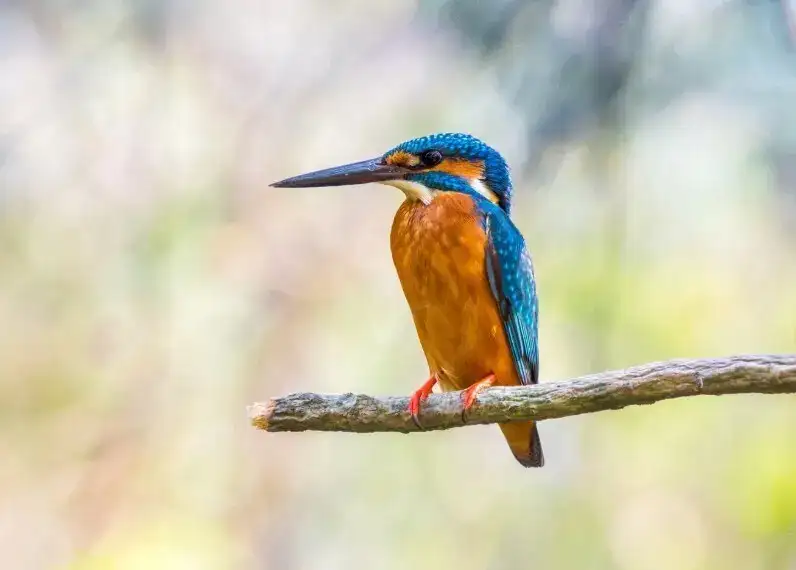
1. Kingfishers Are Found Across the Globe
Kingfishers live on every continent except Antarctica. They are commonly seen in Asia, Africa, Europe, Australia, and the Americas. Some species prefer rivers and lakes, while others thrive in forests and grasslands.
2. There Are More Than 90 Species
Over 90 species of kingfishers exist worldwide. The most famous include the Common Kingfisher, White-throated Kingfisher, and Pied Kingfisher. Each species varies in size, color, and habitat.
3. Their Colors Come From Feather Structure
The kingfisher’s brilliant blue and turquoise feathers are not due to pigments. Instead, the microscopic structure of the feathers reflects light, creating their striking iridescent appearance.
4. They Are Expert Hunters
Kingfishers have excellent eyesight and can spot prey from a distance. They mainly eat fish, but some species also feed on insects, frogs, lizards, and small crustaceans.
5. They Dive at Incredible Speed
When a kingfisher spots prey, it plunges into the water like a tiny missile. A special transparent membrane protects its eyes underwater, allowing it to catch fish with remarkable precision.
6. They Build Tunnels for Nests
Instead of using twigs, kingfishers dig tunnels into riverbanks or soil. These tunnels can be up to one meter long and end in a nesting chamber where eggs are laid.
7. They Have Large Heads and Sharp Beaks
Kingfishers are easily recognized by their oversized heads, short tails, and long pointed beaks. Their beaks are perfectly designed to catch and hold slippery prey.
8. Both Parents Care for the Chicks
Male and female kingfishers share parenting duties. They take turns incubating the eggs and bringing food to their hungry chicks until they are ready to fly.
9. They Symbolize Peace and Prosperity
In many cultures, kingfishers are seen as symbols of calm, abundance, and good fortune. Ancient Greeks associated them with the mythical “halcyon days,” representing peaceful weather.
10. Some Species Are Facing Threats
Habitat destruction, water pollution, and climate change are putting pressure on several kingfisher species. Protecting wetlands and rivers is crucial for their survival.
The kingfisher is much more than a colorful bird. It is a skilled hunter, devoted parent, and important part of many ecosystems. Whether perched near a river or darting through the forest, this tiny bird never fails to impress with its beauty and talent.
Disclaimer: This article is intended for general informational purposes only. The content has been compiled from publicly available online sources, including reference websites and educational materials. While every effort has been made to present accurate and up-to-date information, the facts have not been independently verified by the author or publisher. Readers are encouraged to consult authoritative sources for further research and confirmation.
1. Kingfishers Are Found Across the Globe
Kingfishers live on every continent except Antarctica. They are commonly seen in Asia, Africa, Europe, Australia, and the Americas. Some species prefer rivers and lakes, while others thrive in forests and grasslands. 2. There Are More Than 90 Species
Over 90 species of kingfishers exist worldwide. The most famous include the Common Kingfisher, White-throated Kingfisher, and Pied Kingfisher. Each species varies in size, color, and habitat.3. Their Colors Come From Feather Structure
The kingfisher’s brilliant blue and turquoise feathers are not due to pigments. Instead, the microscopic structure of the feathers reflects light, creating their striking iridescent appearance. 4. They Are Expert Hunters
Kingfishers have excellent eyesight and can spot prey from a distance. They mainly eat fish, but some species also feed on insects, frogs, lizards, and small crustaceans.You may also like
- Paris heatwave alert: Extreme heat forces early closure of Eiffel Tower, Louvre; what travellers need to know
- How to grow microgreens at home in just 7 days: A beginner's step-by-step guide
- This is the slowest train in India and that's exactly why travellers love it
- What These Hanuman Chalisa Verses Really Mean
- Quote of the Day by Oscar Wilde, "Man is least himself when he talks in his own..."
5. They Dive at Incredible Speed
When a kingfisher spots prey, it plunges into the water like a tiny missile. A special transparent membrane protects its eyes underwater, allowing it to catch fish with remarkable precision. 6. They Build Tunnels for Nests
Instead of using twigs, kingfishers dig tunnels into riverbanks or soil. These tunnels can be up to one meter long and end in a nesting chamber where eggs are laid. 7. They Have Large Heads and Sharp Beaks
Kingfishers are easily recognized by their oversized heads, short tails, and long pointed beaks. Their beaks are perfectly designed to catch and hold slippery prey. 8. Both Parents Care for the Chicks
Male and female kingfishers share parenting duties. They take turns incubating the eggs and bringing food to their hungry chicks until they are ready to fly.9. They Symbolize Peace and Prosperity
In many cultures, kingfishers are seen as symbols of calm, abundance, and good fortune. Ancient Greeks associated them with the mythical “halcyon days,” representing peaceful weather. 10. Some Species Are Facing Threats
Habitat destruction, water pollution, and climate change are putting pressure on several kingfisher species. Protecting wetlands and rivers is crucial for their survival. The kingfisher is much more than a colorful bird. It is a skilled hunter, devoted parent, and important part of many ecosystems. Whether perched near a river or darting through the forest, this tiny bird never fails to impress with its beauty and talent.
Disclaimer: This article is intended for general informational purposes only. The content has been compiled from publicly available online sources, including reference websites and educational materials. While every effort has been made to present accurate and up-to-date information, the facts have not been independently verified by the author or publisher. Readers are encouraged to consult authoritative sources for further research and confirmation.






More from our partners


Loving Newspoint? Download the app now
