
10 Intriguing Facts About Origami: Discover The Rich History & Cultural Significance of Paper Folding

Origami, the ancient art of paper folding, boasts a history as intricate as the delicate creations it produces. This article explores ten curious facts about origami, delving into its origins, cultural significance, and surprising applications throughout history. From its possible roots in ancient rituals to its modern-day use in mathematics and design, origami's journey is a fascinating tale of creativity and ingenuity. Discover the secrets behind this captivating art form and its enduring appeal.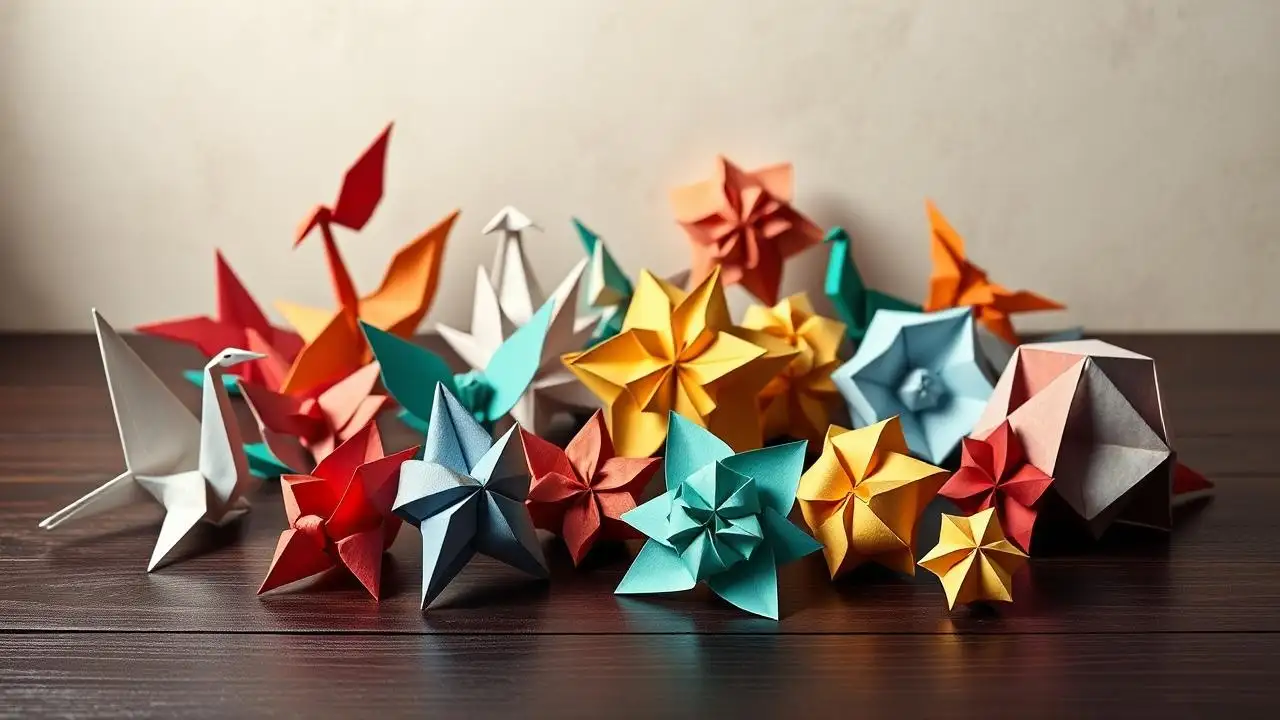
Origami is far more than just a childhood pastime. It's an art form with a rich and fascinating history.
Let's unfold ten curious facts about origami and its journey through time.
Others argue that it developed independently in Japan. Regardless, Japan is where origami truly flourished.
Paper folding was often used in Shinto rituals. It also adorned gifts to the gods.
This simple combination perfectly encapsulates the essence of the art form.
It was a skill practiced by the upper classes and used in special ceremonies.
It was published in 1797. The book showcases various ways to fold connected paper cranes.
Yoshizawa developed a system of notation using dots and dashes. This system is now used worldwide to diagram origami folds.
Complex origami designs rely on geometric principles. These principles are now used in fields like engineering and architecture.
These structures can be compactly stored for launch and then deployed in space.
These large-scale projects often require teams of people and enormous sheets of paper.
It can also help improve fine motor skills and concentration.
Origami is far more than just a childhood pastime. It's an art form with a rich and fascinating history.
Let's unfold ten curious facts about origami and its journey through time.
The Origins of Origami
The exact origins of origami are debated. Some believe it emerged in China, shortly after the invention of paper.Others argue that it developed independently in Japan. Regardless, Japan is where origami truly flourished.
Origami's Early Uses
In its early days, origami wasn't just for decoration. It had significant ceremonial and religious uses.Paper folding was often used in Shinto rituals. It also adorned gifts to the gods.
The Meaning of Origami
The word origami itself is Japanese in origin. It combines 'ori' (folding) and 'kami' (paper).This simple combination perfectly encapsulates the essence of the art form.
You may also like
- Quote of the Day by Confucius, "When you see a worthy person, endeavor to emulate him. When you see an unworthy person, then...."
- 'I knew we had to prevent a priceless treasure being lost forever': Inside Dumfries House, Scotland's timeless property King Charles saved
- Fashion quote of the day by Iris Apfel: 'Jewellery is the most transformative thing you can wear'
- Want your child to value money and time? German parents teach kids these 4 simple habits early in life
- Why do railways use stones under tracks?
A Symbol of Luxury
For centuries, paper was a luxury item. This meant origami was initially reserved for the elite.It was a skill practiced by the upper classes and used in special ceremonies.
The Hiden Senbazuru Orikata
One of the earliest known origami books is the Hiden Senbazuru Orikata. This translates to Secrets of One Thousand Cranes Origami.It was published in 1797. The book showcases various ways to fold connected paper cranes.
Akira Yoshizawa: The Grandmaster
Akira Yoshizawa is considered the grandmaster of modern origami. He was a pivotal figure in its evolution.Yoshizawa developed a system of notation using dots and dashes. This system is now used worldwide to diagram origami folds.
Mathematical Origami
Origami isn't just about art. It also has surprising mathematical applications.Complex origami designs rely on geometric principles. These principles are now used in fields like engineering and architecture.
Origami in Space
Believe it or not, origami has even made its way into space exploration. Scientists have used origami principles to design foldable structures.These structures can be compactly stored for launch and then deployed in space.
The World's Largest Origami
The world's largest origami creation is constantly changing. Ambitious folders around the globe are always pushing the boundaries.These large-scale projects often require teams of people and enormous sheets of paper.
Origami Therapy
Origami is sometimes used as a form of therapy. The repetitive folding motions can be calming and meditative.It can also help improve fine motor skills and concentration.






Loving Newspoint? Download the app now
