12-year-old UK girl put through six rounds of chemo after years of misdiagnosis; now she is wheelchair-bound and 'a ticking time bomb'


Newspoint
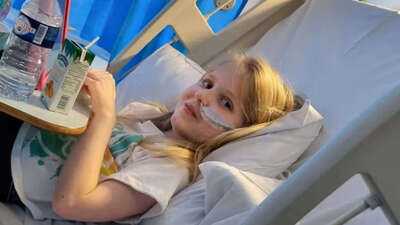
For years, Christina Condon trusted the doctors’ diagnosis. Her 12-year-old daughter, Faye Condon , was said to have a rare autoimmune disease, so she went through six rounds of chemotherapy, suffering through painful injections and nasty side effects. Still, nothing helped, and her health never improved.

After years of misdiagnosis and mistreatment, when the Faye finally moved to specialists at another hospital, everything changed.
Hero Image

Turns out, she didn’t have an autoimmune disorder at all. What she actually had was a rare genetic muscle disease, and that’s incurable. What’s more, the whole approach to managing that disease is completely different. By the time doctors figured it out, the family had lost years they’d never get back.

Now, Christina says Faye’s health is like “a ticking time bomb,” because EDMD can mess with the heart’s electrical system and lead to life-threatening problems. The family plans to formally complain to the first hospital, saying the wrong diagnosis “ruined her whole childhood”.

But what exactly happened to Faye?

What happened to Faye CondonPer The Mirror, Christina, from Plymouth, Devon, remembers signs starting when Faye was just five. She struggled to keep up with other kids, tripped and fell a lot, and couldn’t walk long distances. Christina says she warned doctors that something was seriously wrong, but felt ignored.

In Christina’s words, "I first took her for hip pain and inability to bear weight, and we knew something was wrong but the doctors couldn't see what I could see as a parent. She couldn't walk 200 yards to school, she would randomly fall, I had to take videos and pictures to prove it.”

Faye was referred to Bristol Children's Hospital (BCH), where doctors ran some initial tests, and in November 2019, they eventually diagnosed juvenile dermatomyositis (JDM), a rare autoimmune disorder where the immune system attacks the muscles and skin, causing inflammation and weakness. That explained Faye’s symptoms, so the medical team prescribed tough treatments: chemotherapy drugs and immune-suppressing shots.

The therapy drained Faye physically. Chemotherapy made her sick to her stomach. Hospital stays dragged on. Faye even landed with viral meningitis from a blood transfusion. Each visit felt like another blow, and despite all the effort, her muscle strength only got worse.

Frustrated, Christina pushed for a second opinion. A doctor at Derriford Hospital in Plymouth questioned everything and sent Faye to Great Ormond Street Hospital (GOSH) in London.

There, doctors thought she might have something else entirely. Genetic tests finally confirmed it: Faye had Emery-Dreifuss muscular dystrophy (EDMD), a progressive disorder causing muscle weakness, joint stiffness, and risky heart rhythm changes. It isn’t triggered by the immune system — it’s a genetic mutation. Chemotherapy doesn’t help.

Christina said, "Without the support of doctors at Derriford Hospital, we would never have got the correct diagnosis. They have been amazing from day one, they listened to and believed us as parents and really pushed for someone to listen.”

In August 2025, Faye finally got the right diagnosis, with de novo Emery-Dreifuss muscular dystrophy (EDMD) type 2. "The specialist at GOSH took one look at her and named this type of muscular dystrophy. All it took to diagnose her was a blood test with specific genetic testing, but the doctors at BCH were so adamant that it was JDM they never sent for this test,” said her mum.

Faye now uses a wheelchair and needs breathing support at night. The family always worries about sudden, serious heart problems.

Christina said: "We have spent her entire childhood in and out of hospital, we haven't been on holidays and we don't have a house or car that is wheelchair accessible as we were told she was going to get better."

She added, "If we had the correct diagnosis seven years ago when Faye was able to walk, we could have gone on holiday and had more fun with her before she was wheelchair bound. We put our lives on hold because we were always told she was going to get better."

What is juvenile dermatomyositis (JDM)?Juvenile dermatomyositis (JDM) is a rare autoimmune disease in children that causes muscle inflammation (myositis) and characteristic skin rashes (dermato). Per the Cleveland Clinic, it usually begins between ages 5 and 10 and occurs when the immune system mistakenly attacks healthy blood vessels, muscles, and skin. In this disease, symmetric weakness in muscles closest to the torso (shoulders, hips, neck, and thighs) makes it difficult to climb stairs, get up from the floor, or lift objects.

What is Emery-Dreifuss muscular dystrophy (EDMD)?Meanwhile, Emery-Dreifuss muscular dystrophy (EDMD) is a rare genetic disorder, with a classic triad of symptoms like early-onset joint contractures (stiff joints), slowly progressive muscle weakness and wasting (starting in the upper arms and lower legs), and severe heart problems, such as abnormal rhythms and cardiac conduction defects. EDMD primarily affects both skeletal and cardiac muscles. In this disease, joint stiffness frequently appears in early childhood. It also affects the elbows, Achilles tendons (heels), and the back of the neck, often causing restricted movement before any significant muscle weakness occurs.

What makes EDMD more serious and life-threatening is its cardiac involvement. One may develop conditions like cardiac conduction blocks, arrhythmias, and cardiomyopathy due to the progression of this disease. And since EDMD doesn’t have a cure, patients often require a pacemaker later in life.

How is JMD different than EDMD?Because both diseases include muscle weakness as one of the symptoms, JMD (Juvenile Dermatomyositis) and EDMD (Emery-Dreifuss Muscular Dystrophy) are often confused in pediatric neurology. However, it is crucial to clarify them more distinctly for the sake of the patient.

JMD is an autoimmune, inflammatory condition of the muscles and skin, whereas EDMD is an inherited genetic disease causing muscle wasting and heart problems.

Why Faye Condon’s story mattersFaye’s story draws attention to a big problem in medicine — how hard it is to properly diagnose rare diseases. These conditions often start out looking like more common ones. Muscle weakness, fatigue, and trouble walking turn up in all sorts of scenarios: autoimmune disorders, muscular dystrophies, neurological diseases, even metabolic issues.

Figuring out which is which takes repeated exams, special imaging, biopsies, and, more and more, genetic tests.

Christina believes earlier genetic testing could have caught EDMD years ago. Great Ormond Street doctors suspected it quickly, then used a targeted genetic analysis to confirm it.

Christina said, “The doctor [at (BCH)] was very flippant about it, they just threw medicine at her but nothing would make a difference. In October 2019 we were categorically told it was not muscular dystrophy, but I'm sure that the doctor was looking for her to fit into a rheumatology disease, it was almost like he was tainted before he had even seen Faye.”

She added, "Everyone could see there was something wrong, but no one wanted to take responsibility for her and do more tests as tests cost money. The staff at the hospital were very vocal about a financial fight about which department would pay for testing.”

Faye underwent her first round of chemotherapy in January 2021.

Christina said: "She was about seven for her first round of chemo and was so sick, it was awful. We couldn't be near anybody and she became really poorly, it was horrific to watch. She then contracted viral meningitis as a side effect of a blood product a doctor gave her and she was forced to stay in a dark room,” adding, "Those doctors ruined my little girl's whole childhood. She is losing the use of her legs very quickly, she was refused entry into a school because her needs changed too much.”

Christina said her 12-YO daughter is now "a ticking time bomb, her heart could stop at any minute and she is on a ventilator at night, so cannot have a sleepover like other girls in her class,” adding, “Had we known from five years old, and they had diagnosed her correctly, we would have everything in place… every appointment we go to is more bad news."

This isn’t just about one family. Diagnostic mistakes happen everywhere. And even though there’s no cure for EDMD, catching it early matters. Patients get regular heart checkups, tailored physical therapy, breathing support, and genetic counseling for families.