
5 Tiny Animals You Should Never Underestimate: Small but Surprisingly Dangerous

Small animals often look adorable and harmless, but appearances can be misleading. Some of the tiny animals you should never underestimate possess powerful defence mechanisms, deadly toxins, extraordinary hunting skills or survival abilities that seem almost impossible. From a venom-resistant mammal to a microscopic creature that can endure extreme temperatures, nature has developed remarkable ways for small species to protect themselves and overpower their surroundings. Here are five fascinating animals that prove size is not always a measure of strength.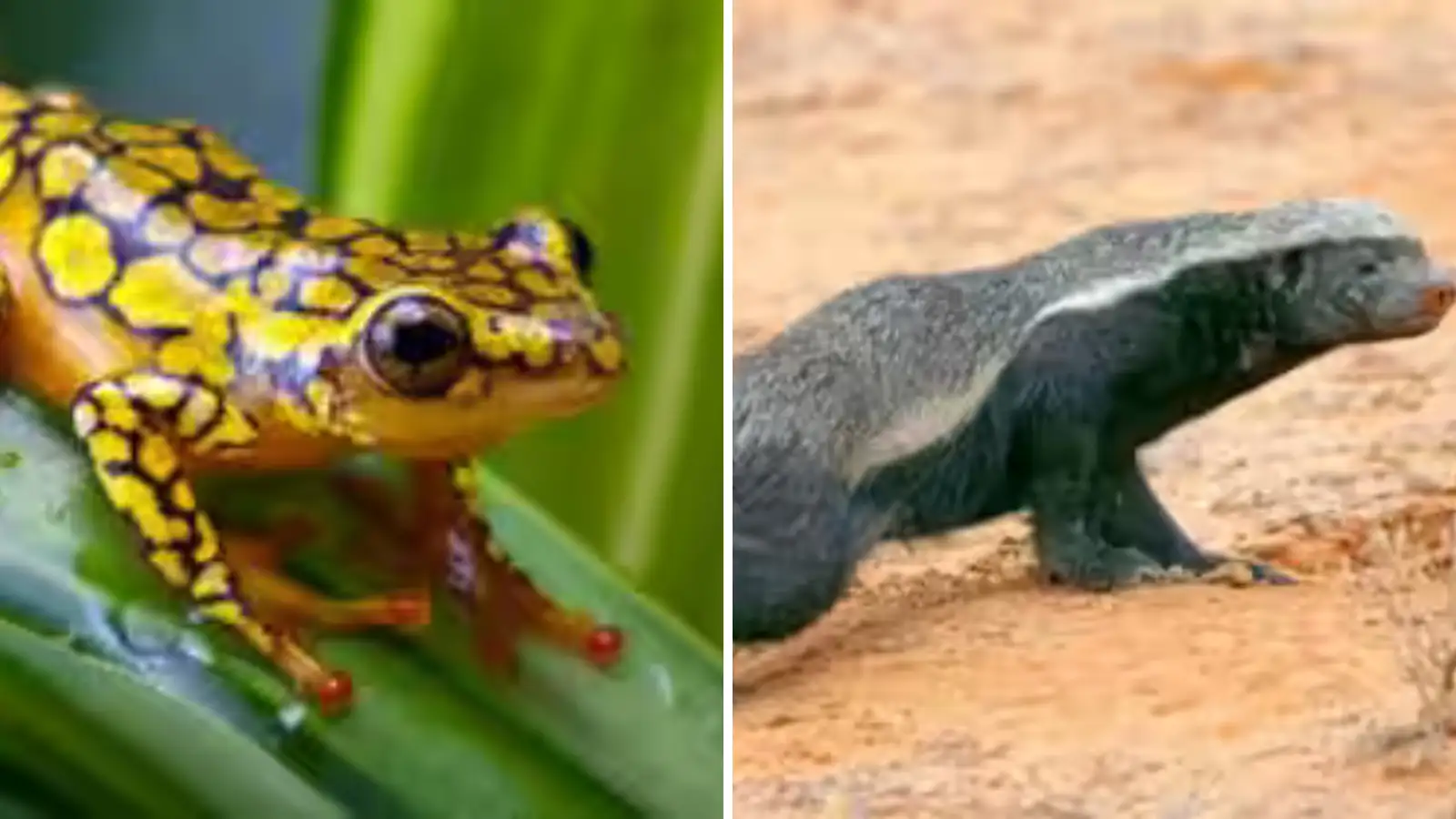
One of its biggest advantages is its unusually tough skin. The honey badger's thick, loose hide helps protect it from bites, scratches and stings. Its flexible skin also allows it to twist around when grabbed by a predator, giving it an opportunity to retaliate with its powerful jaws and sharp teeth.
What makes this animal even more remarkable is its resistance to certain snake venoms. Research published in the journal Toxicon in 2015 explored how changes in the honey badger's nicotinic acetylcholine receptors may help it withstand neurotoxins found in the venom of some highly venomous snakes.
Although a venomous snakebite can still be dangerous, this adaptation gives the honey badger an advantage when facing certain predators and prey. Its strong build, sharp claws and determined nature make it a formidable opponent despite its relatively modest size.
What makes it dangerous? Tough skin, powerful jaws, sharp claws and resistance to certain snake venoms help the honey badger defend itself against serious threats.
Typically weighing only a few hundred grams, the stoat can hunt animals much larger than itself, including rabbits. Its slender body allows it to move quickly through grass, burrows and narrow spaces, making it an efficient predator in a variety of environments.
The stoat's energy requirements also keep it busy. Because it has a fast metabolism, it needs to eat frequently to maintain its energy levels. This means spending much of its time searching for food rather than remaining inactive for long periods.
Its hunting behaviour is particularly fascinating. Stoats may leap, twist and move unpredictably while approaching prey. These movements can confuse or distract an animal, helping the stoat get close enough to launch an attack. Once within reach, it uses its sharp teeth to deliver a bite, often targeting the head or neck.
Despite its small size, the stoat is an efficient and adaptable hunter. Its combination of agility, speed and persistence makes it one of the more impressive small predators in the wild.
What makes it dangerous? Exceptional agility, sharp teeth, a high-energy lifestyle and the ability to hunt prey considerably larger than itself make the stoat a formidable little carnivore.
Native to a small area of Colombia's Pacific rainforest region, the golden poison frog generally measures around 2.5 to 5 centimetres in length. Unlike predators that depend on claws, teeth or physical strength, this frog relies on a powerful chemical defence to deter potential attackers.
Its skin contains batrachotoxin, an exceptionally potent toxin that interferes with the normal functioning of sodium channels in nerve and muscle cells. Exposure can disrupt muscle activity, affect the heart and potentially cause fatal cardiac failure.
The amount of toxin associated with a wild golden poison frog can be extraordinarily dangerous. However, toxicity varies between individuals, and estimates of how many humans a single frog could kill depend on assumptions about the quantity of toxin and the route of exposure. The frog should never be handled in the wild.
Interestingly, the golden poison frog does not appear to manufacture batrachotoxin on its own. Scientists believe it obtains the compounds from its diet, which includes small arthropods such as certain beetles. Frogs raised in captivity without access to the relevant dietary sources generally lack the same levels of toxicity seen in wild populations.
Its striking colour also serves an important purpose. The bright appearance acts as a warning to potential predators, signalling that attacking this seemingly defenceless amphibian could have serious consequences.
What makes it dangerous? Its skin can carry a potent neurotoxin capable of disrupting nerve and muscle function, making its chemical defence far more effective than its tiny size suggests.
Unlike many ant species that maintain permanent nests, these army ants move between temporary living formations called bivouacs. Their colonies organise large-scale foraging raids, travelling across the forest floor in search of insects, spiders and other small animals.
Their strength lies in numbers and coordination. As thousands of workers move together, they can overwhelm prey that would be difficult for a single ant to capture. The colony's organised movement allows individual ants to contribute to a much larger hunting effort.
Some worker ants also possess powerful, elongated mandibles that help them grip and restrain prey. Depending on the species and circumstances, their bites and other defensive mechanisms can make encounters painful for animals or humans who disturb them.
Army ant raids can be particularly effective against small creatures that have limited opportunities to escape. Insects and other invertebrates caught in the path of a moving swarm may quickly become prey. Some larger animals can also be attacked if they are vulnerable or unable to move away.
However, army ants are not invincible. Their success depends on colony size, prey availability, terrain and the ability of their targets to escape.
What makes them dangerous? Coordinated attacks, large numbers and specialised jaws allow army ants to overpower prey through teamwork rather than individual strength.
Unlike the other animals on this list, tardigrades are not known primarily for attacking large prey or defending themselves through brute force. Their extraordinary ability to endure harsh environmental conditions is what makes them stand out.
Some tardigrade species can enter a dormant, dehydrated state known as a tun when environmental conditions become unfavourable. During this process, the animal loses most of its body water, contracts into a compact form and reduces its metabolic activity to extremely low levels.
This state allows certain tardigrades to withstand conditions that would be fatal to most animals. Depending on the species, exposure conditions and duration, they can tolerate severe dehydration, intense radiation, extreme cold, brief exposure to high temperatures and even the vacuum of space.
Experiments have demonstrated that some tardigrades can survive exposure to the vacuum of space, although survival is not guaranteed under every condition. Similarly, claims about surviving temperatures ranging from approximately -272°C to 150°C should be understood as referring to particular experimental conditions, not an ability to remain active at those temperatures.
Tardigrades also possess specialised adaptations that help protect their cells during periods of environmental stress. Their resilience has attracted scientific interest because it may offer insights into how biological systems respond to dehydration, radiation and other extreme challenges.
Despite their reputation as nearly indestructible creatures, tardigrades are not immortal. Their survival depends on the species, the severity of the stress and how long the exposure lasts.
What makes them extraordinary? The ability of certain tardigrades to enter a dormant state and survive extreme environmental stress makes them some of the most resilient microscopic animals known to science.
Different species have developed specialised adaptations to meet the challenges of their environments. Honey badgers rely on protective skin and physical strength, while stoats use agility and hunting skills. Golden poison frogs employ chemical defences, army ants depend on collective action, and tardigrades survive by entering a highly resistant dormant state.
These strategies have developed over generations through natural selection. Each adaptation offers an advantage in a particular ecological setting, helping an animal find food, avoid predators or survive unfavourable conditions.
Size can sometimes be a disadvantage, but it can also offer benefits. Small animals often require fewer resources, can hide in narrow spaces and may move through habitats that are inaccessible to larger creatures.
The animal kingdom is full of surprises, and these five species demonstrate just how misleading appearances can be. From the honey badger's fearless defence to the golden poison frog's powerful toxins and the tardigrade's remarkable resilience, each has developed a unique way to survive.
Their abilities also show why it is important to understand wildlife rather than judge it by appearance alone. Some tiny animals are skilled hunters, others rely on specialised chemical or physical defences, and a few have evolved extraordinary ways to endure environmental extremes.
The biggest lesson is simple: in nature, being small does not mean being weak.
1. Honey Badger : The Fearless Fighter of the Wild
The honey badger may not be particularly large, but it has earned a reputation as one of the most fearless mammals in the animal kingdom. Found across parts of Africa, the Middle East and the Indian subcontinent, this sturdy animal is known for confronting threats that many larger creatures would prefer to avoid.One of its biggest advantages is its unusually tough skin. The honey badger's thick, loose hide helps protect it from bites, scratches and stings. Its flexible skin also allows it to twist around when grabbed by a predator, giving it an opportunity to retaliate with its powerful jaws and sharp teeth.
What makes this animal even more remarkable is its resistance to certain snake venoms. Research published in the journal Toxicon in 2015 explored how changes in the honey badger's nicotinic acetylcholine receptors may help it withstand neurotoxins found in the venom of some highly venomous snakes.
Although a venomous snakebite can still be dangerous, this adaptation gives the honey badger an advantage when facing certain predators and prey. Its strong build, sharp claws and determined nature make it a formidable opponent despite its relatively modest size.
What makes it dangerous? Tough skin, powerful jaws, sharp claws and resistance to certain snake venoms help the honey badger defend itself against serious threats.
2. Stoat : The Tiny Hunter That Takes on Larger Prey
The stoat, also known as the short-tailed weasel, is a small carnivorous mammal with an appetite and hunting ability that seem disproportionate to its size. Found across parts of Europe, Asia and North America, this agile predator is built for speed, stealth and relentless pursuit.Typically weighing only a few hundred grams, the stoat can hunt animals much larger than itself, including rabbits. Its slender body allows it to move quickly through grass, burrows and narrow spaces, making it an efficient predator in a variety of environments.
The stoat's energy requirements also keep it busy. Because it has a fast metabolism, it needs to eat frequently to maintain its energy levels. This means spending much of its time searching for food rather than remaining inactive for long periods.
Its hunting behaviour is particularly fascinating. Stoats may leap, twist and move unpredictably while approaching prey. These movements can confuse or distract an animal, helping the stoat get close enough to launch an attack. Once within reach, it uses its sharp teeth to deliver a bite, often targeting the head or neck.
Despite its small size, the stoat is an efficient and adaptable hunter. Its combination of agility, speed and persistence makes it one of the more impressive small predators in the wild.
What makes it dangerous? Exceptional agility, sharp teeth, a high-energy lifestyle and the ability to hunt prey considerably larger than itself make the stoat a formidable little carnivore.
3. Golden Poison Frog : A Beautiful Creature With a Deadly Defence
With its brilliant golden-yellow colour and tiny body, the golden poison frog looks more like a colourful rainforest ornament than a dangerous animal. However, this species, scientifically known as Phyllobates terribilis, is considered one of the most poisonous animals on Earth.Native to a small area of Colombia's Pacific rainforest region, the golden poison frog generally measures around 2.5 to 5 centimetres in length. Unlike predators that depend on claws, teeth or physical strength, this frog relies on a powerful chemical defence to deter potential attackers.
Its skin contains batrachotoxin, an exceptionally potent toxin that interferes with the normal functioning of sodium channels in nerve and muscle cells. Exposure can disrupt muscle activity, affect the heart and potentially cause fatal cardiac failure.
The amount of toxin associated with a wild golden poison frog can be extraordinarily dangerous. However, toxicity varies between individuals, and estimates of how many humans a single frog could kill depend on assumptions about the quantity of toxin and the route of exposure. The frog should never be handled in the wild.
Interestingly, the golden poison frog does not appear to manufacture batrachotoxin on its own. Scientists believe it obtains the compounds from its diet, which includes small arthropods such as certain beetles. Frogs raised in captivity without access to the relevant dietary sources generally lack the same levels of toxicity seen in wild populations.
Its striking colour also serves an important purpose. The bright appearance acts as a warning to potential predators, signalling that attacking this seemingly defenceless amphibian could have serious consequences.
What makes it dangerous? Its skin can carry a potent neurotoxin capable of disrupting nerve and muscle function, making its chemical defence far more effective than its tiny size suggests.
4. Army Ant: A Tiny Predator With an Overwhelming Advantage
An individual army ant may measure only a few millimetres, but a colony working together can become a formidable hunting force. Species such as Eciton burchellii, found in Central and South American rainforests, demonstrate how cooperation can turn thousands of tiny insects into highly effective predators.Unlike many ant species that maintain permanent nests, these army ants move between temporary living formations called bivouacs. Their colonies organise large-scale foraging raids, travelling across the forest floor in search of insects, spiders and other small animals.
Their strength lies in numbers and coordination. As thousands of workers move together, they can overwhelm prey that would be difficult for a single ant to capture. The colony's organised movement allows individual ants to contribute to a much larger hunting effort.
Some worker ants also possess powerful, elongated mandibles that help them grip and restrain prey. Depending on the species and circumstances, their bites and other defensive mechanisms can make encounters painful for animals or humans who disturb them.
Army ant raids can be particularly effective against small creatures that have limited opportunities to escape. Insects and other invertebrates caught in the path of a moving swarm may quickly become prey. Some larger animals can also be attacked if they are vulnerable or unable to move away.
However, army ants are not invincible. Their success depends on colony size, prey availability, terrain and the ability of their targets to escape.
What makes them dangerous? Coordinated attacks, large numbers and specialised jaws allow army ants to overpower prey through teamwork rather than individual strength.
5. Tardigrade: The Microscopic Animal That Can Survive Extreme Conditions
Tardigrades , popularly called water bears or moss piglets, are among the most fascinating microscopic animals on Earth. Usually measuring less than a millimetre, these eight-legged creatures are found in environments ranging from moss and freshwater habitats to marine ecosystems.Unlike the other animals on this list, tardigrades are not known primarily for attacking large prey or defending themselves through brute force. Their extraordinary ability to endure harsh environmental conditions is what makes them stand out.
Some tardigrade species can enter a dormant, dehydrated state known as a tun when environmental conditions become unfavourable. During this process, the animal loses most of its body water, contracts into a compact form and reduces its metabolic activity to extremely low levels.
This state allows certain tardigrades to withstand conditions that would be fatal to most animals. Depending on the species, exposure conditions and duration, they can tolerate severe dehydration, intense radiation, extreme cold, brief exposure to high temperatures and even the vacuum of space.
Experiments have demonstrated that some tardigrades can survive exposure to the vacuum of space, although survival is not guaranteed under every condition. Similarly, claims about surviving temperatures ranging from approximately -272°C to 150°C should be understood as referring to particular experimental conditions, not an ability to remain active at those temperatures.
Tardigrades also possess specialised adaptations that help protect their cells during periods of environmental stress. Their resilience has attracted scientific interest because it may offer insights into how biological systems respond to dehydration, radiation and other extreme challenges.
Despite their reputation as nearly indestructible creatures, tardigrades are not immortal. Their survival depends on the species, the severity of the stress and how long the exposure lasts.
What makes them extraordinary? The ability of certain tardigrades to enter a dormant state and survive extreme environmental stress makes them some of the most resilient microscopic animals known to science.
You may also like
- Railways Now Offering Floral Comforters Instead of Blankets on Rajdhani Express—What Makes Them Special?
- UP's BC Sakhi Scheme: When and how much money do women receive?
- Solar Water Heaters Heat Water Even Without Direct Sunlight—Here's How They Work
- Meet M Thangaraj, the Tenkasi teacher who turned a village classroom into a mini government; students run education, health and agriculture ministries, while his methods have reached 50+ teachers
- Gardening Tips: Beetroot Lip Balm to Calendula Cream, 5 Ways to Use Home-Grown Produce in Your Beauty Routine
Why Are Some Tiny Animals So Powerful?
The remarkable abilities of these animals highlight an important principle of evolution: survival does not always depend on having a large body.Different species have developed specialised adaptations to meet the challenges of their environments. Honey badgers rely on protective skin and physical strength, while stoats use agility and hunting skills. Golden poison frogs employ chemical defences, army ants depend on collective action, and tardigrades survive by entering a highly resistant dormant state.
These strategies have developed over generations through natural selection. Each adaptation offers an advantage in a particular ecological setting, helping an animal find food, avoid predators or survive unfavourable conditions.
Size can sometimes be a disadvantage, but it can also offer benefits. Small animals often require fewer resources, can hide in narrow spaces and may move through habitats that are inaccessible to larger creatures.
The animal kingdom is full of surprises, and these five species demonstrate just how misleading appearances can be. From the honey badger's fearless defence to the golden poison frog's powerful toxins and the tardigrade's remarkable resilience, each has developed a unique way to survive.
Their abilities also show why it is important to understand wildlife rather than judge it by appearance alone. Some tiny animals are skilled hunters, others rely on specialised chemical or physical defences, and a few have evolved extraordinary ways to endure environmental extremes.
The biggest lesson is simple: in nature, being small does not mean being weak.






Loving Newspoint? Download the app now
