
6 Incredible Animal Cities That Showcase Nature's Extraordinary Architecture

Humans may have mastered the art of building skyscrapers, bridges and sprawling cities, but the natural world has its own remarkable architects. From tiny insects constructing elaborate homes in treetops to fish creating intricate underwater designs, several species display extraordinary building skills. These fascinating animal cities demonstrate how creatures use teamwork, instinct and ingenious techniques to create structures that serve entire communities or help them reproduce. Some of these natural constructions stretch across vast landscapes, while others feature surprisingly precise geometric patterns. Here are six incredible examples of animal architecture that challenge our understanding of construction and design.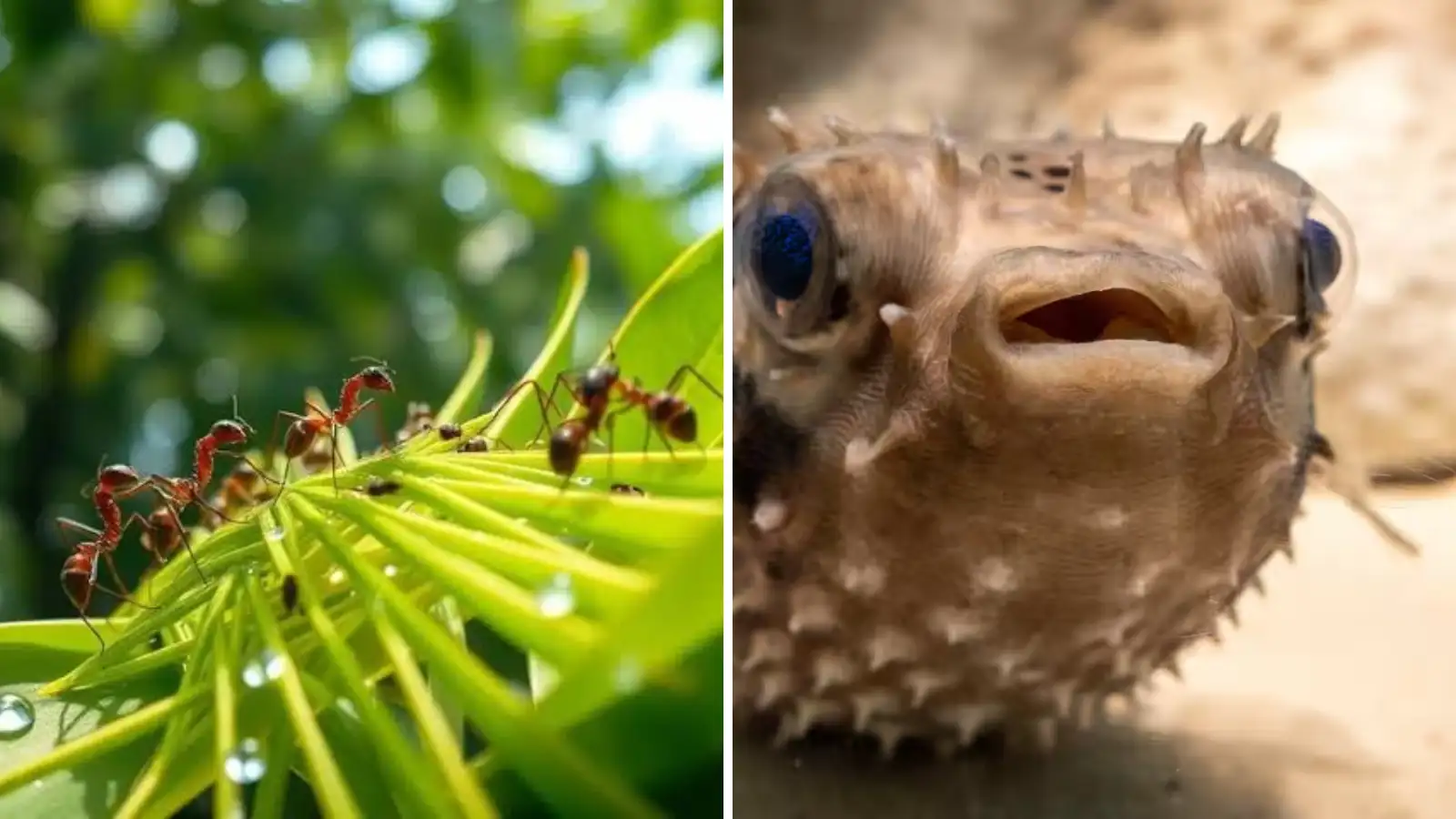
These ants commonly build their nests in broad-leaved trees, including mango trees. The construction process involves remarkable teamwork. First, groups of worker ants pull neighbouring leaves towards one another until their edges touch. Other workers then bring ant larvae to the joined edges. The larvae produce silk, which the adult ants use to stitch the leaves together.
By repeating this process across several leaves, the colony creates a network of enclosed shelters that offers protection against rain and potential predators.
Weaver ants are found across tropical regions of Africa, South Asia, Southeast Asia and northern Australia. Apart from their impressive construction abilities, they are also valued as natural pest controllers because they prey on insects that damage tropical crops. In certain parts of Southeast Asia, they are even consumed as food.
The underwater settlement developed around rocky formations and discarded shells scattered across the seabed. Instead of living in completely isolated dens, multiple octopuses occupied neighbouring shelters and repeatedly interacted with one another.
Their behaviour revealed an unexpectedly complicated social environment. Researchers observed octopuses defending their dens, chasing away rivals and sometimes attempting to drive neighbouring animals out of their shelters.
Unlike human settlements, Octlantis was not a deliberately planned community. However, its existence demonstrated that octopuses can form surprisingly complex social arrangements when suitable habitats and resources bring them together.
The discovery offered scientists a fascinating glimpse into the social behaviour of a species traditionally considered solitary.
Researchers documented approximately 200 million earthen mounds created by Syntermes dirus termites. Together, these formations occupy nearly 230,000 square kilometres of seasonally dry tropical forest, an area comparable in size to Great Britain.
The individual mounds are impressive in their own right. On average, they stand around 2.5 metres tall and measure approximately nine metres across. Scientists estimate that the entire system contains nearly 10 cubic kilometres of excavated soil.
Interestingly, these mounds are not separate termite nests. They are deposits of soil removed by termites while digging extensive underground tunnel networks to reach fallen leaves and other food sources.
Over thousands of years, this continuous excavation has transformed the landscape into a remarkably organised pattern that can even be identified through satellite imagery. Researchers estimate that the system may have been developing for as long as 4,000 years.
This enormous construction project shows how the repeated activities of tiny insects can gradually reshape an entire region.
These animals live in large colonies known as prairie dog towns . Each colony consists of interconnected or closely grouped burrow systems featuring tunnels, nesting chambers and multiple entrances. These underground structures provide shelter, protection and living space for the animals.
A remarkable historical account dates back to 1901, when naturalist Vernon Bailey described an enormous black-tailed prairie dog town in central Texas. His estimate suggested that the colony covered nearly 25,000 square miles and contained approximately 400 million animals.
Although this historical figure describes a vast regional colony rather than one continuous underground tunnel system, it highlights the extraordinary scale of prairie dog populations in the past.
Their construction activities also benefit other wildlife. By digging through the ground, prairie dogs help aerate the soil and influence the surrounding vegetation. Their abandoned burrows can provide shelter for other animals, including burrowing owls.
Unfortunately, prairie dog populations have declined significantly over time because of habitat destruction, poisoning and disease. Their disappearance can also affect the many species that depend on their underground habitats.
The mystery was solved in 2011, when researchers observed a small male white-spotted pufferfish creating these unusual formations.
Found in waters near southern Amami-Oshima Island in Japan's Ryukyu Islands, these fish are only around 10–12 centimetres long. Yet they can construct remarkably detailed underwater designs measuring approximately two metres across.
The male pufferfish uses its body and fins to repeatedly move sand, creating a series of radial grooves, ridges and valleys. The result is a large circular structure with carefully arranged geometric patterns. Fine sand and fragments of shells are also used to decorate different sections of the design.
But this elaborate construction is not simply for appearance. The male creates the structure as a nesting site to attract females and support reproduction. The carefully shaped patterns help form a suitable environment for the eggs.
The pufferfish's ability to create such a precise design despite its small size makes it one of the most fascinating builders in the underwater world.
Native to Madagascar, this species is famous for creating enormous orb-shaped webs suspended above streams and rivers. Instead of relying on nearby branches, the spider uses long silk threads to anchor its web between distant points on opposite riverbanks.
Some of these supporting silk lines can stretch up to 25 metres, allowing the spider to create a web covering an area of approximately 2.8 square metres.
What makes this construction even more remarkable is the quality of the silk. Darwin's bark spider produces exceptionally tough silk that combines impressive tensile strength with elasticity. This unusual combination makes it remarkably resistant to breaking compared with many previously studied spider silks.
By using these strong anchor lines, the spider can establish large webs over open water, creating an effective structure for catching prey.
Madagascar is already famous for its extraordinary wildlife and unique species, but the architectural abilities of Darwin's bark spider add another fascinating dimension to the island's natural history.
Unlike human architecture, which often relies on blueprints, machinery and advanced technology, these natural structures are largely created through instinct, specialised biological abilities and cooperation.
Some animals build to protect their communities, others create elaborate structures to attract mates, while certain species gradually transform entire landscapes through their everyday activities.
These six examples remind us that impressive architecture is not exclusive to humans. Across forests, grasslands, rivers and oceans, nature continues to produce extraordinary structures that are as fascinating as many of the world's greatest human-made creations.
1. Weaver Ants: Building Homes With Living Silk
Weaver ants are among nature's most resourceful builders. Unlike many other ant species that establish colonies underground, these insects create elaborate nests among the branches and leaves of trees. Their ability to turn ordinary foliage into secure shelters makes them particularly fascinating.These ants commonly build their nests in broad-leaved trees, including mango trees. The construction process involves remarkable teamwork. First, groups of worker ants pull neighbouring leaves towards one another until their edges touch. Other workers then bring ant larvae to the joined edges. The larvae produce silk, which the adult ants use to stitch the leaves together.
By repeating this process across several leaves, the colony creates a network of enclosed shelters that offers protection against rain and potential predators.
Weaver ants are found across tropical regions of Africa, South Asia, Southeast Asia and northern Australia. Apart from their impressive construction abilities, they are also valued as natural pest controllers because they prey on insects that damage tropical crops. In certain parts of Southeast Asia, they are even consumed as food.
2. Octlantis: The Underwater Neighbourhood of Octopuses
Octopuses are generally known for their solitary lifestyles, making the discovery of an underwater gathering of these creatures particularly surprising. Located in Jervis Bay, New South Wales, Australia, this unusual habitat was given the name Octlantis by researchers studying the behaviour of gloomy octopuses, scientifically known as Octopus tetricus.The underwater settlement developed around rocky formations and discarded shells scattered across the seabed. Instead of living in completely isolated dens, multiple octopuses occupied neighbouring shelters and repeatedly interacted with one another.
Their behaviour revealed an unexpectedly complicated social environment. Researchers observed octopuses defending their dens, chasing away rivals and sometimes attempting to drive neighbouring animals out of their shelters.
Unlike human settlements, Octlantis was not a deliberately planned community. However, its existence demonstrated that octopuses can form surprisingly complex social arrangements when suitable habitats and resources bring them together.
The discovery offered scientists a fascinating glimpse into the social behaviour of a species traditionally considered solitary.
3. Brazil's 200 Million Termite Mounds: A Landscape Built Over Centuries
One of the most extraordinary examples of animal construction can be found in northeastern Brazil, where an enormous landscape is covered with millions of termite mounds.Researchers documented approximately 200 million earthen mounds created by Syntermes dirus termites. Together, these formations occupy nearly 230,000 square kilometres of seasonally dry tropical forest, an area comparable in size to Great Britain.
The individual mounds are impressive in their own right. On average, they stand around 2.5 metres tall and measure approximately nine metres across. Scientists estimate that the entire system contains nearly 10 cubic kilometres of excavated soil.
Interestingly, these mounds are not separate termite nests. They are deposits of soil removed by termites while digging extensive underground tunnel networks to reach fallen leaves and other food sources.
Over thousands of years, this continuous excavation has transformed the landscape into a remarkably organised pattern that can even be identified through satellite imagery. Researchers estimate that the system may have been developing for as long as 4,000 years.
This enormous construction project shows how the repeated activities of tiny insects can gradually reshape an entire region.
4. Prairie Dogs: The Enormous Underground Towns of North America
Prairie dogs may look like small, ordinary rodents, but their underground communities are among the most impressive animal settlements ever documented.These animals live in large colonies known as prairie dog towns . Each colony consists of interconnected or closely grouped burrow systems featuring tunnels, nesting chambers and multiple entrances. These underground structures provide shelter, protection and living space for the animals.
A remarkable historical account dates back to 1901, when naturalist Vernon Bailey described an enormous black-tailed prairie dog town in central Texas. His estimate suggested that the colony covered nearly 25,000 square miles and contained approximately 400 million animals.
Although this historical figure describes a vast regional colony rather than one continuous underground tunnel system, it highlights the extraordinary scale of prairie dog populations in the past.
Their construction activities also benefit other wildlife. By digging through the ground, prairie dogs help aerate the soil and influence the surrounding vegetation. Their abandoned burrows can provide shelter for other animals, including burrowing owls.
Unfortunately, prairie dog populations have declined significantly over time because of habitat destruction, poisoning and disease. Their disappearance can also affect the many species that depend on their underground habitats.
5. Japanese Pufferfish: Creating Perfect Geometric Underwater Nests
One of nature's most surprising architectural creations lies beneath the sandy seabeds surrounding Japan's subtropical islands. For years, divers encountered intricate circular patterns on the ocean floor without knowing which creature was responsible for them.The mystery was solved in 2011, when researchers observed a small male white-spotted pufferfish creating these unusual formations.
Found in waters near southern Amami-Oshima Island in Japan's Ryukyu Islands, these fish are only around 10–12 centimetres long. Yet they can construct remarkably detailed underwater designs measuring approximately two metres across.
The male pufferfish uses its body and fins to repeatedly move sand, creating a series of radial grooves, ridges and valleys. The result is a large circular structure with carefully arranged geometric patterns. Fine sand and fragments of shells are also used to decorate different sections of the design.
But this elaborate construction is not simply for appearance. The male creates the structure as a nesting site to attract females and support reproduction. The carefully shaped patterns help form a suitable environment for the eggs.
The pufferfish's ability to create such a precise design despite its small size makes it one of the most fascinating builders in the underwater world.
6. Darwin's Bark Spider: Building Giant Webs Across Rivers
Most spiders construct their webs between nearby branches, plants or other supporting surfaces. Darwin's bark spider, scientifically known as Caerostris darwini, takes web construction to an entirely different level.Native to Madagascar, this species is famous for creating enormous orb-shaped webs suspended above streams and rivers. Instead of relying on nearby branches, the spider uses long silk threads to anchor its web between distant points on opposite riverbanks.
Some of these supporting silk lines can stretch up to 25 metres, allowing the spider to create a web covering an area of approximately 2.8 square metres.
What makes this construction even more remarkable is the quality of the silk. Darwin's bark spider produces exceptionally tough silk that combines impressive tensile strength with elasticity. This unusual combination makes it remarkably resistant to breaking compared with many previously studied spider silks.
By using these strong anchor lines, the spider can establish large webs over open water, creating an effective structure for catching prey.
Madagascar is already famous for its extraordinary wildlife and unique species, but the architectural abilities of Darwin's bark spider add another fascinating dimension to the island's natural history.
What Do These Animal Cities Teach Us About Nature?
From the intricate leaf shelters of weaver ants to the enormous underground networks of prairie dogs, animal construction projects reveal how different species adapt their surroundings to survive and reproduce.Unlike human architecture, which often relies on blueprints, machinery and advanced technology, these natural structures are largely created through instinct, specialised biological abilities and cooperation.
Some animals build to protect their communities, others create elaborate structures to attract mates, while certain species gradually transform entire landscapes through their everyday activities.
These six examples remind us that impressive architecture is not exclusive to humans. Across forests, grasslands, rivers and oceans, nature continues to produce extraordinary structures that are as fascinating as many of the world's greatest human-made creations.
Next Story