
Animal Memory Research Is Overturning Everything We Thought We Knew About Cognition


The assumption that crumbled firstThe standard view held that episodic memory, the ability to mentally replay a specific past event, not just respond to a learned cue, was uniquely human. Then came a 1998 study by Nicola Clayton and Anthony Dickinson at Cambridge University, published in Nature, that changed the framing permanently. Western scrub jays, they found, could remember what food they had cached, where they had hidden it, and crucially, how long ago, adjusting their retrieval behavior based on whether the food would have spoiled. That is not conditioning. That is a bird tracking time, location, and content simultaneously.
 The finding mattered because it met the criteria for episodic-like memory without requiring language or self-report. The jays had no way to tell the researchers anything. The behavior itself was the evidence.
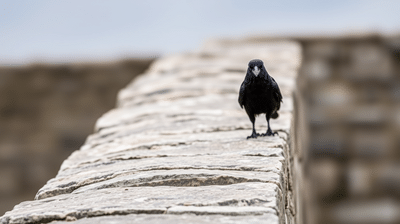
What crows and ravens remember about youCorvids have since become the most studied genus in animal cognition research, and the findings keep compounding. John Marzluff's research at the University of Washington demonstrated that American crows not only recognize individual human faces but hold grudges. Crows that were captured and banded by researchers wearing specific masks later dive-bombed and scolded those same masked faces, and taught the behavior to other crows who had never encountered the original threat. The memory persisted across years and spread socially.
This is recall operating across time and across individuals. The crow is not reacting to a present stimulus. It is applying a stored evaluation of a past experience to a new situation, then transmitting that evaluation to others. That is closer to how human social memory works than most models predicted for a bird with a brain the size of a walnut.
The octopus problemOctopuses complicate the memory picture from a completely different direction. Their neurons are distributed: roughly two-thirds of an octopus's 500 million neurons sit not in its central brain but in its eight arms. Each arm can process information and execute responses semi-independently. A 2021 study from the Hebrew University of Jerusalem showed that octopuses in REM-like sleep cycles display rapid color changes across their skin, suggesting active memory consolidation, the same process that happens in sleeping humans and other mammals.
The biological fact that makes this striking is the octopus's lifespan: most species live one to two years. Whatever memory architecture they have evolved, it operates under extreme time pressure. They learn fast, store efficiently, and die before most mammals have finished growing. Their cognition appears optimized for compression in a way that mammalian memory research had never needed to model.
Bees, numbers, and the limits of brain size as a proxy for intelligenceThe assumption that memory capacity scales with brain size has taken repeated hits. Honeybees, with fewer than a million neurons, can learn to associate symbols with quantities, a finding published in 2019 by researchers at RMIT University in Melbourne. They can also recognize individual human faces, navigate using landmarks stored from a single flight, and communicate the location of food sources to other bees through the waggle dance, which encodes distance and direction as movement. That is spatial memory, social transmission, and symbolic association in an animal whose entire nervous system weighs less than a milligram.
What crows and ravens remember about youCorvids have since become the most studied genus in animal cognition research, and the findings keep compounding. John Marzluff's research at the University of Washington demonstrated that American crows not only recognize individual human faces but hold grudges. Crows that were captured and banded by researchers wearing specific masks later dive-bombed and scolded those same masked faces, and taught the behavior to other crows who had never encountered the original threat. The memory persisted across years and spread socially.
This is recall operating across time and across individuals. The crow is not reacting to a present stimulus. It is applying a stored evaluation of a past experience to a new situation, then transmitting that evaluation to others. That is closer to how human social memory works than most models predicted for a bird with a brain the size of a walnut.
The octopus problemOctopuses complicate the memory picture from a completely different direction. Their neurons are distributed: roughly two-thirds of an octopus's 500 million neurons sit not in its central brain but in its eight arms. Each arm can process information and execute responses semi-independently. A 2021 study from the Hebrew University of Jerusalem showed that octopuses in REM-like sleep cycles display rapid color changes across their skin, suggesting active memory consolidation, the same process that happens in sleeping humans and other mammals.
Next Story