
The Anxious-Avoidant Cycle: Why Some Relationships Feel Like a Never-Ending Chase

One reaches back; the other pulls away. You know, that relationship that feels so good until it doesn't? One day, you're talking for hours. They're affectionate, attentive and completely present. You feel secure. Then, almost without warning, something changes. Their replies become shorter. They need space. They're suddenly "busy". You start wondering what happened. So you reach out a little more, hoping to get back the closeness you had before. But the more you try to reconnect, the more they seem to move away somehow.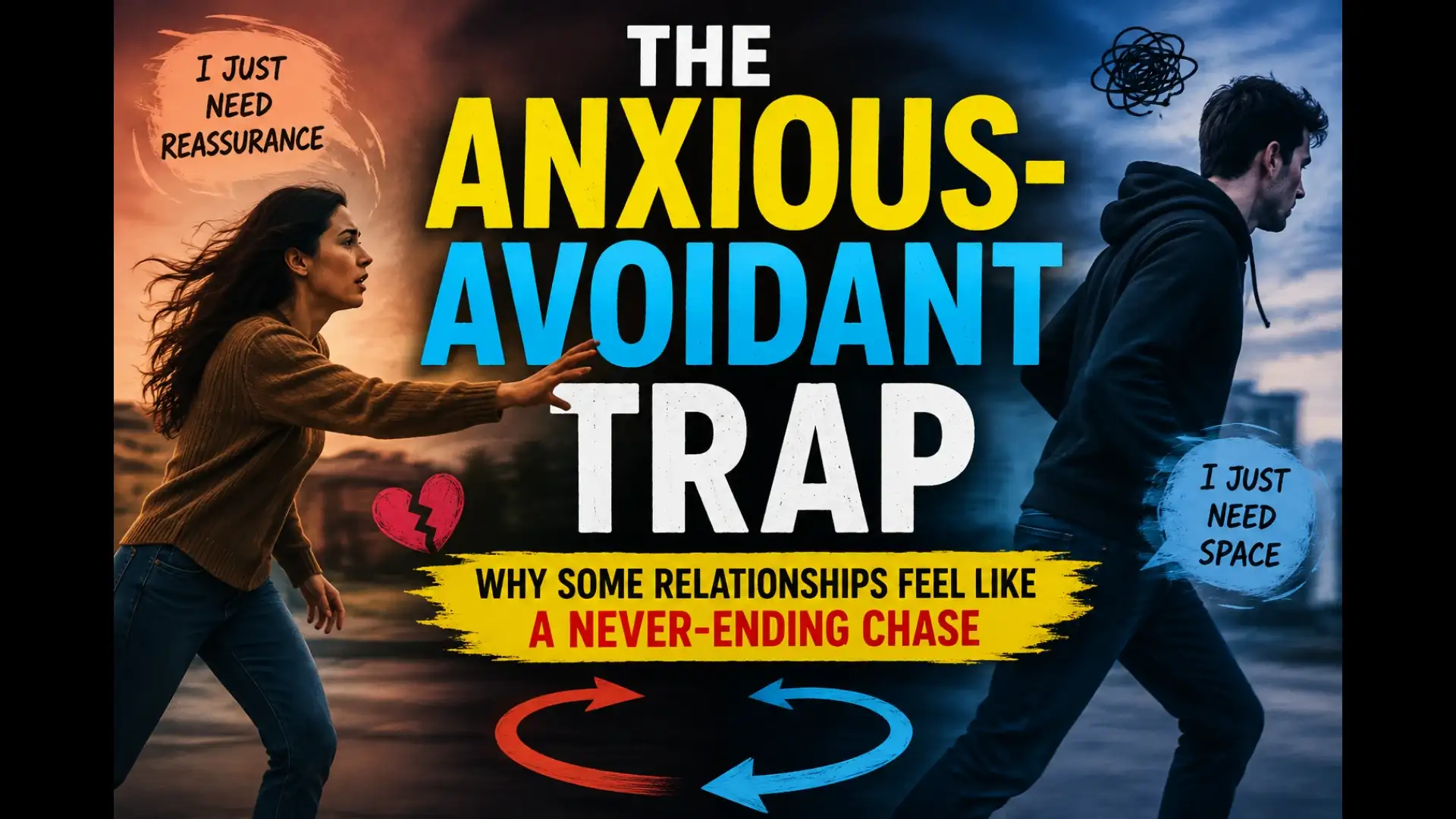
And then comes the confusing part. The moment you finally stop chasing, they come back. Suddenly they're interested again. They're calling. They're texting. They're asking where you've been. So you let them back in. And eventually, the whole thing starts again. For some couples, this isn't just a bad phase. It's a repeating pattern.
When Proximity feels different for two people
This anxious-avoidant dynamic can occur between two people who have very different reactions to emotional closeness. For some, having communication be consistent is how they feel safest. They like to know where they stand.” But if you don’t respond immediately or suddenly seem different, they might suspect something is up.
The other person may experience closeness differently. They might genuinely care, but when a relationship becomes emotionally intense, their instinct can be to create some distance. Neither person necessarily wakes up thinking, “Today I'm going to make this relationship difficult.” They're simply responding to discomfort in opposite ways. One moves closer. The other moves away.
The More You Chase, The More They RunThis is where the cycle becomes particularly painful. Imagine one person feeling ignored. They ask for reassurance. The other person feels the pressure and backs away. That distance makes the first person even more anxious, so they ask more questions, they send another message, or they try harder to fix things. The second person is now feeling even more overwhelmed.
So they withdraw further. And suddenly, both people are reacting to each other's reactions. The person chasing thinks, “Why won't they give me the reassurance I need?” The person withdrawing thinks, "Why can't they just give me some space?” Both feel like the other person is creating the problem.
Why The Push-Pull Can Feel So AddictiveStrangely, inconsistency can sometimes make a relationship feel more intense. When affection comes and goes, every moment of closeness can feel incredibly valuable. A sweet message after days of distance feels bigger than it probably should. A sudden phone call feels like proof that they still care. A good weekend can make you forget the difficult weeks before it.
That's what makes leaving the cycle so complicated. You're not necessarily holding onto the entire relationship. Sometimes you're holding onto the version of it that appears during the good moments.
Love Doesn't Always Fix the PatternThis is probably the hardest part to accept. Two people can genuinely love each other and still be terrible at making each other feel secure. Feelings alone don't automatically teach people how to communicate, handle conflict or tolerate emotional vulnerability.
If one person constantly needs reassurance and the other constantly responds by disappearing, love can start feeling like work neither person knows how to do. The answer isn't necessarily for one person to become “less needy” or the other to become “more available". Both people have to understand the pattern they're participating in.
Breaking the ChaseThe cycle usually doesn't change when one person finally becomes better at chasing. It changes when both people stop reacting automatically. The person who feels anxious may need to learn that distance doesn't always mean abandonment.
The person who pulls away may need to understand that disappearing doesn't actually create healthy space. There has to be room for both closeness and independence.
That doesn't mean never needing reassurance or never needing space. Which means being able to talk to those needs without making them a punishment for the other person.
Maybe The Real Goal Isn't catching each otherHealthy relationships shouldn't feel like one person is constantly trying to catch up while the other is trying to escape. There will always be moments when one person needs more closeness and the other needs a little breathing room. That's normal.
The problem begins when that difference becomes the entire relationship. Because love shouldn't leave you constantly wondering where you stand. And it shouldn't require someone to disappear before the other person finally feels safe enough to stop chasing.
Sometimes the healthiest thing two people can learn is surprisingly simple: you don't have to run from each other to feel free, and you don't have to chase each other to feel loved.
And then comes the confusing part. The moment you finally stop chasing, they come back. Suddenly they're interested again. They're calling. They're texting. They're asking where you've been. So you let them back in. And eventually, the whole thing starts again. For some couples, this isn't just a bad phase. It's a repeating pattern.
When Proximity feels different for two people
This anxious-avoidant dynamic can occur between two people who have very different reactions to emotional closeness. For some, having communication be consistent is how they feel safest. They like to know where they stand.” But if you don’t respond immediately or suddenly seem different, they might suspect something is up.
The other person may experience closeness differently. They might genuinely care, but when a relationship becomes emotionally intense, their instinct can be to create some distance. Neither person necessarily wakes up thinking, “Today I'm going to make this relationship difficult.” They're simply responding to discomfort in opposite ways. One moves closer. The other moves away.
The More You Chase, The More They RunThis is where the cycle becomes particularly painful. Imagine one person feeling ignored. They ask for reassurance. The other person feels the pressure and backs away. That distance makes the first person even more anxious, so they ask more questions, they send another message, or they try harder to fix things. The second person is now feeling even more overwhelmed.
So they withdraw further. And suddenly, both people are reacting to each other's reactions. The person chasing thinks, “Why won't they give me the reassurance I need?” The person withdrawing thinks, "Why can't they just give me some space?” Both feel like the other person is creating the problem.
Why The Push-Pull Can Feel So AddictiveStrangely, inconsistency can sometimes make a relationship feel more intense. When affection comes and goes, every moment of closeness can feel incredibly valuable. A sweet message after days of distance feels bigger than it probably should. A sudden phone call feels like proof that they still care. A good weekend can make you forget the difficult weeks before it.
That's what makes leaving the cycle so complicated. You're not necessarily holding onto the entire relationship. Sometimes you're holding onto the version of it that appears during the good moments.
You may also like
- Before you call your child 'naughty,' remember Krishna was called 'Makhan Chor': Why mischief, curiosity and playfulness are important parts of a happy and healthy childhood
- WMO says El Nino to persist through Feb 2027: What it means for India
- From Dal-Roti to Packaged Food: How India's Traditional Plate Has Changed and What It Means for Your Health
- Forget the stress of a job and start your own business: The government is offering ₹5 lakh, with relief on interest and guarantees..
- EPFO New Update: UAN will no longer be activated on the portal; these services have shifted to the UMANG app—what is the complete process?
Love Doesn't Always Fix the PatternThis is probably the hardest part to accept. Two people can genuinely love each other and still be terrible at making each other feel secure. Feelings alone don't automatically teach people how to communicate, handle conflict or tolerate emotional vulnerability.
If one person constantly needs reassurance and the other constantly responds by disappearing, love can start feeling like work neither person knows how to do. The answer isn't necessarily for one person to become “less needy” or the other to become “more available". Both people have to understand the pattern they're participating in.
Breaking the ChaseThe cycle usually doesn't change when one person finally becomes better at chasing. It changes when both people stop reacting automatically. The person who feels anxious may need to learn that distance doesn't always mean abandonment.
The person who pulls away may need to understand that disappearing doesn't actually create healthy space. There has to be room for both closeness and independence.
That doesn't mean never needing reassurance or never needing space. Which means being able to talk to those needs without making them a punishment for the other person.
Maybe The Real Goal Isn't catching each otherHealthy relationships shouldn't feel like one person is constantly trying to catch up while the other is trying to escape. There will always be moments when one person needs more closeness and the other needs a little breathing room. That's normal.
The problem begins when that difference becomes the entire relationship. Because love shouldn't leave you constantly wondering where you stand. And it shouldn't require someone to disappear before the other person finally feels safe enough to stop chasing.
Sometimes the healthiest thing two people can learn is surprisingly simple: you don't have to run from each other to feel free, and you don't have to chase each other to feel loved.






Loving Newspoint? Download the app now
