
Banana vs Apple: Which Fruit Should Be Part of Your Daily Diet?

When it comes to choosing a healthy fruit, apples and bananas are two of the most popular options. Both are affordable, easy to carry, naturally sweet, and packed with essential nutrients. But if you had to choose between an apple and a banana, which one would be healthier?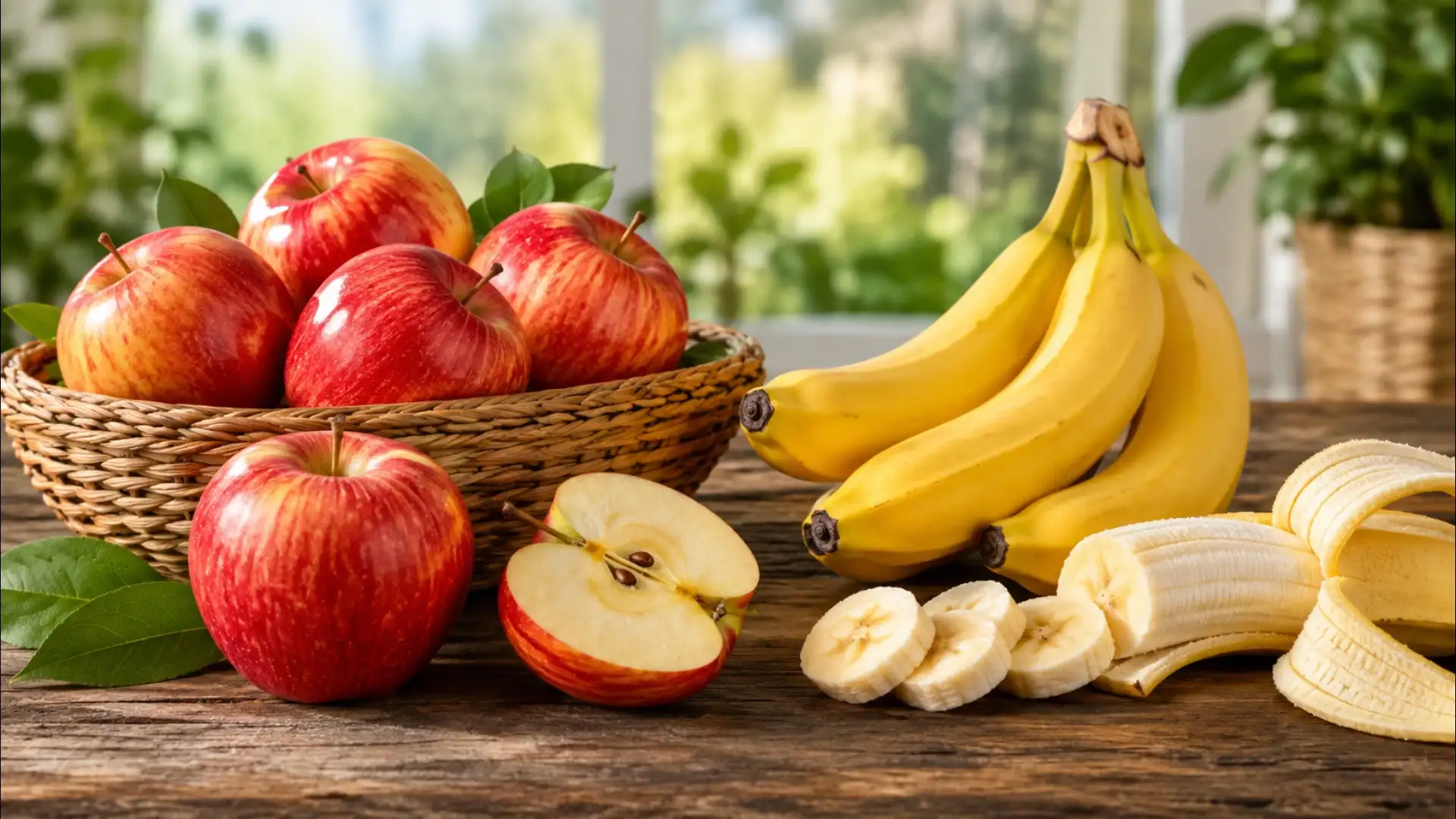
The answer depends on your nutritional needs and health goals. Let's compare the two fruits to understand their benefits.
A medium apple contains roughly 95 calories and provides about 4 grams of fibre. It is particularly known for its vitamin C and antioxidant content.
A medium banana contains around 105 calories and provides about 3 grams of fibre. Bananas are especially rich in potassium and vitamin B6, making them a great choice for supporting energy levels and normal muscle function.
Apples also contain antioxidants and plant compounds that may support overall heart health. Their naturally high water content makes them a refreshing snack, while their crunchy texture can make them satisfying to eat.
For people looking for a lower-calorie fruit with a little more fibre, an apple may have an advantage.
They also provide vitamin B6 and carbohydrates, which make them a convenient source of energy. This is one reason bananas are often popular before or after exercise.
Ripe bananas are also soft and easy to digest, making them a convenient option for people who want a quick and filling snack.
However, portion size and your overall diet matter more than choosing one fruit over the other. Instead of focusing on a single "best" fruit, include a variety of fruits in your diet.
That said, an apple can also be a nutritious snack, especially when paired with a source of protein or healthy fat such as nuts or nut butter.
The healthiest choice is ultimately the one that fits your nutritional needs and that you enjoy eating. Rather than choosing between apples and bananas, include both as part of a varied, balanced diet.
Apples and bananas are both nutritious fruits with different strengths. Apples offer fibre and antioxidants, while bananas provide potassium, vitamin B6, and carbohydrates for energy. Instead of asking which fruit is healthier, enjoy both regularly to get a wider range of nutrients.
The answer depends on your nutritional needs and health goals. Let's compare the two fruits to understand their benefits.
Apple vs Banana: Nutritional Comparison
Both fruits provide carbohydrates, fibre, vitamins, minerals, and antioxidants. However, their nutritional profiles are slightly different.A medium apple contains roughly 95 calories and provides about 4 grams of fibre. It is particularly known for its vitamin C and antioxidant content.
A medium banana contains around 105 calories and provides about 3 grams of fibre. Bananas are especially rich in potassium and vitamin B6, making them a great choice for supporting energy levels and normal muscle function.
Health Benefits of Apples
Apples are a good source of dietary fibre, particularly soluble fibre such as pectin. Fibre can support healthy digestion and help you feel full for longer.Apples also contain antioxidants and plant compounds that may support overall heart health. Their naturally high water content makes them a refreshing snack, while their crunchy texture can make them satisfying to eat.
For people looking for a lower-calorie fruit with a little more fibre, an apple may have an advantage.
Health Benefits of Bananas
Bananas are best known for their potassium content, an essential mineral involved in muscle function, nerve signalling, and maintaining normal blood pressure.They also provide vitamin B6 and carbohydrates, which make them a convenient source of energy. This is one reason bananas are often popular before or after exercise.
Ripe bananas are also soft and easy to digest, making them a convenient option for people who want a quick and filling snack.
Which Is Better for Weight Management?
Both apples and bananas can fit into a healthy weight-management diet. Apples are slightly lower in calories and contain a little more fibre per medium fruit, which may help with fullness.However, portion size and your overall diet matter more than choosing one fruit over the other. Instead of focusing on a single "best" fruit, include a variety of fruits in your diet.
Which Fruit Is Better Before Exercise?
Bananas may have an edge before physical activity because they provide readily available carbohydrates along with potassium. They are also easy to eat and digest.That said, an apple can also be a nutritious snack, especially when paired with a source of protein or healthy fat such as nuts or nut butter.
So, Apple or Banana?
There is no clear winner. Apples may be a better choice if you want more fibre and fewer calories, while bananas stand out for potassium, vitamin B6, and convenient energy.The healthiest choice is ultimately the one that fits your nutritional needs and that you enjoy eating. Rather than choosing between apples and bananas, include both as part of a varied, balanced diet.
Apples and bananas are both nutritious fruits with different strengths. Apples offer fibre and antioxidants, while bananas provide potassium, vitamin B6, and carbohydrates for energy. Instead of asking which fruit is healthier, enjoy both regularly to get a wider range of nutrients.
Next Story