
Baby's First Foods: When to Start and What to Give


According to the WHO and the Indian Academy of Pediatrics (IAP), a baby's first foods should be introduced at around 6 months, when breast milk or formula alone no longer meets a growing baby's nutritional needs. Safe, suitable first foods include single-ingredient purees like mashed banana, ragi porridge, moong dal, and cooked carrot, all easy to digest and widely available in Indian households. Starting too early (before 4 months) raises the risk of choking and allergies; starting too late (after 7 months) can lead to iron deficiency and delayed chewing skills.
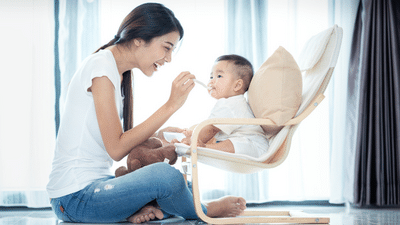
Signs Your Baby Is Ready to Start Solid Foods
Age alone is not the only indicator. Look for these signs before beginning:
If your baby was born prematurely, consult your paediatrician before starting, as the timeline may differ.

Best First Foods for Babies at 6 Months
Start with single-ingredient, smooth, and easily digestible foods. Introduce one new food every 3 to 5 days so you can watch for allergic reactions before moving on.
Cereals and Grains
Whole nuts: Choking hazard; nut butters in thin, diluted form are safe from 6 months if no family history of allergy Unpasteurised dairy, raw eggs, undercooked meat or fish: Risk of foodborne infections Packaged baby foods with preservatives or refined flour: Avoid anything with added sugar, salt, preservatives, or refined flour listed in the ingredients How Much Should a 6-Month-Old Eat?At 6 months, solids are about exploration, not nutrition. Breast milk or formula remains the primary source of nutrition until 12 months.
Never force-feed. Stop when the baby turns away, closes the mouth, or shows disinterest.
Simple Homemade Options by AgeIndia has a tradition of introducing wholesome, home-cooked foods to babies. Here is a simple age-wise guide using locally available ingredients:
Finely chopped versions of most family meals, soft paneer, and well-cooked fish
Every baby moves at their own pace; follow your child's cues, keep mealtimes calm, and trust that small, consistent steps will build a healthy relationship with food that lasts a lifetime.
Whether you’re pregnant, a new mom, or navigating postpartum, you don’t have to do it alone. Join oursupport group to connect, share, and support one another.
FAQs on Baby's First Foods: When to Start and What to GiveDo I need to stop breastfeeding when I start solids?
No. Breast milk or formula should continue as the primary source of nutrition until 12 months. Solids complement milk feeds; they do not replace them. The WHO recommends continued breastfeeding alongside solid foods up to 2 years of age or beyond, based on the mother and child's preference.
Signs Your Baby Is Ready to Start Solid Foods
Age alone is not the only indicator. Look for these signs before beginning:
- Can sit up with minimal support and hold their head steady
- Shows interest in food, watches you eat, reaches for your plate
- Has lost the tongue-thrust reflex (no longer pushes food out automatically)
- Can move food to the back of the mouth and swallow
If your baby was born prematurely, consult your paediatrician before starting, as the timeline may differ.
Best First Foods for Babies at 6 Months
Start with single-ingredient, smooth, and easily digestible foods. Introduce one new food every 3 to 5 days so you can watch for allergic reactions before moving on.
Cereals and Grains
- Rice porridge
- Ragi porridge
- Semolina porridge
- Oatmeal
- Mashed sweet potato
- Boiled and mashed carrots
- Mashed pumpkin
- Boiled spinach puree
- Mashed banana
- Mashed ripe papaya
- Cooked and mashed apple
- Mashed ripe pear or chikoo
- Moong dal water
- Well-cooked and mashed moong dal
- Mashed egg yolk
- Well-cooked, pureed chicken or fish
- Honey: Can cause infant botulism, a serious bacterial illness
- Cow's milk: Digestive system is not ready for it before 1 year (small amounts in cooking are fine)
- Salt and sugar: Kidneys cannot process added salt; sugar promotes unhealthy taste preferences early
- Start with 1 to 2 teaspoons once a day
- Gradually increase to 2 to 3 tablespoons, two to three times a day, by 8 months
- By 9 to 12 months, aim for three small meals and one to two snacks daily
- Offer solids after a milk feed, so hunger does not cause frustration
Never force-feed. Stop when the baby turns away, closes the mouth, or shows disinterest.
Simple Homemade Options by AgeIndia has a tradition of introducing wholesome, home-cooked foods to babies. Here is a simple age-wise guide using locally available ingredients:
| Age | Suitable Foods |
| 6 months | Ragi porridge, moong dal water, mashed banana, rice water, mashed sweet potato |
| 7 months | Soft khichdi (rice + moong dal), mashed papaya, carrot puree, egg yolk |
| 8 months | Suji kheer (no sugar), mashed idlis with sambar, soft-cooked vegetable combinations |
| 9–10 months | Soft-cooked family foods without salt or spice, small pieces of roti with dal |
| 11–12 months |
Finely chopped versions of most family meals, soft paneer, and well-cooked fish
Every baby moves at their own pace; follow your child's cues, keep mealtimes calm, and trust that small, consistent steps will build a healthy relationship with food that lasts a lifetime.
Whether you’re pregnant, a new mom, or navigating postpartum, you don’t have to do it alone. Join our
FAQs on Baby's First Foods: When to Start and What to Give
No. Breast milk or formula should continue as the primary source of nutrition until 12 months. Solids complement milk feeds; they do not replace them. The WHO recommends continued breastfeeding alongside solid foods up to 2 years of age or beyond, based on the mother and child's preference.
Next Story