
Baked Samosa Recipe: How to Make Crispy, Flaky Potato Samosas at Home

Baked samosas are a great alternative to the traditional deep-fried snack, especially when you want something crisp, flavourful and homemade. Filled with spiced potatoes, green peas and fresh coriander, these triangular pastries work well for evening tea, family gatherings or weekend snacks. The secret lies in getting the pastry right. A little oil or ghee rubbed into the flour, a short resting period and a well-cooled filling help create a crust that turns golden in the oven without becoming hard or dry. With a few simple ingredients and the right technique, you can make delicious vegetarian samosas in your own kitchen.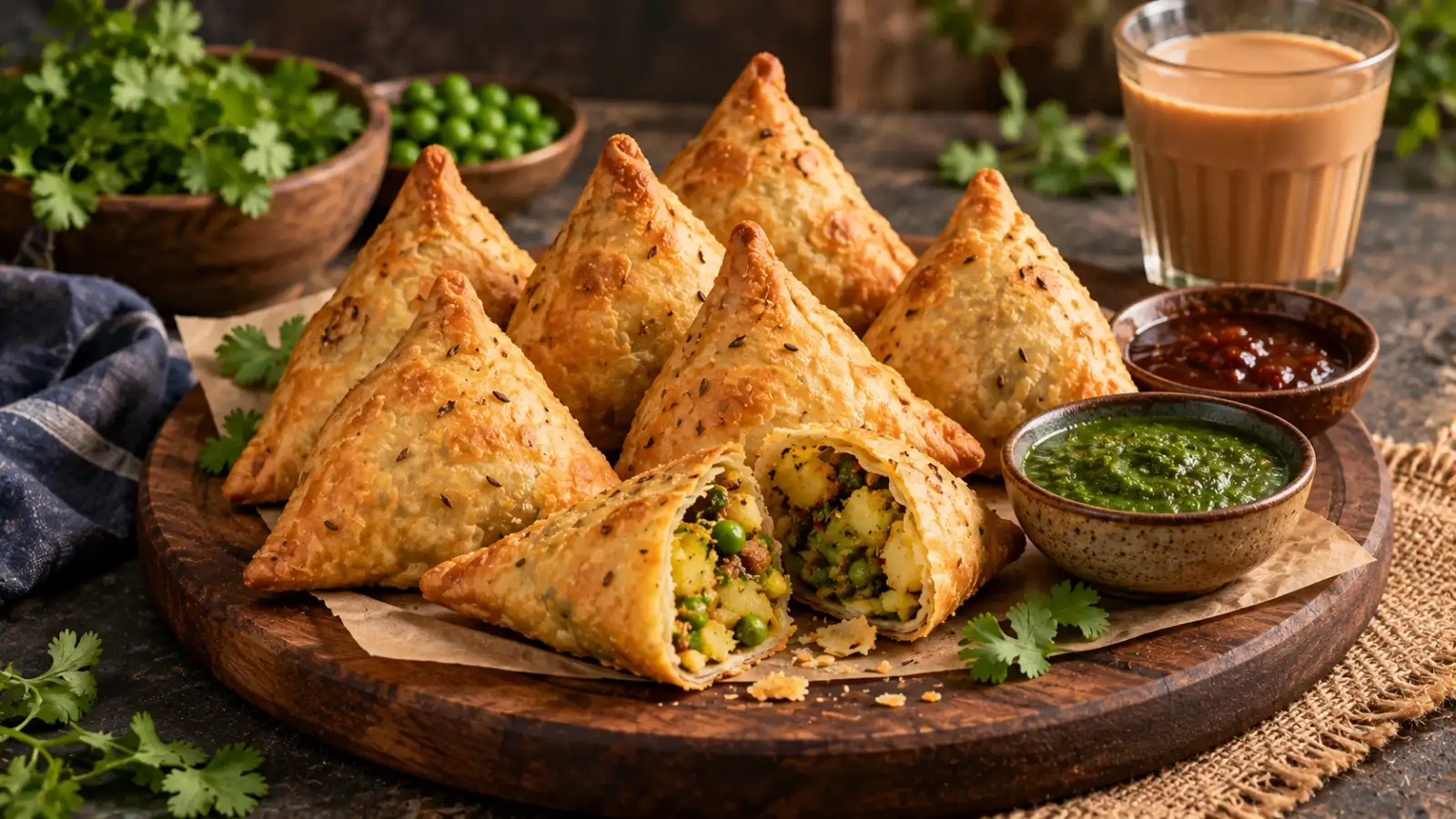
Heat one tablespoon of oil in a pan over medium heat. Add the cumin seeds and let them release their aroma. Stir in the chopped onion and cook until softened. Add the ginger and green chilli, followed by turmeric, ground coriander and salt.
Add the peas and potatoes, then mix everything gently so the spices coat the vegetables evenly. Stir in the garam masala and amchur powder or lemon juice. Finish with chopped coriander and cook for another two minutes.
The filling should be relatively dry rather than wet or sticky. Spread it on a plate and leave it to cool completely before assembling the samosas. Warm filling can soften the pastry and make sealing more difficult.
This step is important because the fat coats the flour particles and helps create a crumbly, flaky texture. To check whether you have added enough fat, squeeze a small amount of the mixture in your palm. It should hold its shape briefly without feeling greasy.
Add the water gradually and bring the mixture together into a firm dough. Avoid pouring in all the water at once, as the amount required can vary depending on the flour. Knead gently until the dough is smooth enough to roll, but do not overwork it.
Cover the dough with a damp cloth and leave it to rest for 25 to 30 minutes. Resting allows the flour to hydrate and makes the dough easier to shape without excessive shrinking.
Cut each rolled piece in half to create two semi-circles. Take one semi-circle, lightly moisten one straight edge with water and bring the two corners together to form a cone. Press the overlapping edge firmly to seal it.
Hold the cone in your hand and add one or two tablespoons of the cooled potato filling. Avoid overfilling, as too much mixture can split the pastry during baking. Moisten the remaining open edge, then press it together to close the samosa.
Check that there are no gaps or cracks along the seams. Place the finished samosas under a clean cloth while you shape the remaining portions so that the pastry does not dry out.
Brush the tops and sides lightly with oil or melted ghee. This helps the crust develop an attractive golden colour and crisp surface.
Bake for 30 to 40 minutes, turning the samosas carefully halfway through if you want more even browning. Cooking time will depend on their size, the thickness of the pastry and your oven. They are ready when the crust feels firm and looks golden brown, with no visibly raw patches.
Leave them to cool for a few minutes before serving, as the filling will be very hot immediately after baking.
For a variation, replace some of the potatoes with cooked cauliflower, add sweetcorn for a touch of sweetness or use paneer with peas for a richer filling. Keep the mixture dry and allow it to cool before shaping the pastries.
You can freeze the shaped, unbaked samosas on a tray before transferring them to a freezer-safe container. Bake them from frozen, allowing extra cooking time and checking that the pastry is golden and the filling is piping hot throughout.
Making baked samosas from scratch takes a little preparation, but the result is worth the effort. A well-seasoned potato filling, carefully prepared dough and patient baking produce a satisfying snack with a crisp exterior and a soft, spicy centre.
Ingredients for Homemade Baked Samosas
This recipe makes approximately 10 to 12 medium-sized samosas.For the flaky homemade crust
- 250g plain flour
- 4 tablespoons vegetable oil or melted ghee
- ½ teaspoon carom seeds (ajwain)
- ½ teaspoon salt
- Approximately 100 to 120ml water, added gradually
For the potato and pea filling
- 3 medium potatoes
- 100g green peas, fresh or frozen
- 1 medium onion, finely chopped
- 1 green chilli, finely chopped
- 1 teaspoon grated ginger
- 1 teaspoon cumin seeds
- 1 teaspoon ground coriander
- ½ teaspoon garam masala
- ½ teaspoon amchur powder or 1 teaspoon lemon juice
- ¼ teaspoon turmeric powder
- 2 tablespoons chopped fresh coriander
- 1 tablespoon vegetable oil
- Salt to taste
Step 1: Prepare the Spiced Potato Filling
Boil the potatoes until just tender, then drain them and allow them to cool slightly before peeling. Mash them roughly, keeping a few small chunks for texture. If using fresh peas, cook them until tender. Frozen peas can be added directly to the pan after thawing.Heat one tablespoon of oil in a pan over medium heat. Add the cumin seeds and let them release their aroma. Stir in the chopped onion and cook until softened. Add the ginger and green chilli, followed by turmeric, ground coriander and salt.
Add the peas and potatoes, then mix everything gently so the spices coat the vegetables evenly. Stir in the garam masala and amchur powder or lemon juice. Finish with chopped coriander and cook for another two minutes.
The filling should be relatively dry rather than wet or sticky. Spread it on a plate and leave it to cool completely before assembling the samosas. Warm filling can soften the pastry and make sealing more difficult.
Step 2: Make the Flaky Homemade Crust
Place the flour, salt and carom seeds in a large mixing bowl. Add the oil or melted ghee and rub it into the flour with your fingertips until the mixture resembles coarse breadcrumbs.This step is important because the fat coats the flour particles and helps create a crumbly, flaky texture. To check whether you have added enough fat, squeeze a small amount of the mixture in your palm. It should hold its shape briefly without feeling greasy.
Add the water gradually and bring the mixture together into a firm dough. Avoid pouring in all the water at once, as the amount required can vary depending on the flour. Knead gently until the dough is smooth enough to roll, but do not overwork it.
Cover the dough with a damp cloth and leave it to rest for 25 to 30 minutes. Resting allows the flour to hydrate and makes the dough easier to shape without excessive shrinking.
Step 3: Shape the Samosas
Divide the rested dough into 5 or 6 equal portions. Roll each portion into a ball, then flatten it into an oval or circle approximately 15 to 18cm wide.Cut each rolled piece in half to create two semi-circles. Take one semi-circle, lightly moisten one straight edge with water and bring the two corners together to form a cone. Press the overlapping edge firmly to seal it.
Hold the cone in your hand and add one or two tablespoons of the cooled potato filling. Avoid overfilling, as too much mixture can split the pastry during baking. Moisten the remaining open edge, then press it together to close the samosa.
Check that there are no gaps or cracks along the seams. Place the finished samosas under a clean cloth while you shape the remaining portions so that the pastry does not dry out.
Step 4: Bake Until Golden and Crisp
Preheat the oven to 200°C, or 180°C for a fan oven. Line a baking tray with baking parchment and arrange the samosas with a little space between each one.Brush the tops and sides lightly with oil or melted ghee. This helps the crust develop an attractive golden colour and crisp surface.
Bake for 30 to 40 minutes, turning the samosas carefully halfway through if you want more even browning. Cooking time will depend on their size, the thickness of the pastry and your oven. They are ready when the crust feels firm and looks golden brown, with no visibly raw patches.
Leave them to cool for a few minutes before serving, as the filling will be very hot immediately after baking.
You may also like
Tips for a Crisp, Flaky Crust
The quality of the pastry makes a noticeable difference to the finished samosas. Keep these points in mind when preparing your next batch.- Measure the fat carefully. Too little can produce a hard crust, while excessive fat can make the dough difficult to seal.
- Keep the dough firm. A very soft dough may produce a less structured pastry and can be harder to shape.
- Do not skip resting. Rested dough is easier to roll and less likely to shrink.
- Cool the filling completely. Excess moisture and heat can weaken the pastry.
- Avoid thick pastry. Roll the dough evenly so the outer crust cooks through without becoming heavy.
- Brush lightly with oil. A thin coating helps the surface brown without making the samosas greasy.
What to Serve With Baked Samosas
Serve the samosas warm with mint-coriander chutney, tamarind chutney or a simple coriander and yoghurt dip. A cup of masala chai makes them a natural choice for an evening snack.For a variation, replace some of the potatoes with cooked cauliflower, add sweetcorn for a touch of sweetness or use paneer with peas for a richer filling. Keep the mixture dry and allow it to cool before shaping the pastries.
How to Store and Reheat Baked Samosas
Allow leftover samosas to cool completely before storing them in an airtight container in the refrigerator for up to three days. Reheat them in a preheated oven at 180°C until warmed through and crisp again. A few minutes in an air fryer can also help restore the crust.You can freeze the shaped, unbaked samosas on a tray before transferring them to a freezer-safe container. Bake them from frozen, allowing extra cooking time and checking that the pastry is golden and the filling is piping hot throughout.
Making baked samosas from scratch takes a little preparation, but the result is worth the effort. A well-seasoned potato filling, carefully prepared dough and patient baking produce a satisfying snack with a crisp exterior and a soft, spicy centre.






Loving Newspoint? Download the app now
