
10 Places Where You Can Watch the Sun Shine at Midnight

Imagine standing beside a quiet fjord at midnight, watching the sun hover just above the horizon instead of disappearing. There is no darkness, no need for streetlights and no clear signal that the day has ended. In the world's far northern regions, summer can bring this remarkable experience when the sun remains visible around the clock.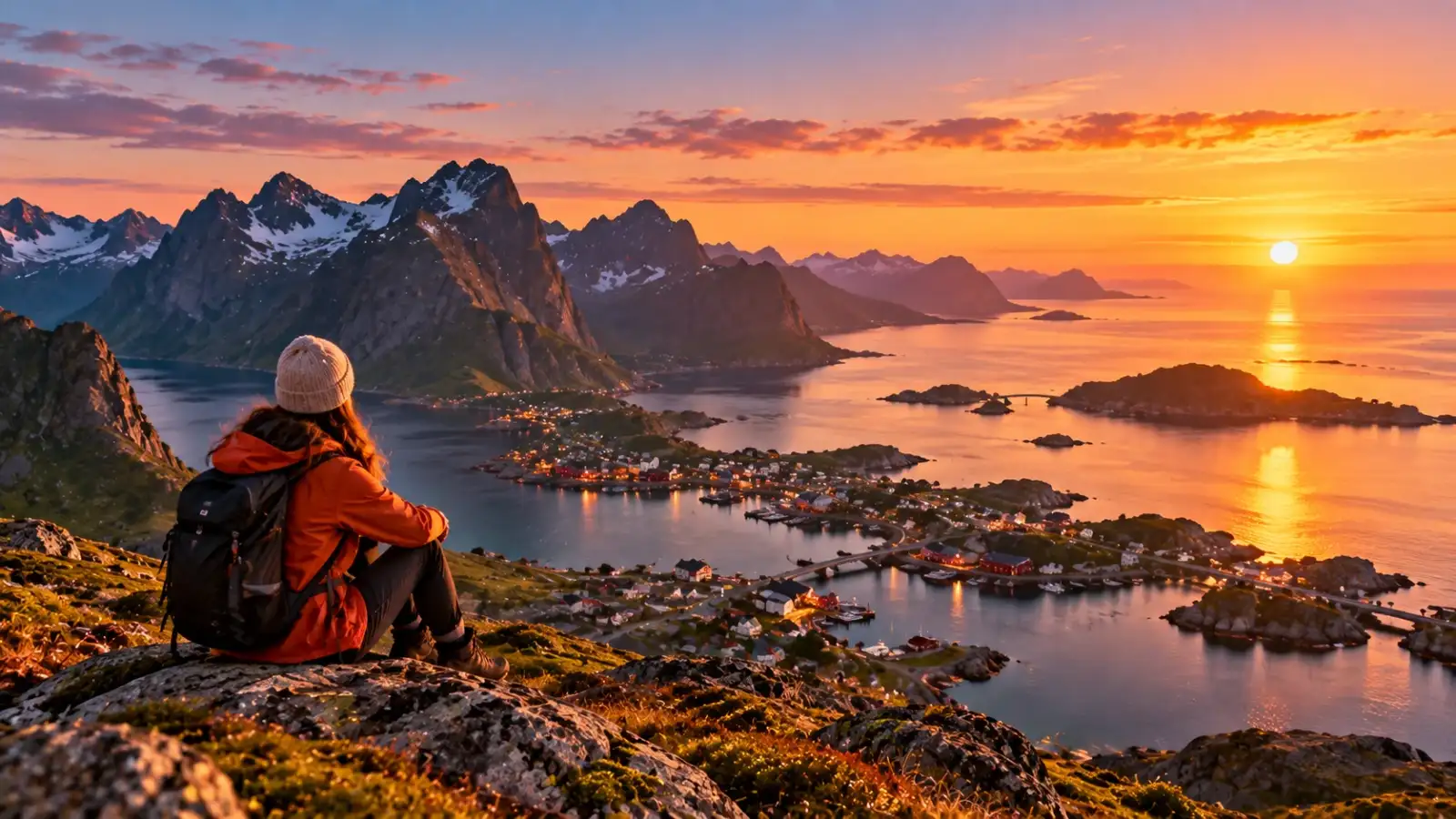
Known as the Midnight Sun , this natural phenomenon occurs when the Earth's tilt causes areas near and above the Arctic Circle to remain turned towards the sun for extended periods during summer. The further north you travel, the longer the period of continuous daylight can last. Northern Norway, Sweden, Finland, Iceland, Greenland and Alaska are among the places where travellers can experience this unusual summer landscape.
The Midnight Sun is more than simply seeing the sun at an unusual hour. It changes the character of a destination, allowing mountains, lakes, forests, islands and coastal landscapes to remain illuminated long after midnight.
Longyearbyen provides a base for exploring the dramatic Arctic surroundings, while guided excursions can take visitors into landscapes of glaciers, mountains and frozen wilderness. During the brighter months, the continuous daylight gives the scenery a completely different appearance, with low sunlight creating long shadows across the terrain.
Because Svalbard is a fragile Arctic environment, visitors need to follow local safety and environmental rules, particularly when travelling outside settlements.
The Midnight Sun is visible in Lofoten from roughly late May to mid-July. This makes summer an excellent period for activities such as hiking, kayaking, fishing and photography.
One of the pleasures of Lofoten is that the phenomenon does not require a complicated expedition. Travellers can simply find a viewpoint, beach or quiet harbour and watch the changing light remain on the landscape well into the night.
The surrounding region offers plenty of ways to use those extra hours. Travellers can hike, cycle, kayak or take excursions into the surrounding mountains and islands. The long daylight also makes it possible to explore the region late into the evening without the landscape becoming dark.
Tromsø is particularly interesting for visitors who want the combination of a functioning Arctic city and easy access to dramatic natural scenery.
Visit Sweden gives Abisko an approximate Midnight Sun period from 25 May to 18 July. Kiruna, another popular base in the region, experiences it from approximately 28 May to 14 July.
The region is well suited to travellers who want to combine the phenomenon with hiking, cycling, paddling and mountain experiences. Abisko's location also makes the surrounding landscapes particularly appealing for photography, as the low summer sun creates warm tones and long shadows across the mountains and water.
The Midnight Sun remains visible here for several weeks around the summer solstice, with Visit Sweden listing approximately 28 May to 14 July for the continuous daylight period.
Kiruna also offers an opportunity to experience the cultural landscape of Swedish Lapland. The broader region is part of Sápmi, the traditional homeland of the Sámi people, making a summer visit about more than simply photographing the sun.
The landscape is particularly appealing for travellers who prefer slower outdoor experiences. Hiking trails, lakeside locations and open wilderness provide plenty of places to sit beneath the late-night sunlight without the feeling of being in a major tourist centre.
The Midnight Sun also changes the rhythm of activities. A walk that would normally be considered an evening excursion can take place at what looks like midnight, while the surrounding landscape still appears illuminated by late afternoon light.
Although Iceland does not experience the same widespread period of true 24-hour sunlight as places farther north, its bright summer nights offer a similar visual experience. The sun remains low on the horizon, bathing waterfalls, volcanic landscapes, coastlines and mountains in soft light.
For photographers and road-trip travellers, this extended daylight can be especially useful. The long hours make it possible to visit popular landscapes late in the evening when the atmosphere can feel quieter than during the middle of the day.
The experience here feels very different from visiting an Arctic city in Scandinavia. Settlements are separated by vast distances, and much of the surrounding environment remains dominated by wilderness.
The Midnight Sun can therefore become part of a much broader Arctic experience, particularly for travellers interested in glaciers, coastal landscapes, traditional communities and remote environments.
Utqiaġvik, one of the northernmost communities in the United States, is particularly associated with the phenomenon. The extended daylight transforms everyday life, allowing outdoor activities to continue at times that would normally be considered the middle of the night.
Alaska's vast scale also makes the experience particularly striking. Mountains, tundra, rivers and wildlife habitats can remain visible beneath the low summer sun, creating an environment that feels very different from more familiar summer destinations.
Visit Norway lists the approximate Midnight Sun period here from 14 May to 29 July.
The appeal is partly about the landscape and partly about the sense of geographical remoteness. Standing at the edge of northern Europe while the sun remains visible around midnight creates one of the most memorable versions of the phenomenon.
The extended daylight allows visitors to explore the island long after conventional sightseeing hours. Hiking trails, beaches and coastal roads take on a different atmosphere when the sun sits low over the horizon rather than disappearing into darkness.
For photographers, this period is particularly valuable because the light can remain warm and directional for hours, producing constantly changing conditions across the landscape.
This is also why travellers should not assume that the Midnight Sun automatically means warm weather. Arctic summer temperatures can remain cool, particularly at night, even though the sun is visible. Layers, sunglasses and good sleep protection can be useful, especially for people who are not accustomed to continuous daylight.
A sleeping mask can be particularly helpful when staying in accommodation without effective blackout curtains. The constant light is fascinating to experience, but it can make maintaining a normal sleep routine surprisingly difficult.
For most travellers, June and July provide a practical window for experiencing the phenomenon across many northern destinations. However, exact dates vary by location, and weather conditions can affect whether the sun is clearly visible.
The Midnight Sun is ultimately one of those travel experiences that changes the meaning of a familiar word: night. In the far north, summer can turn midnight into another opportunity to hike, paddle, photograph a landscape or simply stand outside and watch the sun move slowly across the horizon.
Known as the Midnight Sun , this natural phenomenon occurs when the Earth's tilt causes areas near and above the Arctic Circle to remain turned towards the sun for extended periods during summer. The further north you travel, the longer the period of continuous daylight can last. Northern Norway, Sweden, Finland, Iceland, Greenland and Alaska are among the places where travellers can experience this unusual summer landscape.
The Midnight Sun is more than simply seeing the sun at an unusual hour. It changes the character of a destination, allowing mountains, lakes, forests, islands and coastal landscapes to remain illuminated long after midnight.
Svalbard, Norway
For travellers looking for one of the longest Midnight Sun experiences, Svalbard is difficult to ignore. This Arctic archipelago lies far north of mainland Norway, and the sun remains above the horizon for several months. According to Visit Norway, Svalbard experiences the Midnight Sun from around 20 April until 22 August.Longyearbyen provides a base for exploring the dramatic Arctic surroundings, while guided excursions can take visitors into landscapes of glaciers, mountains and frozen wilderness. During the brighter months, the continuous daylight gives the scenery a completely different appearance, with low sunlight creating long shadows across the terrain.
Because Svalbard is a fragile Arctic environment, visitors need to follow local safety and environmental rules, particularly when travelling outside settlements.
Lofoten Islands, Norway
The Lofoten Islands combine the Midnight Sun with some of Norway's most recognisable coastal scenery. Sharp mountains rise behind fishing villages, while beaches, islands and sheltered bays create a landscape that looks dramatically different when illuminated by the low summer sun.The Midnight Sun is visible in Lofoten from roughly late May to mid-July. This makes summer an excellent period for activities such as hiking, kayaking, fishing and photography.
One of the pleasures of Lofoten is that the phenomenon does not require a complicated expedition. Travellers can simply find a viewpoint, beach or quiet harbour and watch the changing light remain on the landscape well into the night.
Tromsø, Norway
Tromsø is one of the most accessible bases for experiencing the Midnight Sun in the Arctic. The city sits well above the Arctic Circle and experiences continuous daylight for approximately two months during summer, with the Midnight Sun period running from around 20 May to 22 July.The surrounding region offers plenty of ways to use those extra hours. Travellers can hike, cycle, kayak or take excursions into the surrounding mountains and islands. The long daylight also makes it possible to explore the region late into the evening without the landscape becoming dark.
Tromsø is particularly interesting for visitors who want the combination of a functioning Arctic city and easy access to dramatic natural scenery.
Abisko, Sweden
Swedish Lapland offers a quieter alternative to some of the better-known Norwegian destinations. Abisko, located in northern Sweden, is surrounded by mountains, lakes and expansive wilderness, creating an impressive setting for watching the Midnight Sun.Visit Sweden gives Abisko an approximate Midnight Sun period from 25 May to 18 July. Kiruna, another popular base in the region, experiences it from approximately 28 May to 14 July.
The region is well suited to travellers who want to combine the phenomenon with hiking, cycling, paddling and mountain experiences. Abisko's location also makes the surrounding landscapes particularly appealing for photography, as the low summer sun creates warm tones and long shadows across the mountains and water.
Kiruna, Sweden
Kiruna is Sweden's northernmost city and one of the main gateways to Arctic Sweden. Its location makes it a practical base for experiencing the long summer days while exploring the surrounding forests, lakes and mountains.The Midnight Sun remains visible here for several weeks around the summer solstice, with Visit Sweden listing approximately 28 May to 14 July for the continuous daylight period.
Kiruna also offers an opportunity to experience the cultural landscape of Swedish Lapland. The broader region is part of Sápmi, the traditional homeland of the Sámi people, making a summer visit about more than simply photographing the sun.
Finnish Lapland
Northern Finland offers a different kind of Midnight Sun experience, with forests, lakes and open fell landscapes replacing the dramatic fjords associated with Norway. During the summer, northern parts of Finnish Lapland experience exceptionally long daylight, and areas north of the Arctic Circle can experience the sun remaining above the horizon.The landscape is particularly appealing for travellers who prefer slower outdoor experiences. Hiking trails, lakeside locations and open wilderness provide plenty of places to sit beneath the late-night sunlight without the feeling of being in a major tourist centre.
The Midnight Sun also changes the rhythm of activities. A walk that would normally be considered an evening excursion can take place at what looks like midnight, while the surrounding landscape still appears illuminated by late afternoon light.
Iceland
Iceland sits just below the Arctic Circle for much of its landmass, but its northern location means summer nights can remain exceptionally bright. In the country's far north, the difference between late evening and early morning becomes difficult to distinguish during the height of summer.Although Iceland does not experience the same widespread period of true 24-hour sunlight as places farther north, its bright summer nights offer a similar visual experience. The sun remains low on the horizon, bathing waterfalls, volcanic landscapes, coastlines and mountains in soft light.
For photographers and road-trip travellers, this extended daylight can be especially useful. The long hours make it possible to visit popular landscapes late in the evening when the atmosphere can feel quieter than during the middle of the day.
Greenland
Greenland offers an extraordinary setting for experiencing the Midnight Sun, particularly in settlements well north of the Arctic Circle. During summer, the sun can remain visible around the clock, illuminating enormous landscapes of mountains, ice and water.The experience here feels very different from visiting an Arctic city in Scandinavia. Settlements are separated by vast distances, and much of the surrounding environment remains dominated by wilderness.
The Midnight Sun can therefore become part of a much broader Arctic experience, particularly for travellers interested in glaciers, coastal landscapes, traditional communities and remote environments.
Alaska, United States
Northern Alaska provides another opportunity to experience continuous summer daylight. Places north of the Arctic Circle, including communities in Alaska's far north, can experience periods when the sun remains above the horizon throughout the night.Utqiaġvik, one of the northernmost communities in the United States, is particularly associated with the phenomenon. The extended daylight transforms everyday life, allowing outdoor activities to continue at times that would normally be considered the middle of the night.
Alaska's vast scale also makes the experience particularly striking. Mountains, tundra, rivers and wildlife habitats can remain visible beneath the low summer sun, creating an environment that feels very different from more familiar summer destinations.
The North Cape, Norway
The North Cape is one of Norway's most famous places for watching the Midnight Sun. Located far above the Arctic Circle, the dramatic coastal viewpoint looks towards the open Barents Sea and provides an expansive horizon for watching the sun remain close to the water.Visit Norway lists the approximate Midnight Sun period here from 14 May to 29 July.
The appeal is partly about the landscape and partly about the sense of geographical remoteness. Standing at the edge of northern Europe while the sun remains visible around midnight creates one of the most memorable versions of the phenomenon.
Senja, Norway
Senja is another Norwegian destination where rugged mountains, fjords and coastal landscapes meet the Midnight Sun. The island offers a more spacious experience than some of the country's better-known Arctic destinations, with roads leading through dramatic scenery and viewpoints overlooking the sea.You may also like
- Travelling, but chasing film sets!
- 'You put underdeveloped brains together': Psychiatrist on why parents should rethink sending children away to college
- King George III built this London observatory to watch the stars; 250 years later, it is a $24 million private home
- Is It Safe to Lift Heavy Objects During Pregnancy?
- AI mural inspired by Banksy sparks backlash in Bristol: Artists spot wrong landmarks and a bizarre version of the famous Mild Mild West as debate over AI art grows
The extended daylight allows visitors to explore the island long after conventional sightseeing hours. Hiking trails, beaches and coastal roads take on a different atmosphere when the sun sits low over the horizon rather than disappearing into darkness.
For photographers, this period is particularly valuable because the light can remain warm and directional for hours, producing constantly changing conditions across the landscape.
Why the Midnight Sun Feels So Different
The most surprising part of the Midnight Sun is often not the fact that the sun is still visible. It is the way it changes your perception of time. At 11 pm, a mountain may look as though it is still late afternoon. At 1 am, a lake can continue reflecting golden light. Even familiar landscapes seem different because the usual boundary between day and night disappears.This is also why travellers should not assume that the Midnight Sun automatically means warm weather. Arctic summer temperatures can remain cool, particularly at night, even though the sun is visible. Layers, sunglasses and good sleep protection can be useful, especially for people who are not accustomed to continuous daylight.
A sleeping mask can be particularly helpful when staying in accommodation without effective blackout curtains. The constant light is fascinating to experience, but it can make maintaining a normal sleep routine surprisingly difficult.
When Should You Travel?
The exact Midnight Sun period depends on latitude. Areas closer to the Arctic Circle experience a shorter period of continuous daylight, while locations farther north can experience it for several months. Norway's official tourism information, for example, lists the period from around 12 June to 1 July at the Arctic Circle, compared with 20 April to 22 August in Svalbard.For most travellers, June and July provide a practical window for experiencing the phenomenon across many northern destinations. However, exact dates vary by location, and weather conditions can affect whether the sun is clearly visible.
The Midnight Sun is ultimately one of those travel experiences that changes the meaning of a familiar word: night. In the far north, summer can turn midnight into another opportunity to hike, paddle, photograph a landscape or simply stand outside and watch the sun move slowly across the horizon.






Loving Newspoint? Download the app now
