
Best Plants for a Balcony That Gets Harsh Afternoon Sun

A sunny balcony sounds ideal for gardening until the afternoon arrives and the heat becomes intense. Pots become hot, soil dries quickly and delicate leaves can start looking burnt or tired.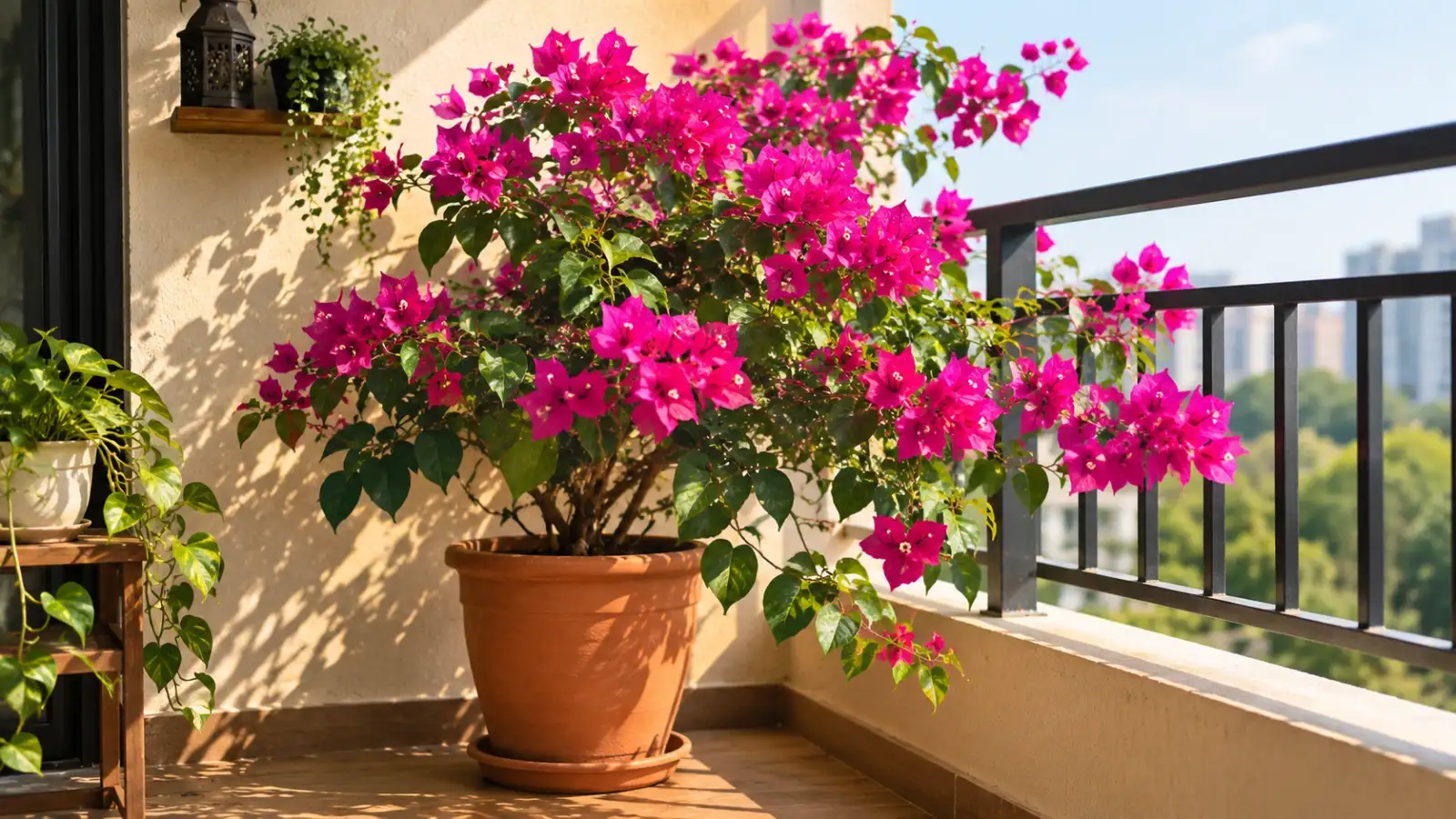
The problem is not necessarily the balcony. It may simply be the plants.
Some plants prefer filtered light or gentle morning sunshine and struggle when exposed to strong afternoon heat. Others are naturally better suited to bright, hot conditions and can turn a difficult balcony into one of the easiest places in your home to grow plants.
For Indian balconies, especially those facing strong afternoon sun, choosing heat-tolerant plants is often more effective than constantly trying to protect unsuitable varieties.
It is comfortable with strong sunlight and can bring plenty of colour without demanding constant attention. With support, it can also be trained upwards or along a balcony railing.
Just remember that bougainvillea needs a suitable container and proper drainage. It also needs room to develop, so avoid squeezing it into a tiny pot.
Also known as moss rose, it is well suited to sunny and relatively dry conditions. Its colourful flowers can make a small balcony look much brighter, particularly when several pots are grouped together.
It is especially useful for people who want flowering balcony plants that can tolerate heat.
Its fleshy leaves store water, allowing the plant to cope with periods of dryness better than many soft-leaved plants. However, good drainage is essential. Aloe vera should not be treated like a thirsty flowering plant and watered repeatedly while the soil remains wet.
A sunny position and a well-draining growing medium can help it thrive.
It enjoys sunlight but is more demanding about watering than succulents such as aloe vera. During very hot weather, the soil may dry quickly, so regular checks are important.
A healthy hibiscus can reward that care with striking blooms that instantly add colour to an outdoor space.
Their thick leaves store water, so they generally prefer well-drained soil rather than constant moisture. They can work particularly well if your balcony is small but receives plenty of light.
Use pots with drainage holes, avoid letting containers sit permanently in water and check soil moisture before watering. Larger containers can also help reduce how quickly soil heats up and dries out.
During extreme heat, grouping pots can create a slightly more sheltered microclimate. If the afternoon sun becomes exceptionally intense, temporary shade can also protect plants during the harshest part of the day.
The best balcony plants are ultimately the ones that match your actual conditions. Instead of forcing delicate plants to survive in an unsuitable spot, choose varieties that naturally enjoy the sunshine your balcony already receives.
The problem is not necessarily the balcony. It may simply be the plants.
Some plants prefer filtered light or gentle morning sunshine and struggle when exposed to strong afternoon heat. Others are naturally better suited to bright, hot conditions and can turn a difficult balcony into one of the easiest places in your home to grow plants.
For Indian balconies, especially those facing strong afternoon sun, choosing heat-tolerant plants is often more effective than constantly trying to protect unsuitable varieties.
Bougainvillea
Bougainvillea is one of the most obvious choices for a hot, sunny balcony.It is comfortable with strong sunlight and can bring plenty of colour without demanding constant attention. With support, it can also be trained upwards or along a balcony railing.
Just remember that bougainvillea needs a suitable container and proper drainage. It also needs room to develop, so avoid squeezing it into a tiny pot.
Portulaca
If you want bright flowers without a plant that constantly demands attention, portulaca is worth considering.Also known as moss rose, it is well suited to sunny and relatively dry conditions. Its colourful flowers can make a small balcony look much brighter, particularly when several pots are grouped together.
It is especially useful for people who want flowering balcony plants that can tolerate heat.
Aloe Vera
Aloe vera is another practical option for a sunny balcony.Its fleshy leaves store water, allowing the plant to cope with periods of dryness better than many soft-leaved plants. However, good drainage is essential. Aloe vera should not be treated like a thirsty flowering plant and watered repeatedly while the soil remains wet.
A sunny position and a well-draining growing medium can help it thrive.
Hibiscus
For people who want large, colourful flowers, hibiscus can be an excellent balcony choice.It enjoys sunlight but is more demanding about watering than succulents such as aloe vera. During very hot weather, the soil may dry quickly, so regular checks are important.
A healthy hibiscus can reward that care with striking blooms that instantly add colour to an outdoor space.
Jade Plant
Jade plants are compact, attractive and well suited to sunny conditions.Their thick leaves store water, so they generally prefer well-drained soil rather than constant moisture. They can work particularly well if your balcony is small but receives plenty of light.
Make the Balcony Easier for Plants
Choosing the right plant is only half the job.Use pots with drainage holes, avoid letting containers sit permanently in water and check soil moisture before watering. Larger containers can also help reduce how quickly soil heats up and dries out.
During extreme heat, grouping pots can create a slightly more sheltered microclimate. If the afternoon sun becomes exceptionally intense, temporary shade can also protect plants during the harshest part of the day.
The best balcony plants are ultimately the ones that match your actual conditions. Instead of forcing delicate plants to survive in an unsuitable spot, choose varieties that naturally enjoy the sunshine your balcony already receives.
Next Story